

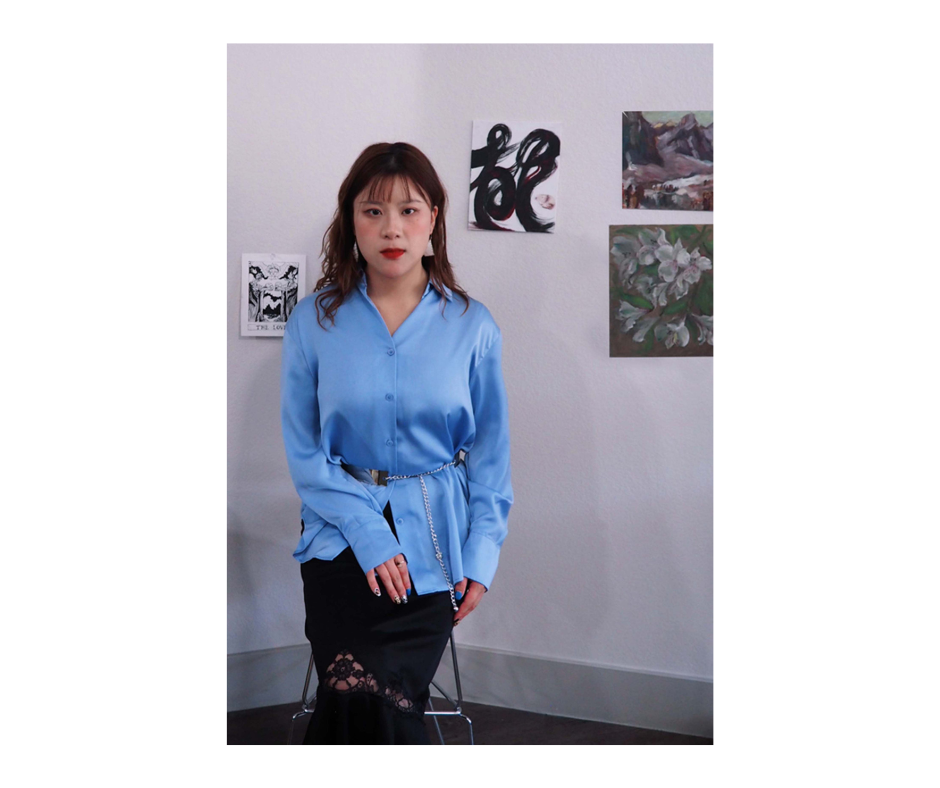
Xinyu Yu, an accomplished artist, invites viewers into a world where emotions transcend the boundaries of human experience, seeping into the objects, spaces, and traces that form the backdrop of daily life. Her work is a delicate exploration of the dialogue between presence and absence, uncovering overlooked narratives embedded within ordinary things. A weathered chair, a chipped teacup, or faint light pooling on a windowsill—these are not merely objects in her paintings but vessels carrying the weight of memory, longing, and the passage of time.
The Language of Silence
Yu describes her creative process as one of quiet observation. Each piece, she explains, begins with an extended gaze at the moments most people rush past: a single drop of water falling from a faucet in the morning light, a small plant pushing up between bathroom tiles, or the edge of a folded sweater visible through a slightly open closet door. For her, these everyday sights become protagonists, their significance lying not in physical existence but in the stories woven between them and their interaction with light, air, and time.
Her approach to painting involves a refined layering technique. Beginning with a base of watercolor pencil, she overlays thick oil paint to create textures that whisper softly at first, only to become impossible to ignore upon closer inspection. This layered construction mirrors her conceptual approach, imbuing her works with both depth and subtlety.
Yu characterizes her creative process as a form of meditation, often spending days contemplating a composition before making the first stroke. To her, the canvas is not merely a surface but a keeper of memory, holding echoes of hidden stories. “A coffee cup might carry the residue of morning conversations,” she explains, “while a crooked tablecloth hints at recent activity in an otherwise empty room.” By distilling these fragments, Yu encourages viewers to reconsider their relationship with the material world, seeing objects as repositories of shared experiences.
The Meaning of the Overlooked
In the rush of contemporary life, Yu observes, people often discard objects and emotions deemed outdated, leaving behind forgotten stories. Her work, however, does not seek to objectively record these stories but to emotionally distill them. She breaks down everyday scenes into “molecules of color and particles of memory,” recombining them into visual fables that evoke a sense of feeling.
In her Fragments of Timelessness series, for instance, worn wooden floors in deep blue, the subtle light reflected off bamboo baskets, and vividly colored fungi with wood grain patterns become “emotional compounds.” These elements, recomposed from daily life, serve as metaphors for what is often overlooked: the mundane objects and the emotions tied to them.
A Mirror, Not a Declaration

Yu intentionally avoids imposing a single interpretation on her work. She explains that each painting is designed to leave space for personal reflection. Some viewers may experience nostalgia, recalling the light of a childhood home, while others might see metaphors for modern life’s weariness or detect environmental themes in her choice of natural materials.
This openness is a deliberate part of Yu’s process. Her works act as mirrors, reflecting not only the subject matter but also the inner worlds of her viewers. Through the interplay of translucent washes, negative space, and hyper-realistic details, Yu masterfully balances imagination with tangible reality, simulating the way human attention selectively focuses on parts of the environment.
Abstract Truth
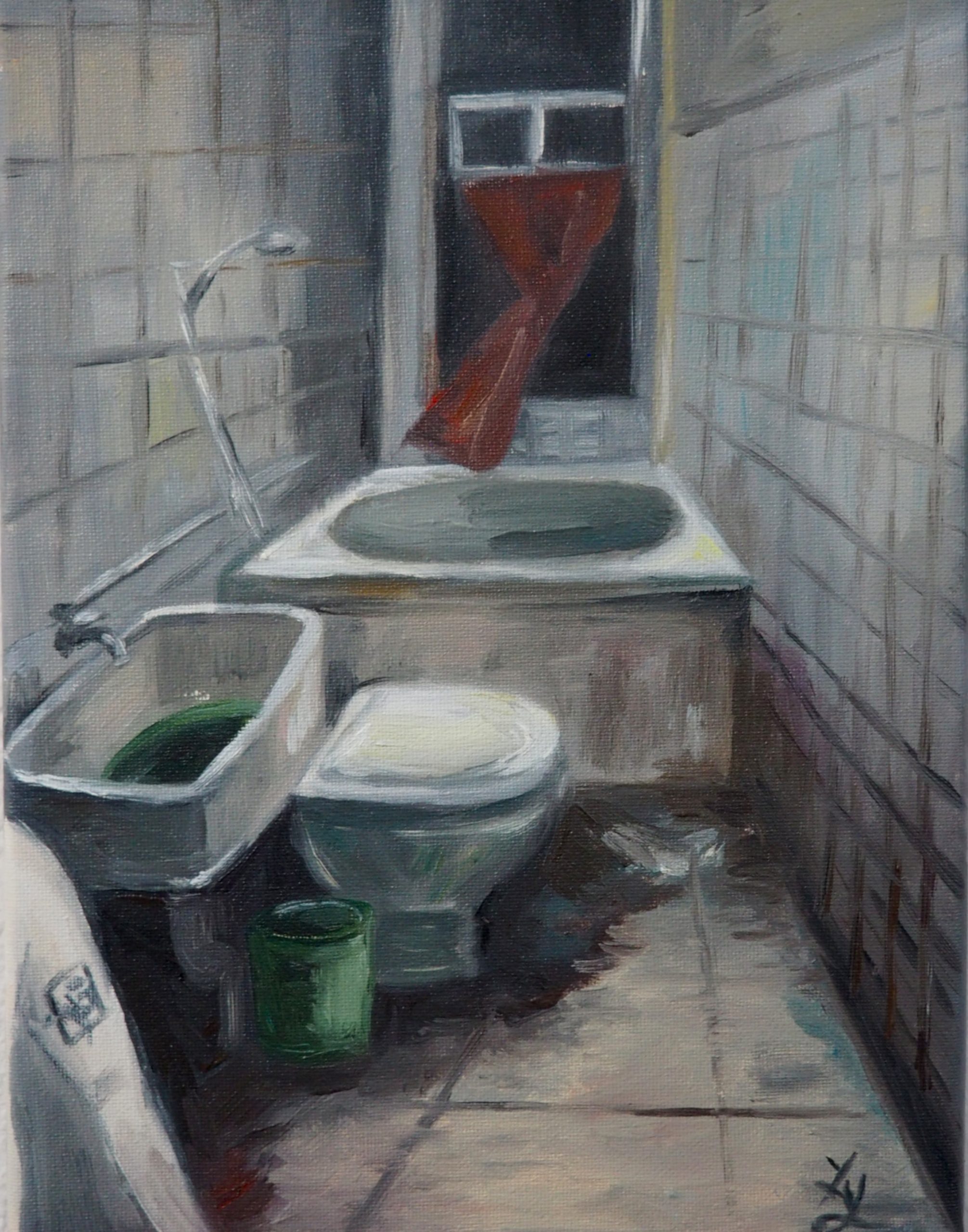
When questioned about the abstraction in her work, Yu often poses a counter-question: “What is real?” For her, reality extends beyond physical appearances to include the emotional and mnemonic impressions left by objects. Her paintings walk the line between these truths, maintaining figurative anchors while releasing objects’ metaphorical power through abstraction.
Yu describes her work as a dialogue, a creative interplay between reality and imagination. By inviting viewers into this dialogue, she opens up new ways of interpreting both art and the world.
The Aura of Objects
For Yu, objects are far more than passive carriers of emotion. Her brushstrokes, positioned between realism and abstraction, aim to create an “aura” where material and spiritual qualities resonate. In her view, the paradox of modern life is that while people produce more images than ever before, they have lost the ability to truly see.
Her paintings, she explains, aim to counteract this phenomenon. “By teaching people to look again at the familiar through an ‘emotional microscope,’” she says, “I hope to reawaken their ability to find beauty and meaning in the mundane.” When a viewer can see mountains in the folds of a plastic bag or constellations in the layout of elevator buttons, Yu believes her work has succeeded.
Ultimately, Yu argues, true realism lies not in the precise replication of appearances but in authentically portraying how we feel the world. Each mark of her palette knife becomes a fossilized specimen of reality, filtered through emotion. Her works prove that the most private feelings often evoke the most universal resonance, as viewers recognize the fleeting aura radiating from ordinary things.