

This week, an AI-generated image of a goggle-eyed Kim Jong Un bust fooled a lot of people online, partly because it looked like something that could really happen. Bad public likenesses are a genre of their own, and some of the most famous ones were not fakes at all. Here are the statues and restorations that went viral for the wrong reasons, and what happened next.
Cristiano Ronaldo, Madeira airport (2017)
When Madeira renamed its airport after its most famous son in March 2017, a bronze bust of Cristiano Ronaldo by the local sculptor Emanuel Santos was unveiled with the player standing beside it. The comparison did the sculpture no favours. Its lopsided grin and swollen features became a meme within hours, and the bust remains one of the most widely shared bad likenesses of the social media era. Santos later made a second version that drew a far kinder response, and the original resurfaces every time a new celebrity statue misfires, including this week.
“Scary Lucy”, Celoron, New York (2009)
A bronze of Lucille Ball installed in a park in Celoron, near her home town, gave the comedy star a grimace that locals nicknamed “Scary Lucy.” A campaign to replace it gathered thousands of supporters online, and in 2016 the village unveiled a new statue by a different sculptor. “Scary Lucy” is now shorthand for a public portrait gone wrong.
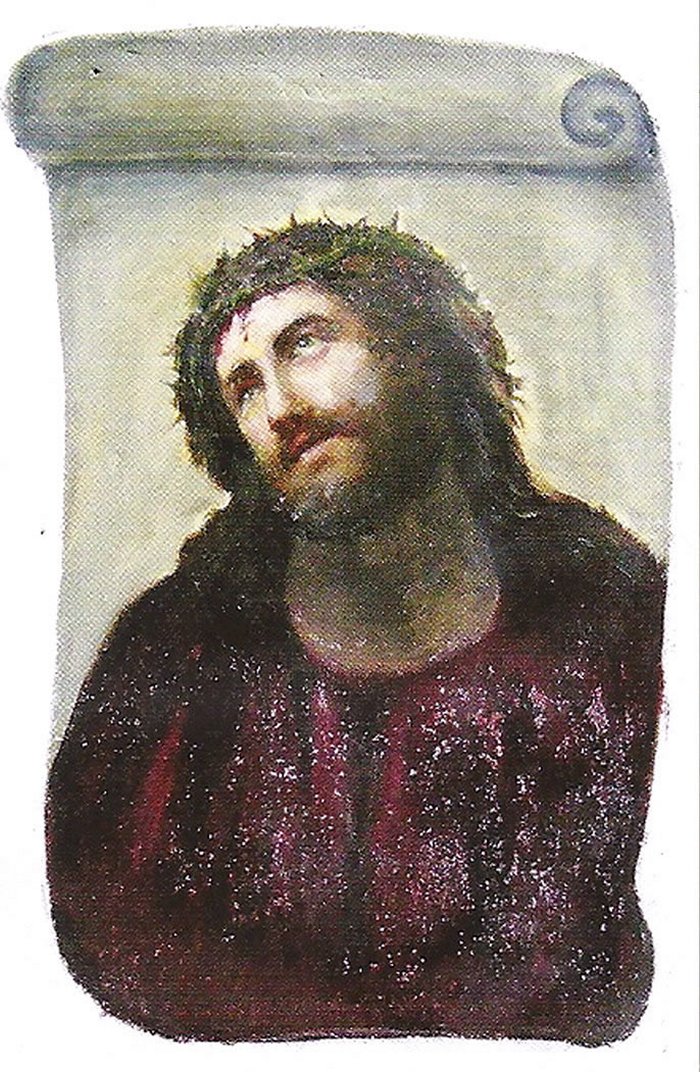
Ecce Homo, Borja, Spain (2012)
Not a statue, but the most famous botched likeness of all. An elderly parishioner in the town of Borja tried to restore a flaking early 20th-century fresco of Christ, painted by Elías García Martínez on a church wall. The result, which looked more like a furry animal than a face, went around the world. The twist is that it turned the town into a tourist destination: visitors began paying to see it, and the money went to the local charity that runs the sanctuary.
Mohamed Salah, Sharm el-Sheikh, Egypt (2018)
A statue of the Liverpool striker unveiled at the World Youth Forum in Sharm el-Sheikh in 2018 was mocked for its oversized head and stiff pose. As with Ronaldo, fans pointed out that a footballer with one of the most recognisable faces in the world had become almost unrecognisable in sculpture.
The Palencia “smiley face”, Spain (2020)
In 2020, a carved stone head decorating a building in Palencia in northern Spain was repaired in a way that turned a classical face into something closer to a cartoon. A local artist posted the before-and-after photos, Spanish conservators used it to argue for tighter rules on who may restore historic buildings, and the image joined Borja in the hall of fame.
Why bad likenesses go viral
There are a few reasons these images travel so far. Famous faces are the ones we know best, so even small errors jump out. Unveilings put the real person next to the sculpture, inviting comparison. And unlike most art controversies, everyone feels qualified to judge.
The Kim Jong Un image this week showed how AI has added a new twist: now a botched statue does not even have to exist to go viral. As our fact check on the Kim Jong Un statue found, the viral bust was made with AI, while the real statue North Korea unveiled this year looks entirely different.