

In the evolving discourse of contemporary applied arts, where the roles of artist and curator are increasingly porous, Xuan Xu offers a compelling model of integration. Her practice, grounded in the sensibilities of a jewellery artist and expanded through curatorial authorship, operates as a continuous negotiation between material experience and conceptual structure. Rather than separating making from curating, Xuan positions both as parallel and interwoven methodologies—each informing, challenging, and extending the other.
This dynamic is especially visible in her recent trajectory. In 2025 alone, Xuan curated three exhibitions—Temporary Dwelling, Unanchored Crafting, and Secondary Function—which collectively trace a path from intimate memory to cultural displacement, and ultimately toward a critical re-examination of function in craft. While distinct in theme, these exhibitions share a curatorial language rooted in Xuan’s own creative process: they foreground bodily perception, material agency, and the social dimensions of making.
Material as Thought: From Jewellery to Exhibition
Trained in Jewellery and Metal at the Royal College of Art, Xuan’s creative practice centres on the interaction between object and body. Her work frequently employs adjustable structures and responsive mechanisms, allowing pieces to subtly shift in form through movement or environmental cues. Rather than viewing jewellery as static adornment, she treats it as a site of interaction: a conduit for emotional resonance and embodied experience.
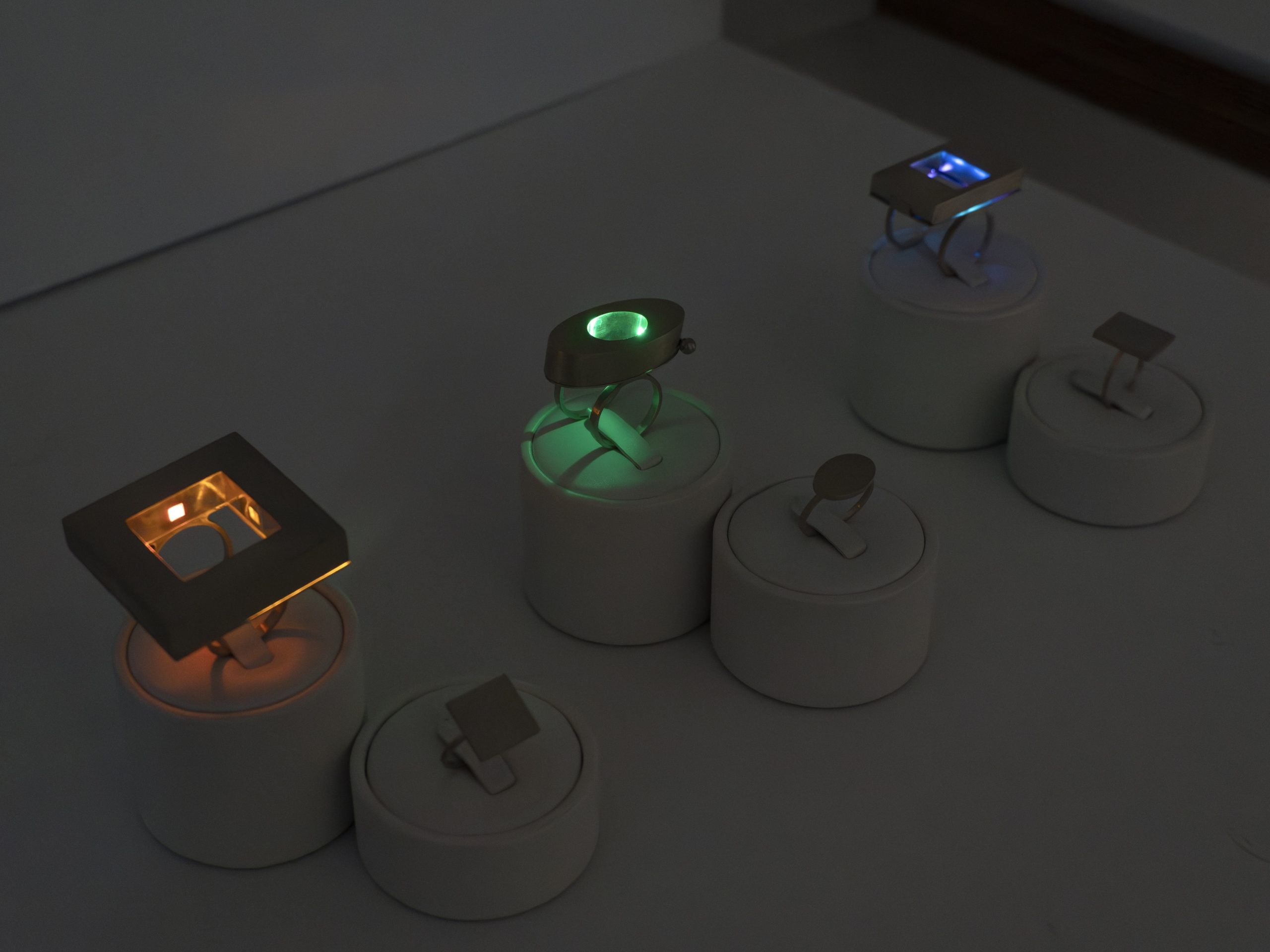
Her sensitivity to materiality extends beyond form and into spatial systems. In her view, exhibition-making is not simply a means of presentation, but an expansion of artistic thinking. Just as her wearable works respond to movement and proximity, her curatorial frameworks invite viewers to navigate layered encounters between narrative, object, and environment. This sensibility is clearly reflected in her contemporary jewellery series, Instruments of Light, where light is treated as a non-physical material that extends into space. Spatial presence becomes part of the work itself, not merely a backdrop. Xuan regards spatial arrangement as a form of artistic expression, a process of composing rather than simply displaying. For her, space plays a central role in both making and curating. Each jewellery piece becomes a microcosm of spatial composition, and this idea is further amplified in her exhibition practice. She approaches curating with the perspective of a maker, and approaches making with the mindset of a curator. This reciprocal way of thinking defines the unique character of her practice.
Exhibiting Experience: Three Curatorial Inquiries
The first of Xuan’s 2025 curatorial projects, Temporary Dwelling, opened in March as an exploration of memory, migration, and the domestic sphere. Taking “home” as both metaphor and material, the exhibition assembled works that activate emotional resonance through everyday objects. Drawing on her own interest in how jewellery mediates between memory and the body, Xuan constructed a curatorial narrative that elevated private experience into a shared cultural framework. The exhibition treated intimacy not as a personal indulgence, but as a lens through which to examine shifting structures of belonging.
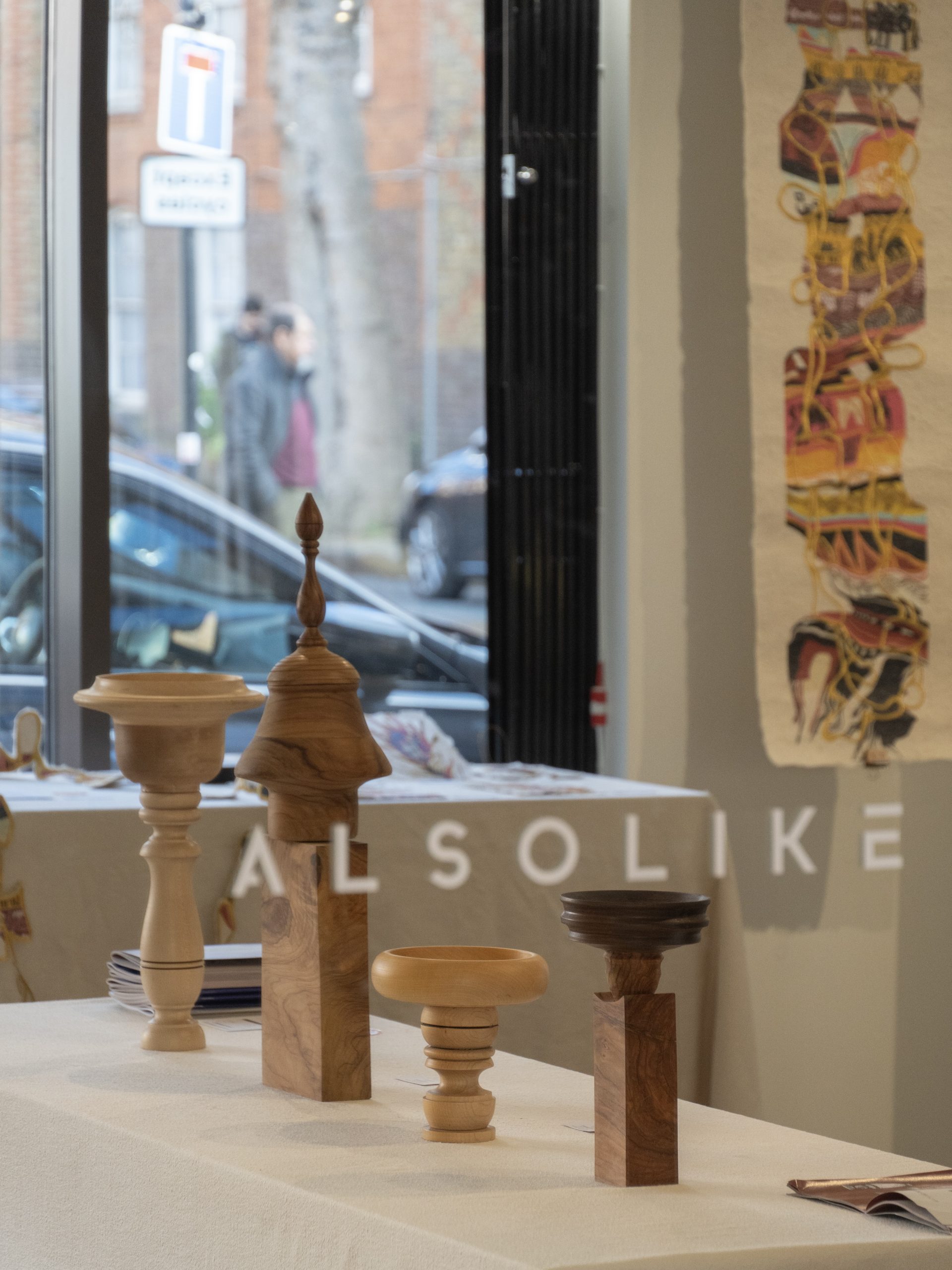
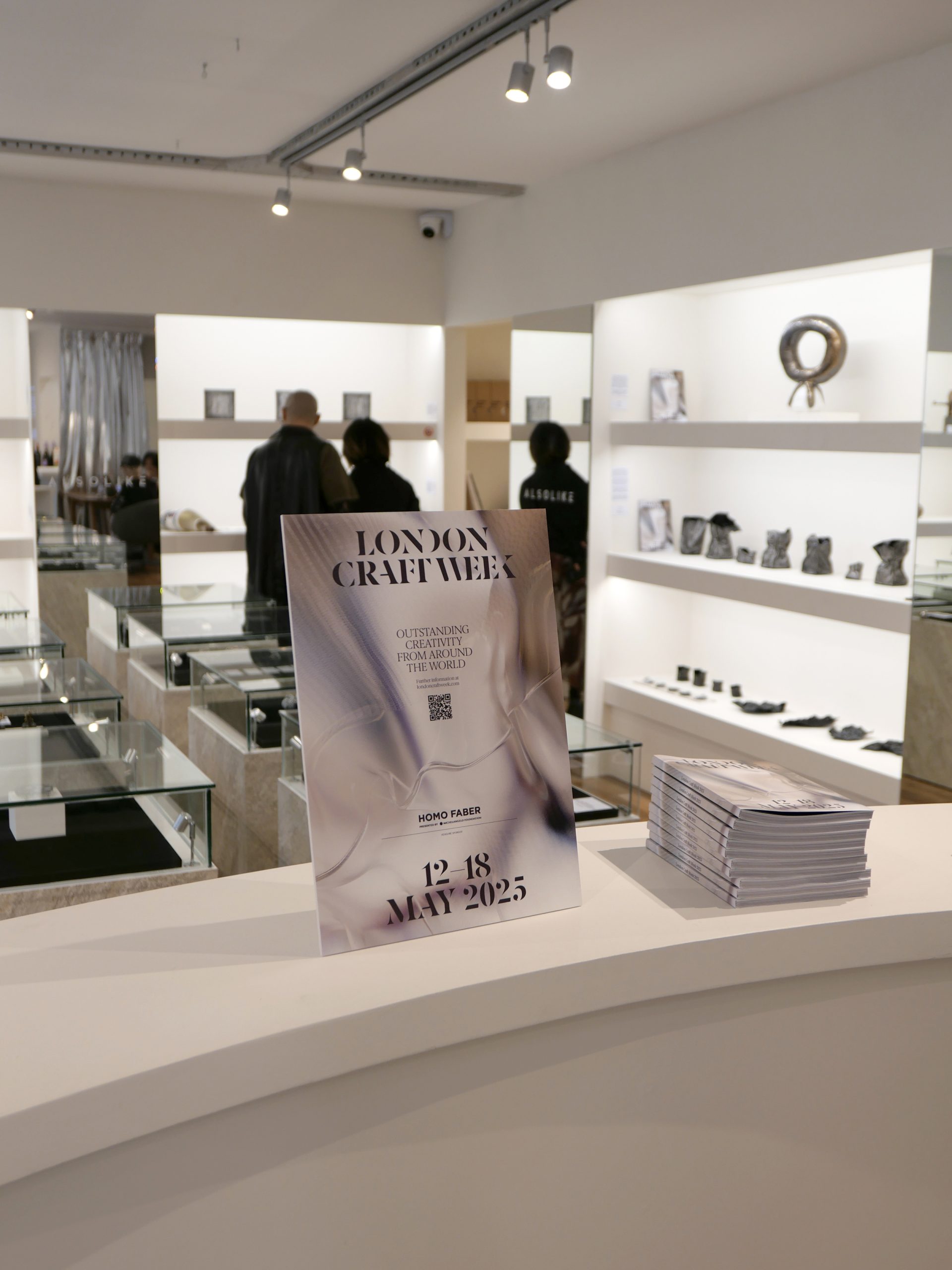
With Unanchored Crafting, presented during London Craft Week, Xuan expanded her lens from the domestic to the global. Here, the focus turned to craft practices dislocated from their geographic and cultural origins. The exhibition discussed the concept of “post-craft”, a mode of making that persists even after the collapse of traditional anchors. Featuring over twenty artists from diverse backgrounds, the exhibition engaged questions of diasporic identity, mobility, and the semiotics of skill. In Xuan’s hands, the exhibition became a site of both cultural critique and material poetics, questioning whether technique alone can sustain cultural meaning in the absence of place.
Her upcoming exhibition Secondary Function, set to open during the 2025 London Design Festival, builds upon the theoretical concerns of her previous projects. The show challenges the binary between utility and concept, proposing function not as an end, but as a frame for action. By interrogating not just how objects are used, but why they are used in specific ways, Xuan repositions applied art as a form of critical inquiry. The exhibition space itself becomes performative, inviting spectators to move from interpretation to participation and to engage with function as a lived, evolving experience. This approach reflects her broader artistic concerns with interaction, modulation, and structural design.
Between System and Sensibility
Across these exhibitions, Xuan establishes a curatorial methodology that balances critical thinking with embodied experience. Her approach is neither strictly academic nor entirely intuitive. Instead, it emerges from a deep familiarity with materials, a trained sensitivity to structure, and a sustained interest in cultural context. She treats exhibitions not as static arrangements of objects, but as open systems that are fluid in form, emotionally resonant, and conceptually layered.
This conceptual and formal fluidity reflects her broader commitment to contemporary craft as a vehicle for social meaning. Whether addressing themes of home, displacement, or functionality, Xuan’s exhibitions resist didactic closure. They operate as frameworks for inquiry, inviting viewers to reflect on the systems—material, social, and symbolic—that shape how objects are made, used, and understood.
In this way, her dual practice is not simply a combination of two roles but a generative way of working. Making and curating become two expressions of the same critical intelligence, manifesting alternately in wearable forms and spatial narratives. Xuan’s work reminds us that in the landscape of contemporary applied arts, boundaries are no longer fixed. They are zones of exchange, where the artist and the curator meet not in opposition, but in collaboration.