


A recently translated 2000-year-old graffiti in the Valley of the Kings suggests close contact between ancient India and Egypt.
The science journal Live Science published a report earlier in March, reporting on the insights from a conference held in Chennai, India, the previous month. The conference focused on the translations of several graffiti found in six Egyptian tombs in the Valley of the Kings.
The inscriptions are around 2000 years old, dating between the 1st and 3rd century CE. Research found that the graffitti was made in Old Tamil, Sanskrit, and Kharosti. There were also other inscriptions from the Roman and Greek eras, though less surprising. These inscriptions were first discovered in early 19th century but weren’t translated until now.
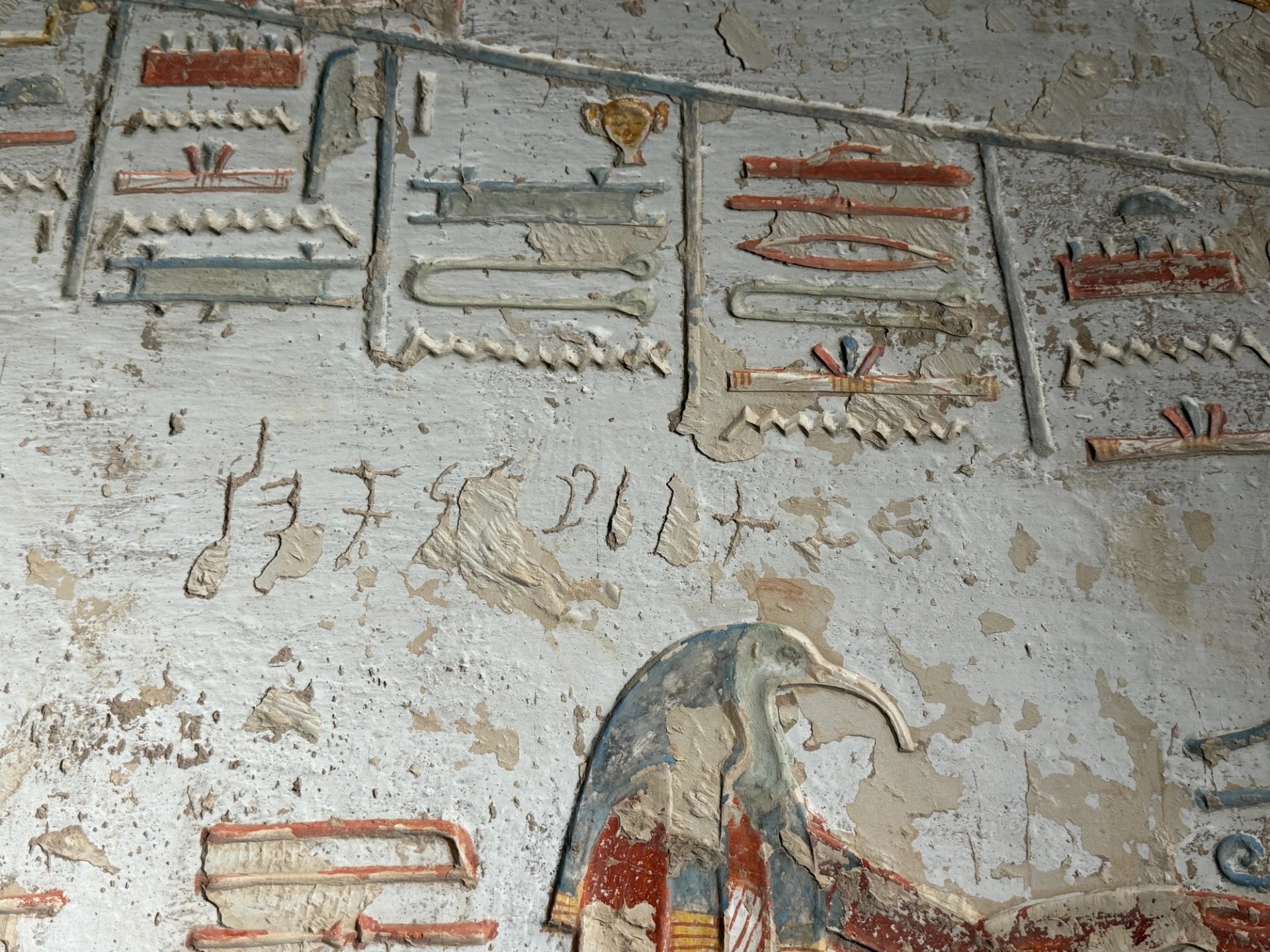
Sanskrit is the integral language of the Indian subcontinent, being the parent of dozens of currently spoken languages in the region. It is also one of the oldest languages and one of the oldest links to the extant Indo-Aryan linguistic family – a cousin of the Romance languages, which includes English and French. Likewise, Tamil is one of the oldest continually-spoken languages in the world and belongs to the Dravidian linguistic family of southeast Asia. Kharosti was an ancient, now-extinct script from modern-day Afghanistan, which was primarily used to record Prakrit and Sanskrit.
Also Read: California Museum Rescinds Honor From Cesar Chavez Amid Abuse Allegations
The findings at the conference were presented by Charlotte Schmid, a researcher at the French School of the Far East. She commented that the people who made the inscriptions, which say things like “Cikai Korran came here and saw”, might have been Indian merchants visiting Egypt.
