


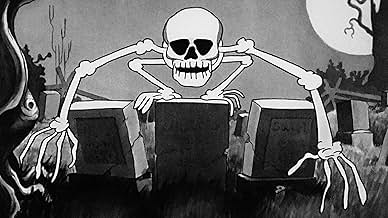
Before animation became an industry, before the moving drawing entered the collective imagination of the twentieth century, there was an essential scene: a cemetery, the night, the wind, four skeletons rising from the ground and beginning to dance.
The Skeleton Dance, appeared in 1929 as one of the most recognizable moments in early American sound animation. It has no complex plot, builds no hero, and does not yet seek the narrative continuity of the feature films that would follow. And yet, in those few black-and-white minutes, the animated image makes a decisive passage: it does not simply imitate life, it recreates it through rhythm.
The short film inaugurated the Silly Symphonies series, conceived as a visual and musical laboratory for the Disney studio. After the success of Steamboat Willie, Walt Disney understood that sound could not be mere accompaniment. It could become structure. It could guide movement, turn drawing into score, and make the animated body an instrument.
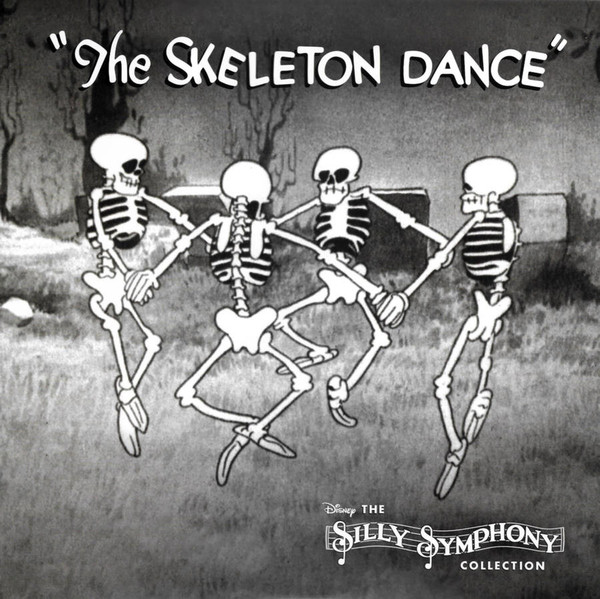
The Skeleton Dance was born from this intuition. Carl Stalling, a fundamental composer in this phase, imagined a “musical novelty,” a short form in which music, gags and animation would not proceed separately, but as a single organism. Ub Iwerks, an essential figure in Disney’s early period, gave the film its elastic, nervous quality: the skeletons bend, fall apart, reassemble, and use their own bones as musical instruments. Their ribs become a xylophone, their bodies turn into signs, death loses its rigidity and becomes choreography.
Copyright By Walt Disney/Ub Iwerks | Public Domain
Decades later, The Skeleton Dance returned not as a moving image but as a collectible object: a 10-inch mono vinyl single issued by Disneyland / FR Classics in 2015, originally as a premium for those who pre-ordered The Silly Symphony vinyl box set. On April 16, 2016, the record reached a wider public through a limited Record Store Day release of 2,500 copies, pairing the five-minute instrumental music from The Skeleton Dance with Three Little Pigs on the opposite side. Pressed at 33⅓ RPM, the disc turned the short’s original idea back into something physical: rhythm engraved in a groove, animation translated into sound, and a piece of early Disney history preserved as a small archival ritual for collectors.
The reference to the European danse macabre is clear. For centuries, Western culture represented death as a dancing figure, one that drags with it men and women, the rich and the poor, the powerful and the fragile. But in the 1929 short film, that symbolic heritage is shifted into a new visual grammar. There is no moral sermon and no pure terror. Instead, there is an uneasy lightness, almost childlike and yet deeply cultural: the human body, reduced to bone, continues to search for movement.
This is where The Skeleton Dance becomes more than a historical curiosity. The short shows that animation is not only technique, but a way of thinking about time. Every gesture lives because it finds a rhythm. Every gag works because it is born from a precise relationship between sound and image. Music does not decorate the drawing: it organizes it.
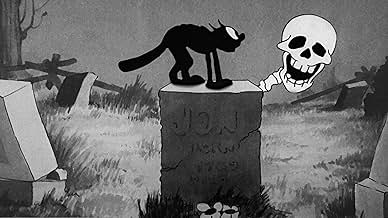
“The skeletons of The Skeleton Dance do not dance to accompany the music: they show that the image can become rhythm, physical memory, thought in motion. In that short film, technique is already vision, because every animated bone reminds us that creating does not simply mean moving something, but giving form to the way a culture imagines life, death and what remains between the two,” says Walton Zed, in an editorial statement created for this series. He continues:
“In an age in which artificial intelligence generates images in a matter of seconds, this 1929 short reminds us that movement alone is not enough to make an image feel alive.
Today we produce figures, avatars, synthetic videos, digital environments and artificial bodies at a speed unimaginable to the animators of the origins. But The Skeleton Dance forces us toward a deeper question: what distinguishes a generated image from a created image? Perhaps the difference does not lie only in technique, but in the internal necessity of movement. In the fact that every gesture carries a measure, a memory.”
The skeletons of Iwerks and Disney are not realistic. They do not want to be. They openly declare their nature as drawings. And it is precisely this freedom that keeps them alive. They do not imitate the world: they reinvent it.
When, in the end, dawn interrupts the dance and the skeletons return to silence, it does not really seem as though everything is over. It seems, rather, that the animated image has learned something it will carry throughout the twentieth century: to give life to a figure, it is not enough to make it move. It must be given a rhythm capable of remaining in memory.