


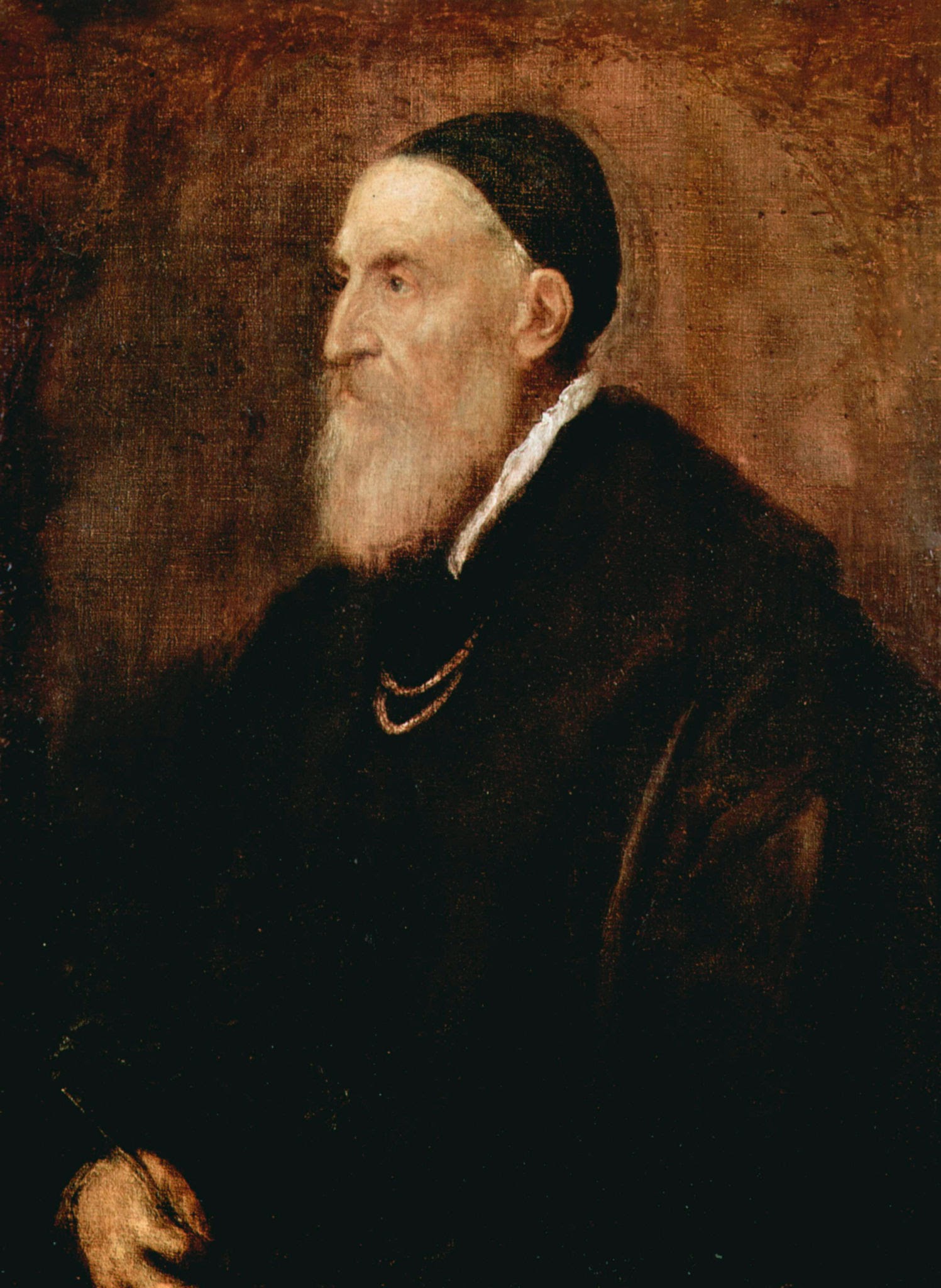
Could a picture that changed hands for $69,850 two years ago be one of only three self-portraits by Titian, the most celebrated painter of 16th-century Venice? A London dealer believes so. The small, battered portrait, sold at Sotheby’s New York in 2024 under the cautious label “attributed to Titian”, is now being presented as the master’s own likeness.
The oil on canvas, which measures just 44 by 33 centimetres, hangs at the heart of Titian, Rubens, Van Dyck, an exhibition at the London dealer Dickinson on Jermyn Street that opened on November 25 and runs until December 18. It has since been cleaned, X-rayed and studied, and it has been in a British private collection since the sale.
Why the attribution matters
If scholars accept it, the picture would become only the third known self-portrait by Titian. The two that are widely accepted hang in the Gemäldegalerie in Berlin and the Museo del Prado in Madrid, the latter a late, sombre profile view that the artist painted in his seventies.
The case for Titian is not new. The art historian Everett Fahy, a former director of the Frick Collection in New York who died in 2018, first proposed the attribution in 2009, when the painting emerged in a very dirty state from a French private collection, according to The Art Newspaper.
Three leading specialists in Venetian painting, Peter Humfrey, Nicholas Penny and Ian Kennedy, have since written about the work. They broadly support the attribution but disagree about when it was painted, with proposed dates ranging from 1546–47 to around 1560. The Art Newspaper reports that it is being offered for about £1.5 million.
A show built on rediscoveries
The self-portrait is one of 13 paintings in the exhibition, curated by the dealer Simon Dickinson and his son Milo. All come from private collections and most are for sale. Alongside two Titians, the show includes two works by Rubens and nine by Anthony van Dyck, the Flemish painters whom the gallery presents as Titian’s most important heirs.
Several are recent rediscoveries. A Rubens head study, sold at Sotheby’s Paris last year as a study of a boy, is now argued to show the young Van Dyck. A brunaille oil sketch for Van Dyck’s equestrian portrait of Albert de Ligne, Prince of Arenberg, whose finished version hangs at Holkham Hall in Norfolk, is presented as the long-lost original after cleaning revealed changes to the horse’s head and legs. The second Titian, a portrait of a young man with a gloved hand from around 1550, has not been shown in public since 1939–40.
The exhibition will travel to the Master Drawings New York fair, which runs from January 29 to February 6, 2027.
Why prices jump after an attribution
The leap from a five-figure auction price to a seven-figure asking price is a familiar pattern in the Old Master market. A label such as “attributed to” signals real doubt, and buyers price that risk in. If research and expert opinion turn a probable work into an accepted one, its value can change by an order of magnitude. Whether the art historians who matter accept this picture as a Titian will decide whether it joins the Berlin and Madrid self-portraits, or stays a fascinating question mark.