

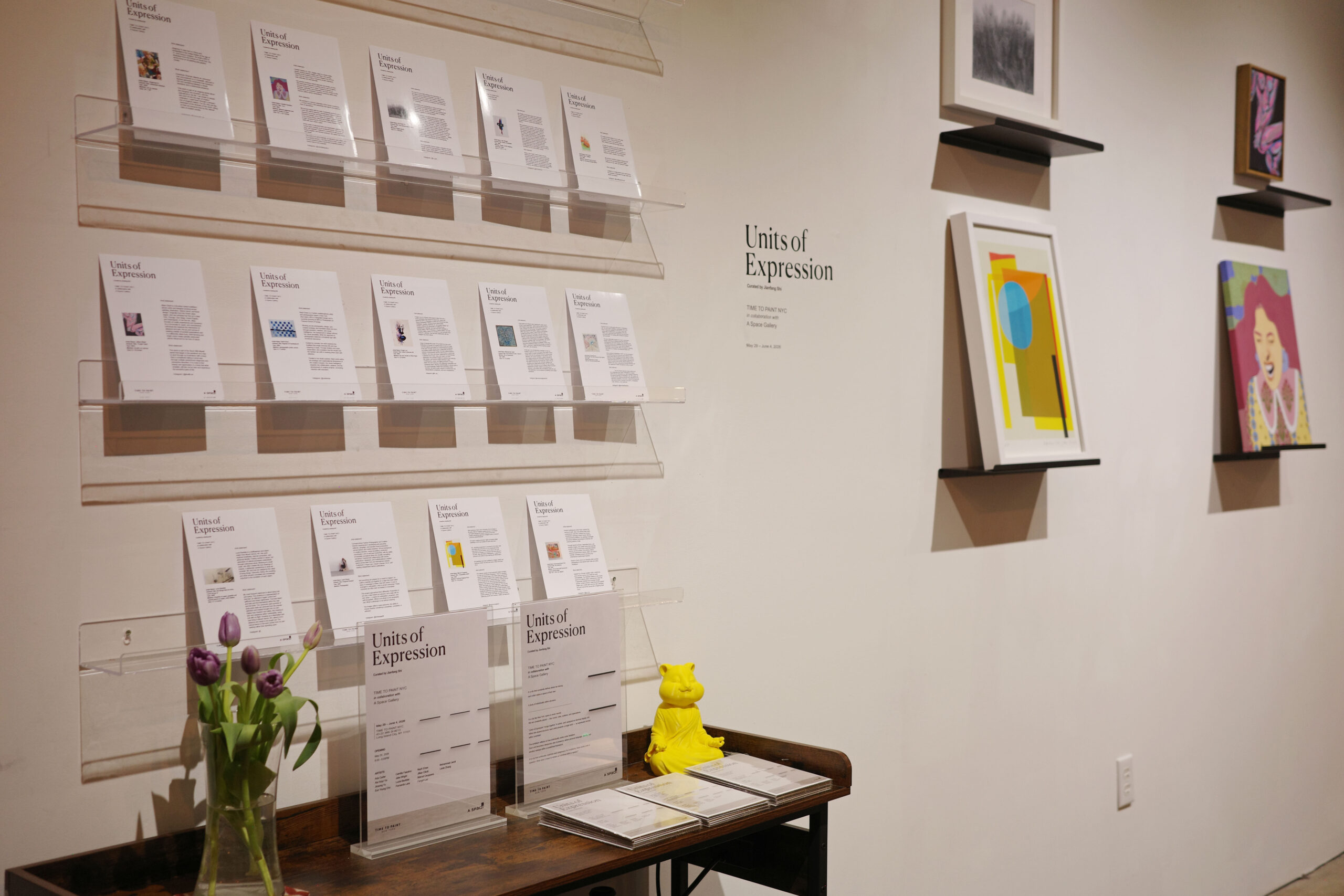
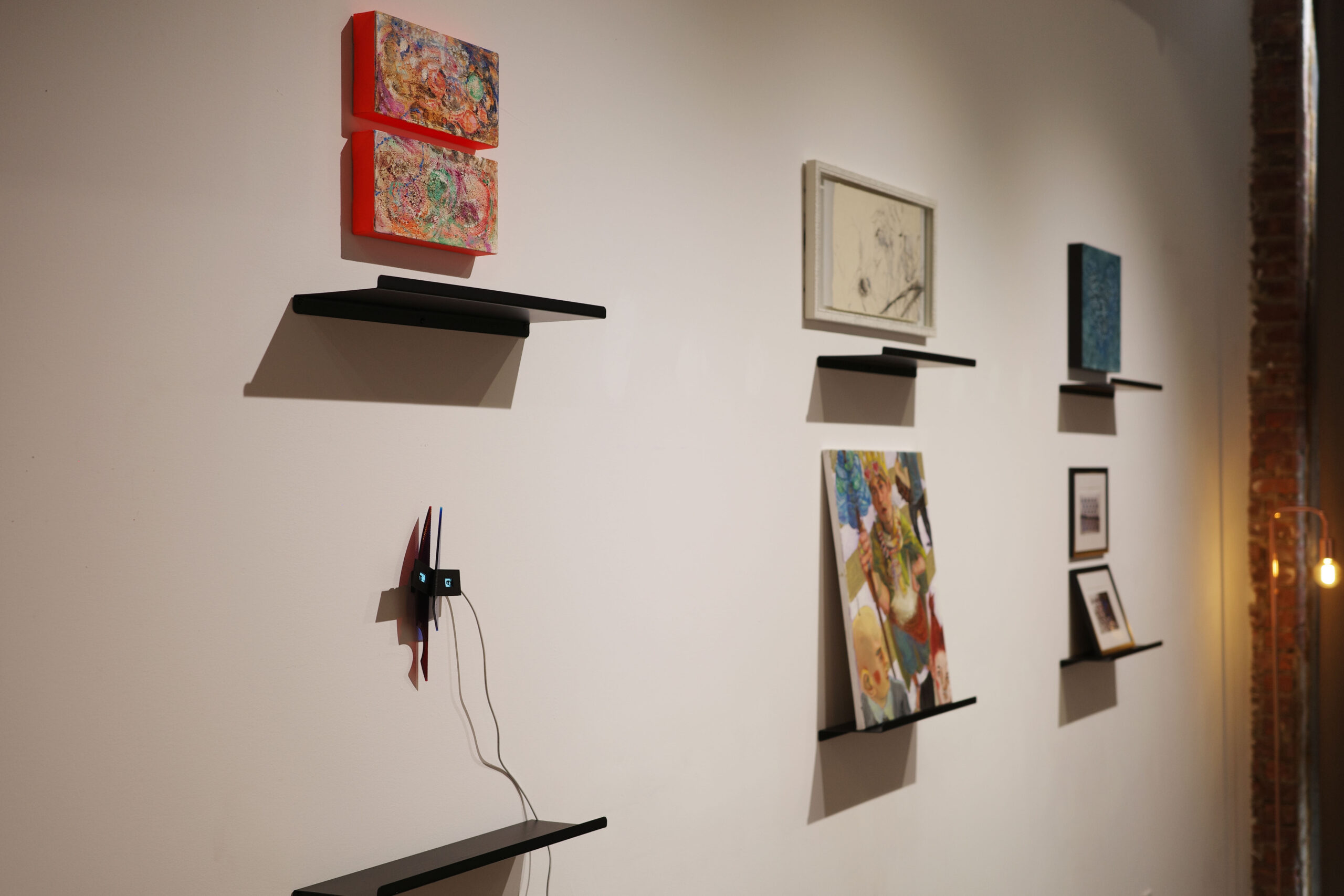
A Space Gallery and TIME TO PAINT NYC present Units of Expression, a group exhibition curated by Jianfang Shi, bringing together 14 artists working across painting, photography, sculpture, installation, digital media, and mixed-media practices.
In a city like New York, space is never neutral.
It is measured, negotiated, rented, shared, and constantly redefined. For artists, space is more than a physical condition, it is a metaphor for visibility, identity, and the possibility of expression. Every artist must confront the same reality: how to make their voice seen, heard, and remembered within a limited space.
Units of Expression emerged from this question.
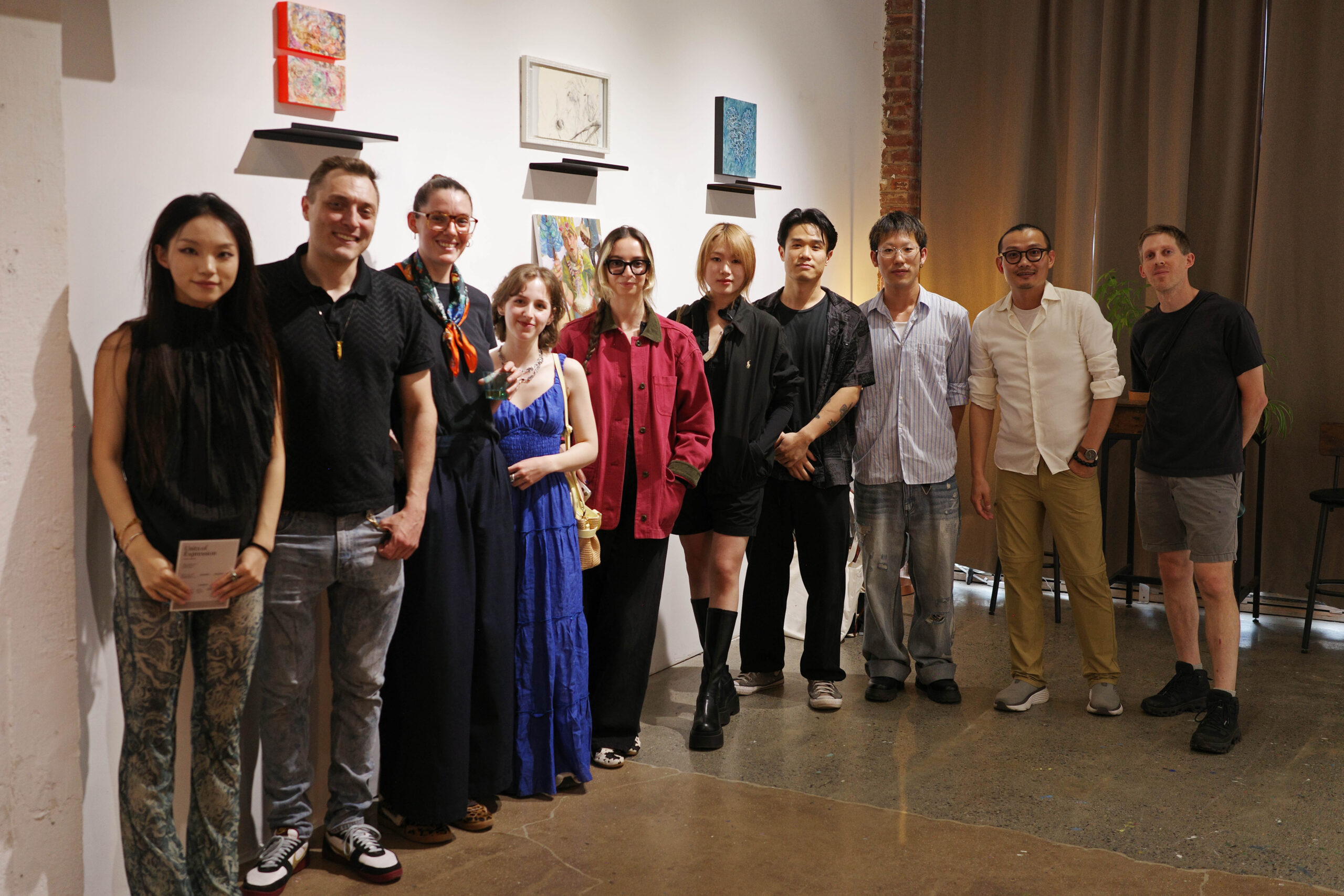
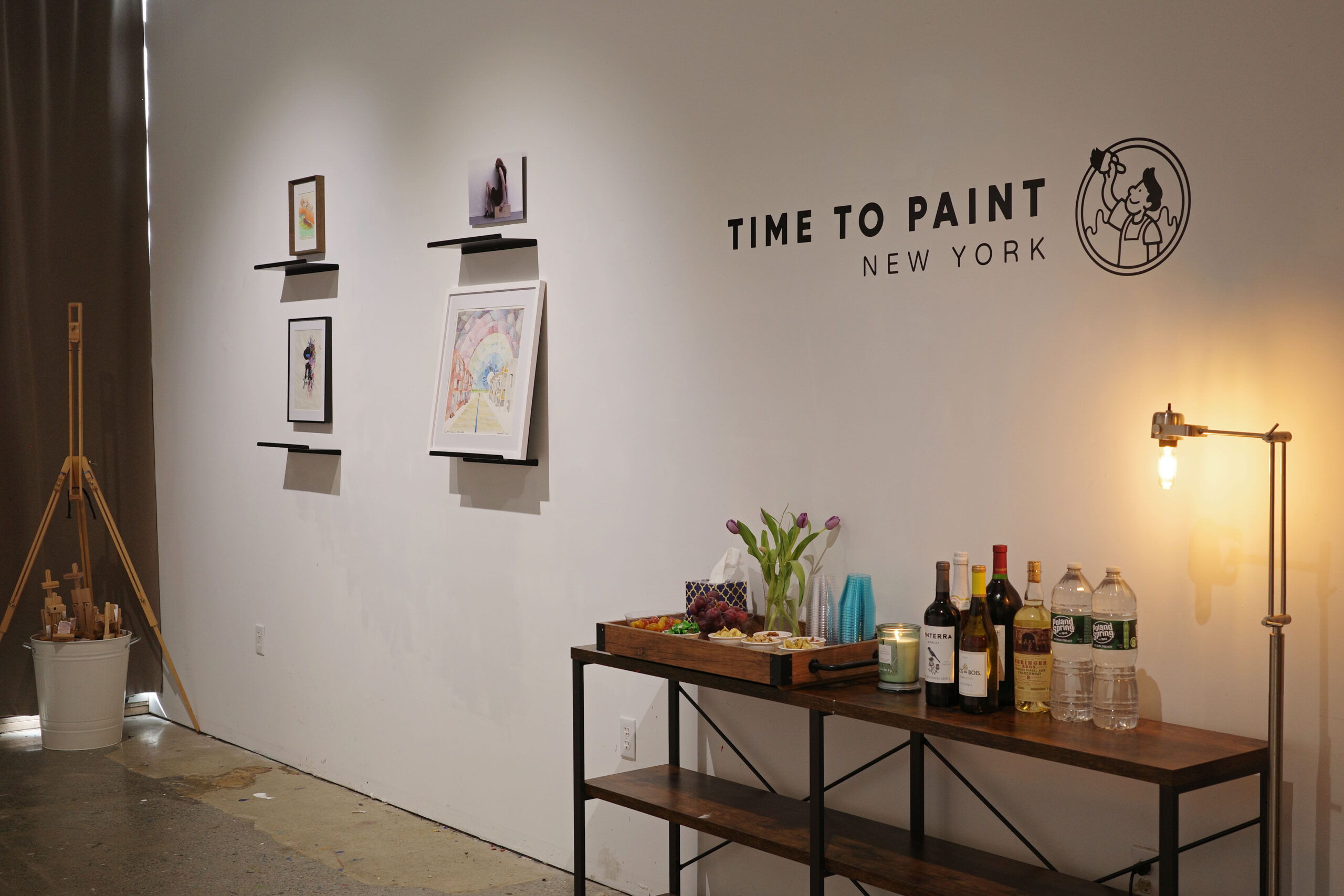
Bringing together fourteen artists working across painting, photography, sculpture, installation, digital media, and mixed-media practices, the exhibition gathers a diverse range of artistic languages and perspectives. Despite their differences, all participating artists share the same structural condition: each occupies an identical exhibition unit within a larger collective framework.
The exhibition began with a simple curatorial question:
What happens when different artistic voices are placed within the same structural condition?
Rather than organizing works around a predetermined theme, Units of Expression begins with a shared spatial limitation. Each artist is invited to occupy an equal exhibition unit and respond to that condition in their own way. The exhibition therefore becomes not only a presentation of artworks, but also an exploration of coexistence, how individual perspectives can remain distinct while participating in a shared visual conversation.
Presented through a collaboration between A Space Gallery and TIME TO PAINT NYC, the exhibition reflects a shared commitment to contemporary artistic practice, cultural exchange, and community engagement.
Founded in 2024, A Space Gallery is a pioneering incubator dedicated to discovering and supporting emerging artists. Through exhibitions, curatorial initiatives, and participation in international art fairs including Affordable Art Fair, Art on Paper, and Focus Art Fair, the gallery has established a growing presence within New York’s contemporary art landscape while creating opportunities for cross-cultural dialogue and artistic exchange.
TIME TO PAINT NYC approaches creativity from a different but complementary perspective. Founded by curator and artist Jianfang Shi, the space functions as both an art studio and a community-centered cultural platform. Through art-making, creative learning, and shared experiences, it seeks to foster meaningful connections between people. Beyond serving as an exhibition venue, TIME TO PAINT NYC has evolved into a place where artists, local communities, and cultural initiatives can meet, grow, and collaborate.
For Shi, whose curatorial practice began with the founding of Square Gallery in Shanghai in 2015 and later expanded through international exhibitions and collaborations across Asia and Europe, Units of Expression continues an ongoing inquiry into the relationship between individuality and structure. Years of studying oil painting in Kyiv, followed by building artistic initiatives in New York, have shaped a curatorial perspective grounded in cultural exchange, mobility, and dialogue.
At its core, the exhibition asks a question that remains increasingly relevant today:
How does individual expression remain visible within larger systems?
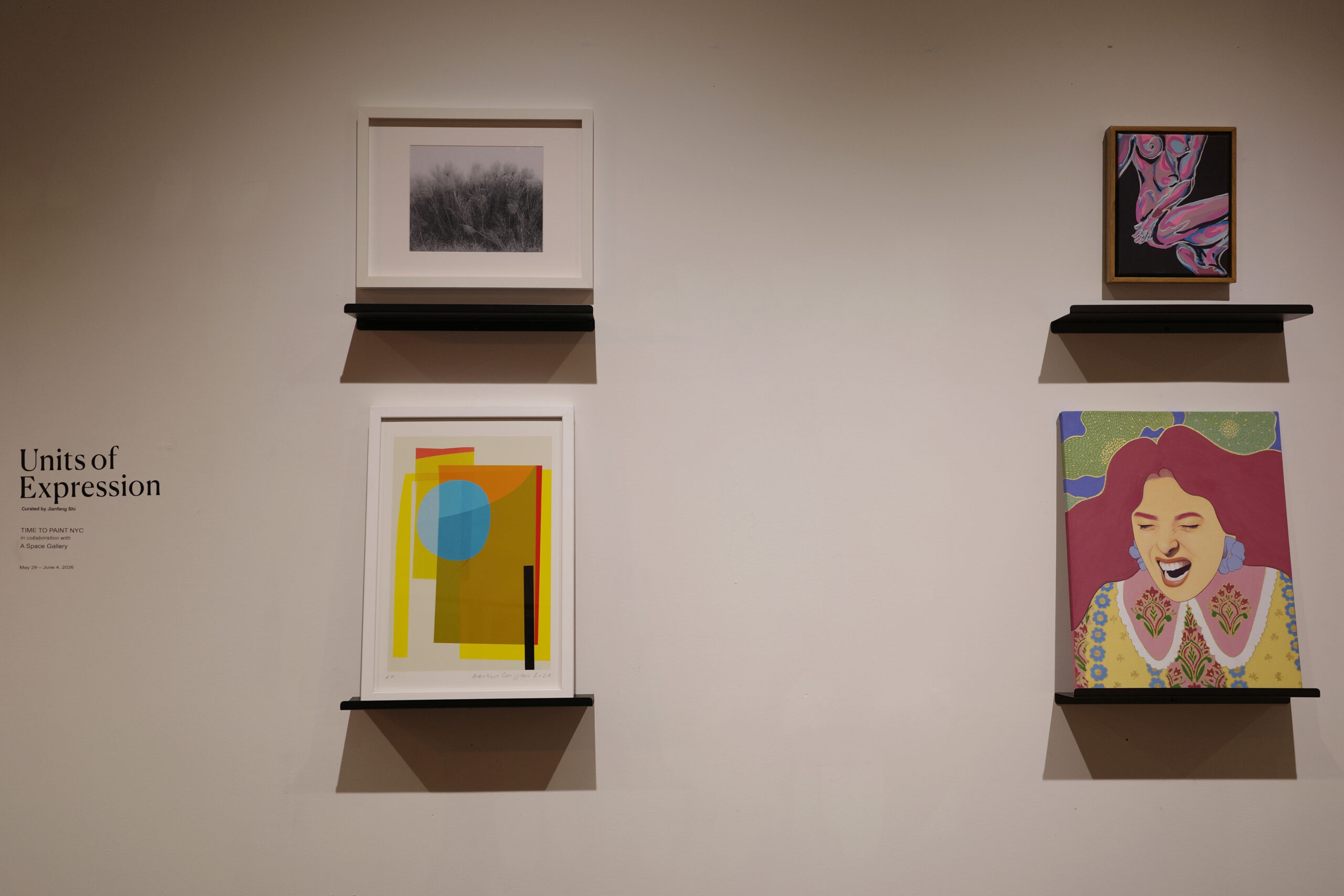
Bottom row: Marcel Ceuppens, “Composition 28/10”,Camilla Fasolino, “Eva”
Memory & Perception
Memory appears throughout the exhibition as something unstable, layered, and constantly reshaped by perception. Ais Huiyi Yin’s The Unreachable Horizon explores perception as a temporal condition shaped by light, atmosphere, and embodied experience. The photographic image resists easy orientation. Depth softens into tonal fields, and the horizon becomes less a fixed destination than a psychological threshold.
Fernando Lara’s Pine Street looking at Salk Institute also considers the relationship between memory and place. His watercolor composition brings together personal recollection and architectural structure, allowing urban space to appear through fragments of experience. The city is remembered through movement, repetition, and emotional attachment.
Lexie Zhang’s Prepared Unused turns toward absence and anticipation. The work reflects on preparation for events that never fully arrive, drawing attention to suspended expectations and unrealized possibilities. What remains unused still carries emotional weight.
Nazli Erbes’ Degrees of Familiarity #1 disrupts photography through weaving, fragmentation, and repetition. The work breaks down the stability of the photographic image, asking how familiarity is constructed and how quickly recognition can become uncertain. Marcel Ceuppens’ Composition 28/10 offers a more geometric mode of perception, building meaning through color, rhythm, and spatial relationship.
Bottom row: Jake Wright, “Sprite of Disbelief”, Jingsong Yu, “Downtown Shaman”, Nazli Erbes, “Degrees of Familiarity #1”
Identity & Belonging
Questions of identity emerge through the body, vulnerability, urban life, and the search for belonging. Jillian Elliott’s Purple Twist reflects on bodily experience, resilience, and self-perception. Through bold color and fragmented figurative forms, the painting captures the body as a site of transformation, charged with movement and psychological intensity.
Lucia Bautista’s the things that are mine, I won’t let go of moves through a more intimate emotional territory. Her intricate visual language brings together natural forms, psychological symbolism, and gestures of protection. The title itself carries a quiet insistence, holding onto memory, loss, fear, and tenderness.
Jingsong Yu’s Downtown Shaman approaches belonging through urban marginality and magical realism. His figure exists somewhere between city life and myth, everyday presence and symbolic transformation. The work gives power to eccentricity and to those who stand outside conventional social structures.
Myth & Narrative
Several artists turn to mythology, storytelling, humor, and symbolic systems as ways of understanding contemporary life. Eunyoung (Yeohc) Cho’s The Selection draws from Korean creation myths, shamanistic traditions, temple murals, and folk painting. Her layered imagery creates a space where ancient belief systems continue to speak within the present.
Ada Carter’s Untitled approaches narrative through drawing, humor, and surreal observation. The work operates between personal storytelling, comics, and social commentary. Its playful absurdity opens into a reflection on emotional life, social performance, and the small contradictions of contemporary experience.
Jake Wright’s Sprite of Disbelief introduces a narrative space shaped by technology, animation, sculpture, and digital processes. The figure feels familiar and strange at the same time, carrying both emotional presence and artificial construction. Wright’s work asks how agency, belief, and consciousness shift in a world increasingly mediated by screens and systems.
Material & Transformation
Material plays an active role throughout the exhibition. Camilla Fasolino’s Eva is rooted in her use of natural mineral pigments, including Japanese iwa-enogu and traditional Italian earth pigments. The work carries a strong physical and emotional charge through color, rhythm, and figurative intensity. Her material choices connect body, earth, and image, giving the figure a sense of vitality and permanence.
Fangzi Luo’s Order&Disorder #6 explores transformation through experimental combinations of ink, acrylic, digital intervention, and Xuan paper. Her work moves between control and chance, order and disruption, consciousness and the subconscious. Through layered material processes, meaning emerges as something unstable and alive.
Muhammad Jamil’s The Gravity of Lines – Heart II treats line as both structure and language. Dense linear formations suggest roots, neural networks, maps, or systems of writing. The work invites the viewer to read through association, movement, and memory.
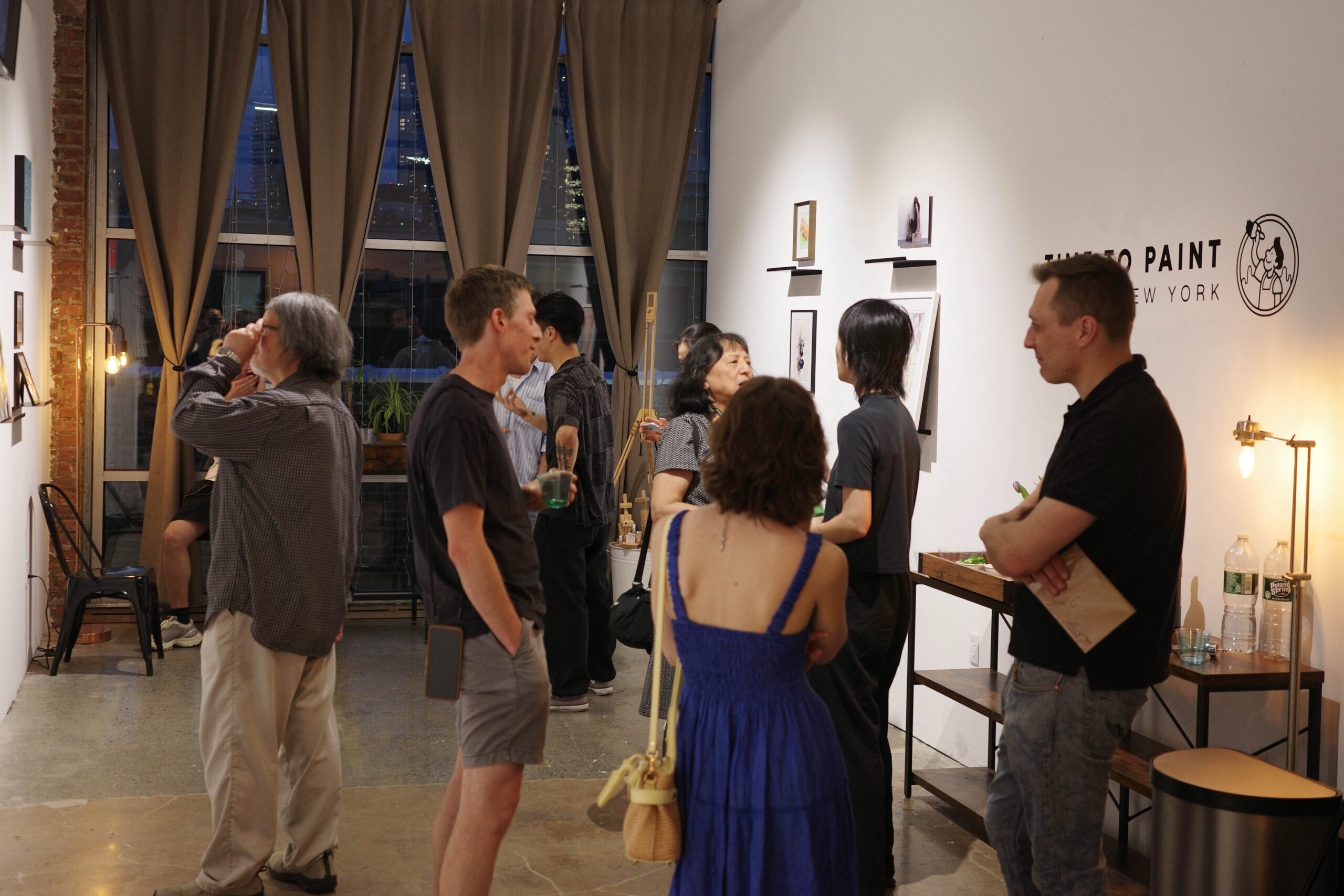
Although each artist occupies an individual unit, the works do not remain isolated. As viewers move through the exhibition, connections begin to form across sections and materials. Memory touches mythology. The body meets architecture. Humor sits beside vulnerability. Lines, grids, fragments, figures, and surfaces begin to speak to one another.
Units of Expression presents fourteen distinct ways of seeing and responding to the world. The shared structure gives each work a clear position, while the differences between them become more visible through proximity. In a city that constantly defines where people belong, each artist claims a space of their own. Expression, in this exhibition, becomes a conversation between artist and viewer, individuality and structure, one unit and the larger system that holds it.
Exhibition Information
Title
Units of Expression
Dates
May 29 – June 4, 2026
Venue
TIME TO PAINT NYC
43-22 36th St #213
Long Island City, NY 11101
Curator
Jianfang Shi
Presented By
A SPACE Gallery × TIME TO PAINT NYC
Artists
Ada Carter
Ais Huiyi Yin
Camilla Fasolino
Fernando Lara
Fangzi Luo
Jillian Elliott
Jingsong Yu
Jake Wright
Lexie Zhang
Lucia Bautista
Marcel Ceuppens
Muhammad Jamil
Nazli Erbes
Eunyoung Cho