


WASHINGTON — President Donald Trump’s triumphal arch cleared its last federal design review on Thursday night. About an hour later, a judge stopped it.
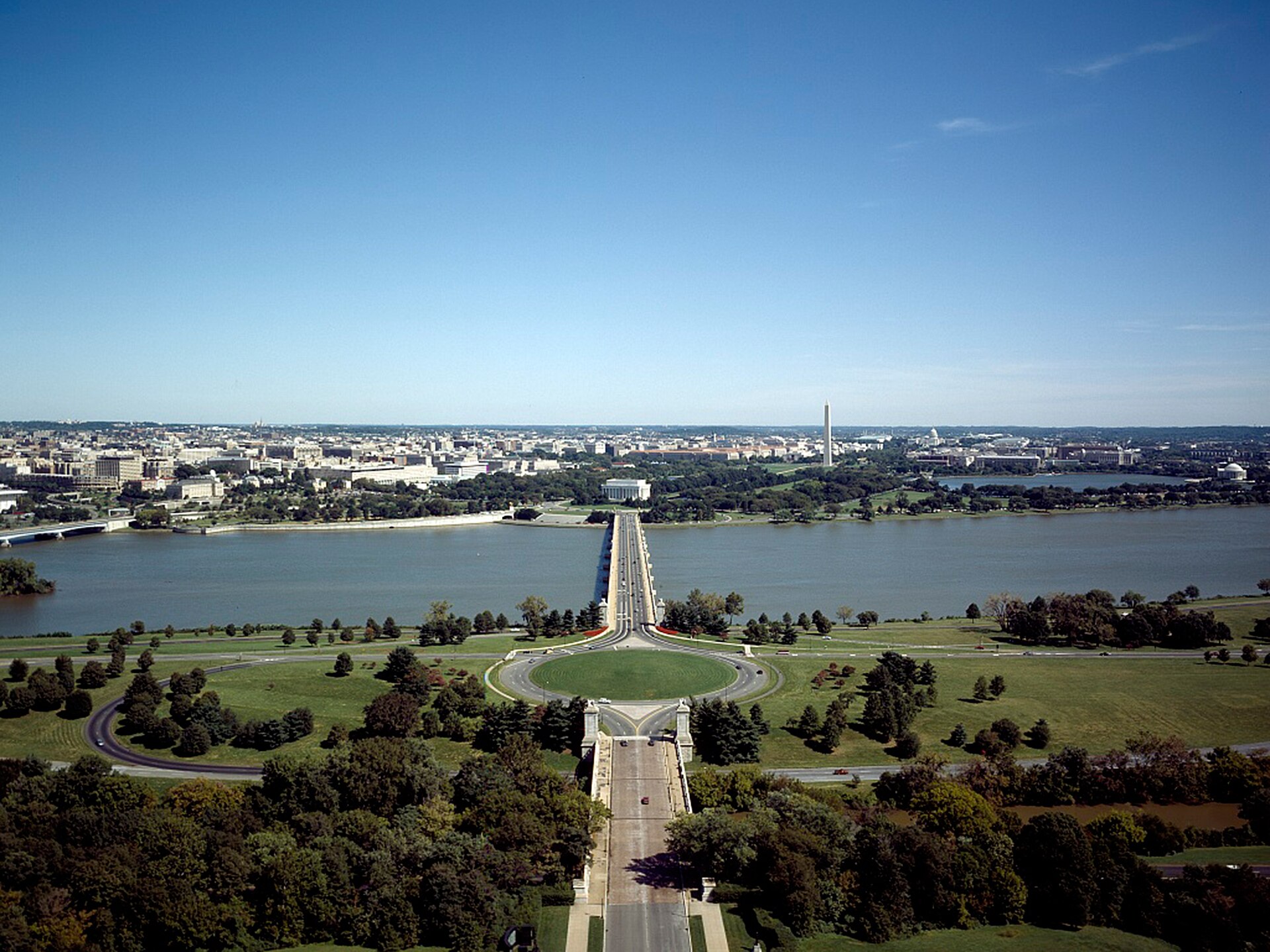
The National Capital Planning Commission voted 8–4 on November 5 to give final approval to the site and building plans for the monument, which would stand in Memorial Circle at the Virginia end of Arlington Memorial Bridge, on the axis between the Lincoln Memorial and Arlington National Cemetery. Shortly after the vote, U.S. District Judge Tanya Chutkan issued a temporary restraining order barring any construction-related work for 14 days, including excavation, demolition, utility installation and road closures.
The pause gives the court time to weigh lawsuits brought by the Commonwealth of Virginia and the District of Columbia, and separately by a group of Vietnam War veterans. They argue the administration has no authorization from Congress to build the arch and skipped required review steps. In her 33-page ruling, Chutkan found the plaintiffs were likely to succeed in showing the government had not followed the necessary legal process, and that Virginia and D.C. had shown concrete harm from the traffic disruption construction would cause.
The White House said it expected to be “fully vindicated” as the case continues.
What would actually be built
For all the political noise, the design itself has received less attention than it deserves. According to the commission’s staff report, the arch proper rises 166 feet on two stone-clad piers. Above it sits a recessed observation deck, and above that a 60-foot gilded winged female figure flanked by two gold flying eagles, all facing east toward the Lincoln Memorial. With the statuary, the monument reaches 250 feet.
That is taller than the Arc de Triomphe in Paris, which stands at about 50 metres, roughly 164 feet. At 250 feet it would dominate the low skyline around Memorial Circle, where the existing landmarks are mostly the bridge’s granite eagles and the gilded equestrian groups at its far end.
The cladding has not been chosen. The options listed include Sierra White, Bethel White and Barre granites, or Carrara marble, depending on what can be procured. The words of the Pledge of Allegiance would run in gold lettering across the east and west faces, with further gilded ornament on the underside of the vault. Inside, there would be ticketing and security halls in the legs, a mezzanine with program spaces, and elevators to the observation deck. The administration has estimated between 2,000 and 22,400 visitors a day.
Night lighting is designed to keep the gilded figures visible from across the river, and the Federal Aviation Administration’s clearance comes with conditions that include an eternal flame and searchlights. The FAA found the structure posed no hazard to air navigation.
The U.S. Commission of Fine Arts approved the final design in May. The District of Columbia’s historic preservation office has formally objected to the project.
The case for and against
The administration presents the arch as a monument to the 250th anniversary of American independence. Mark Paoletta, the commission’s chairman and a senior White House lawyer, called the empty circle a “national disgrace” at Thursday’s hearing and described the arch as the grandest ever built.
Opponents, who made up most of the more than 1,300 public comments the commission received, object on several fronts: the lack of congressional approval, the effect on traffic and emergency routes, and above all its placement. The view from the Lincoln Memorial across the Potomac to Arlington House is one of the most deliberate sightlines in American civic design, laid out in the 1920s to symbolise reconciliation after the Civil War. Critics say a 250-foot monument in the middle of it would change that relationship for good.
Trump has also said the arch could serve as a military complex for drones and snipers. The plans submitted to the commission contain no military use, and government lawyers have declined to discuss it in court.
The administration has until Monday, November 9, to confirm it is complying with the order. Construction, if it goes ahead, is expected to take about three years. The cost and how it would be paid for have not been made public.