


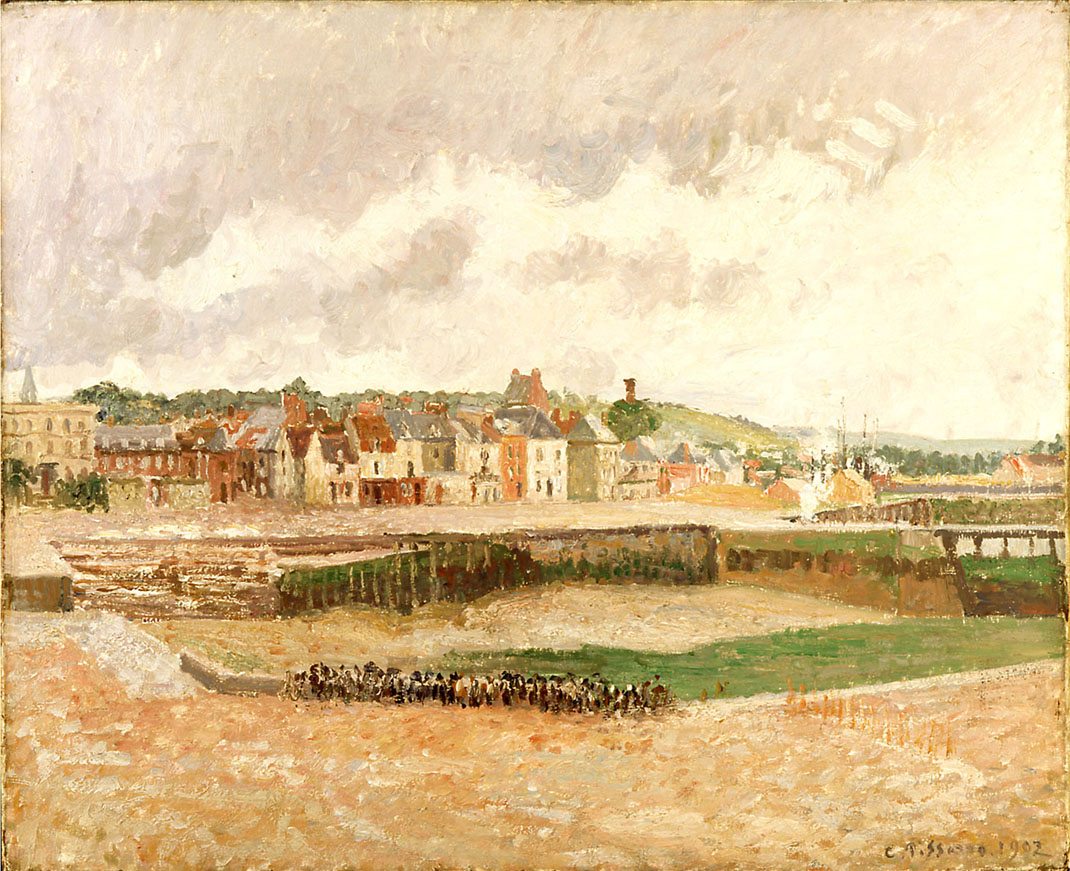
A French court has ordered a Camille Pissarro harbour view sold at Sotheby’s London in 2024 to be returned to the heirs of Salomon Flavian, a Jewish banker whose collection was seized in Paris in 1941. The judges also declared the London sale void, a ruling that could test how far a French judgment reaches into the British art market.
The painting, Darse de pêche et bassin Duquesne (1902), shows the fishing dock and the Duquesne basin at Dieppe, one of the Normandy port views Pissarro painted in the last years of his life. It sold at Sotheby’s London on June 25, 2024, for £1.2 million.
Under the November 5 ruling, Sotheby’s has two months to disclose the full identity of the buyer, with a penalty of €1,000 for every day of delay, The Art Newspaper reported.
A settlement only two heirs signed
The provenance was never hidden. Sotheby’s catalogue noted that Flavian had owned the painting from 1935, and that it appeared in the Répertoire des biens spoliés, the register of looted property France published after the war. The auction house said the work was being sold under a settlement between its owner and Flavian’s heirs, arranged by Mondex Corporation, a Toronto firm that specialises in recovering looted art.
That settlement is where the case turned. Lawyers for seven of Flavian’s heirs told the court in September that only two relatives had signed the agreement, and that the rest had never been consulted.
Sotheby’s and Mondex argued that the painting had left Flavian’s hands before the war: that the British painter and collector Edward Le Bas had bought it from the dealer Paul Rosenberg in the late 1930s, so it was no longer in the collection when the Nazis took it. The judges were not persuaded. They found “no direct and convincing evidence” of those sales, at a time, they noted, when France was at peace and the art market was well organised. The family’s research, by contrast, amounted to precise and consistent evidence that the painting had been looted.
Because French law treats the wartime dispossession as null, the court said every later sale of the painting is void too, including the one in London. It left in place the separate deal under which the two consenting heirs gave up their rights in exchange for a share of the proceeds.
Appeals, and a buyer caught in the middle
Mondex plans to appeal. Sotheby’s said it was disappointed by the restitution order but welcomed the dismissal of all claims against the auction house itself. It is considering joining the appeal, and it has made clear it will not volunteer the buyer’s name, citing client confidentiality and noting that the decision would have to go through a separate procedure before it could be enforced in Britain.
If the family does succeed, it will have to deal with whoever now owns the painting. That buyer, in turn, could seek compensation from Sotheby’s, which may look to the consignor and Mondex under an indemnity in their settlement.
The case lands as restitution law is shifting on both sides of the Atlantic. For auction houses, it is an uncomfortable reminder that a signed settlement with some heirs may not hold if others were left out. For collectors, it is a warning that a clean sale in London is not always the end of the story.