


Every few months, a story goes around about someone who paid a few dollars for a painting or a bowl and walked away with a fortune. Most of the time the details get lost in the retelling. These are the cases that hold up: real finds, confirmed by specialists, with what they actually sold for.
An N.C. Wyeth for $4
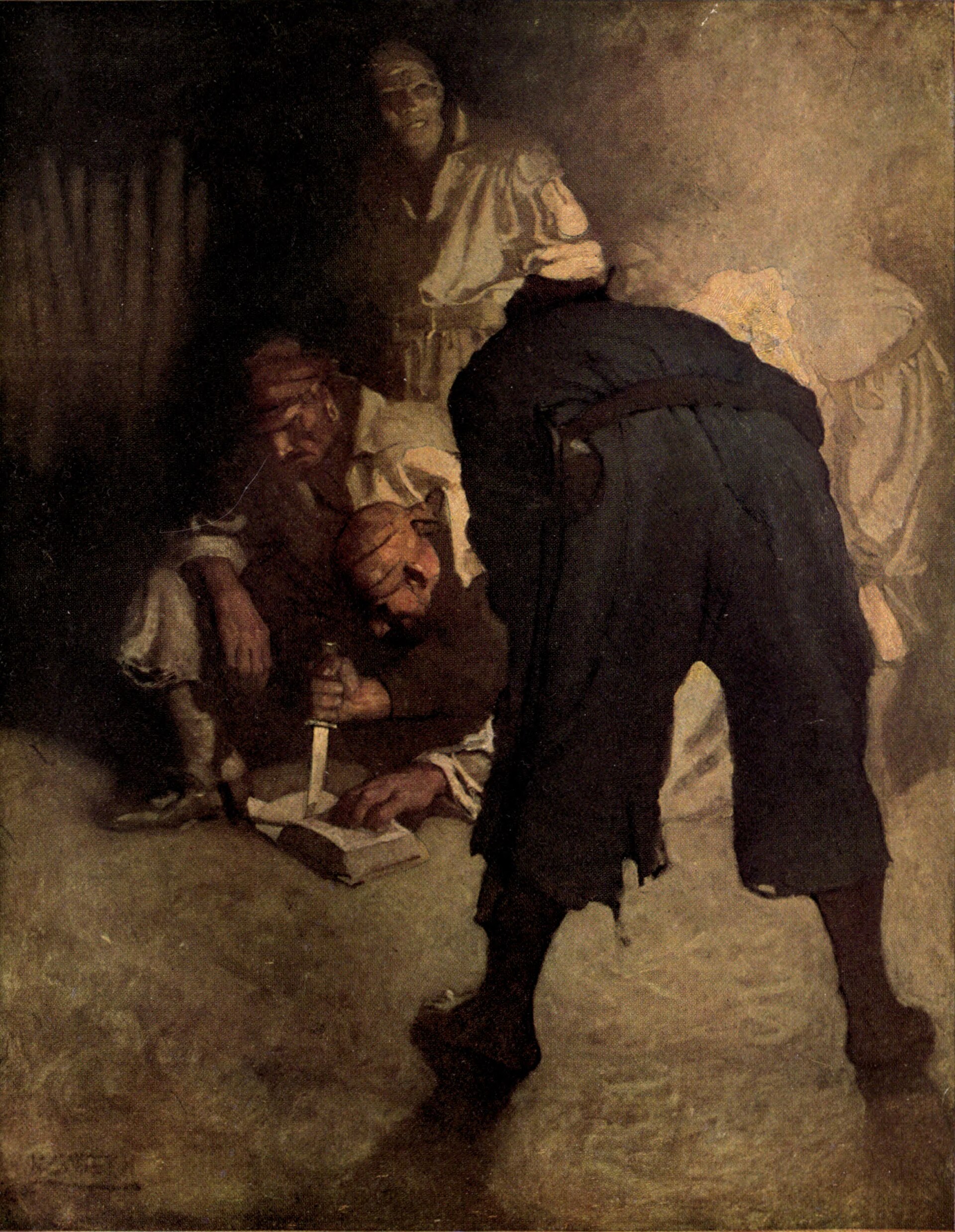
In 2017, a woman in New Hampshire bought a dusty painting at a Savers thrift store in Manchester for $4. Years later, a conservator noticed labels on the back, including one naming N.C. Wyeth. The painting turned out to be Ramona, one of four illustrations Wyeth made in 1939 for an edition of Helen Hunt Jackson’s novel of the same name. A curator at the Brandywine Museum of Art, the leading authority on the Wyeth family, confirmed it was original.
It was offered at Bonhams Skinner in 2023 with an estimate of $150,000 to $250,000 and drew $191,000 with fees, though reports later said the winning bidder failed to pay and the family chose to keep the painting.
A Ming dynasty bowl for $35
At a yard sale near New Haven, Connecticut, in 2020, a collector paid $35 for a small blue-and-white bowl painted with flowers. He suspected it was something special and sent photos to Sotheby’s. Specialists identified it as a 15th-century Chinese porcelain bowl from the early Ming dynasty, one of only a handful of its type known to survive. In March 2021, it sold at Sotheby’s New York for $721,800.
A Roman bust for $34.99
In 2018, Laura Young, an antiques dealer in Austin, Texas, bought a marble bust at a Goodwill store for $34.99. It looked old, and it was: research led specialists to a Roman portrait roughly 2,000 years old, which had once stood in the Pompejanum, a replica Roman villa built for King Ludwig I of Bavaria in Aschaffenburg, Germany. It went missing in the chaos after the Second World War, and how it reached Texas is still unclear.
Young had no right to sell it. Instead, the bust went on display at the San Antonio Museum of Art for a year before being returned to Germany in 2023.
An abstract painting for under $10
In 2012, Beth Feeback, an artist in North Carolina, bought two large canvases at a Goodwill in Concord, intending to paint over them. One had a label on the back for Ilya Bolotowsky, the Russian-born American abstract painter. She looked him up, stopped, and contacted an auction house instead. The painting sold for $34,375.
How to spot a real find
Most thrift-store paintings are exactly what they look like. But the cases above share a few clues worth knowing.
Check the back. Gallery labels, exhibition stickers, framers’ stamps and handwritten inscriptions are how most of these works were identified. In the Wyeth case, a panel maker’s label was the first hint.
Look at materials. Old canvas, hand-cut stretchers, hand-made nails and aged panels are hard to fake cheaply. Mass-produced prints often show a regular dot pattern under magnification.
Take it to a specialist before you do anything else. Do not clean, repaint or reframe a work you think might be valuable. Major auction houses offer free online valuations, and museum curators are often willing to look at photographs.
Be prepared for provenance questions. As the Roman bust showed, an object can be genuine and still not be yours to sell. Anything that may have been looted, especially during the Second World War, needs research before it goes anywhere near a sale.
Not only thrift stores
Some of the best recent finds have come from even less likely places. A Harry Bertoia sculpture spent decades forgotten in a Michigan mall basement before General Motors bought it. A Dutch family found 35 Rembrandt etchings in a folder of keepsakes. And this month, a Georgia O’Keeffe landscape that had been boxed up in an East Village closet since the 1980s goes to auction at Christie’s with an expected price of around $3 million.