


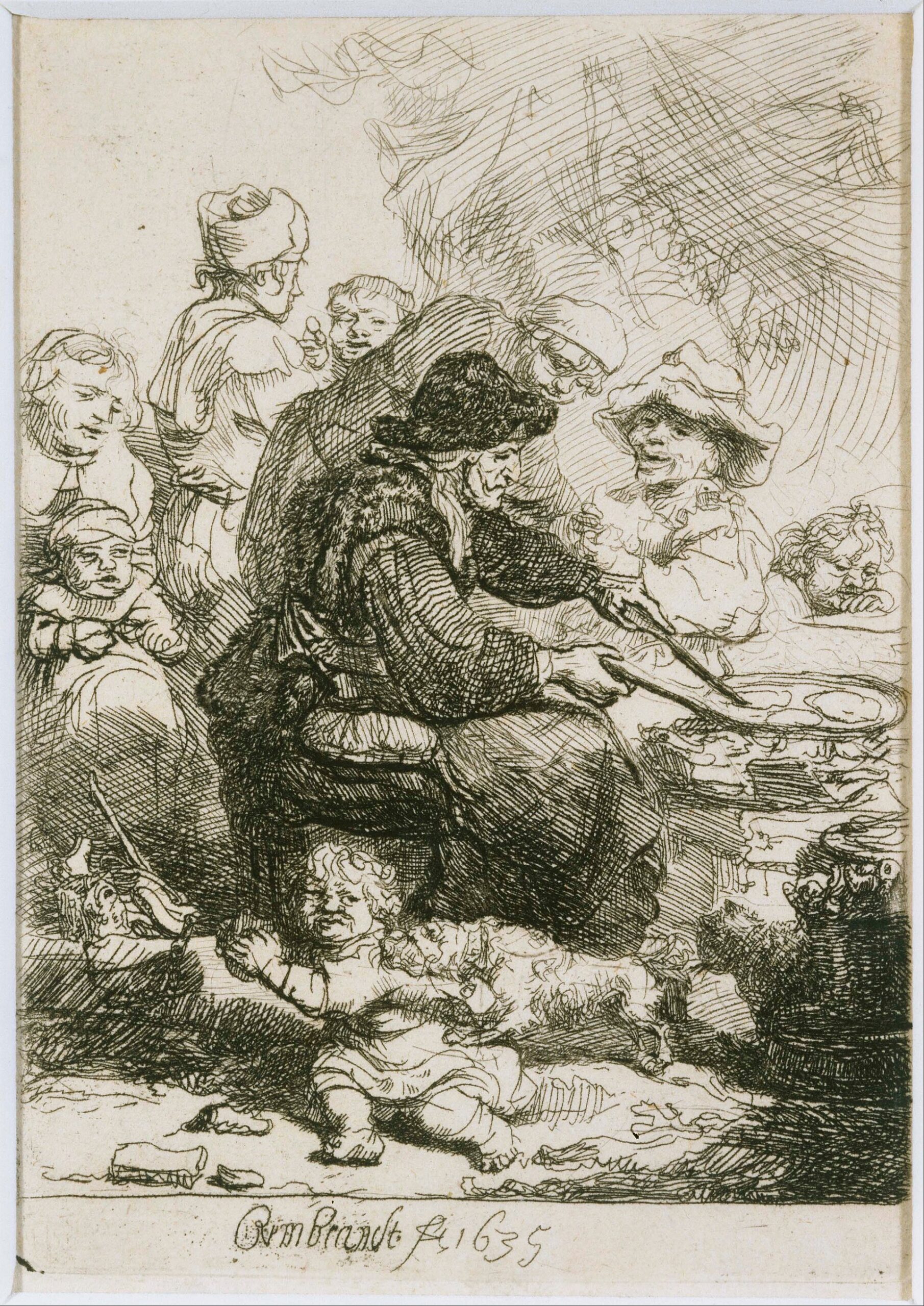
For most of a century, the family simply called them “nice pictures.” They sat in a folder, bought by a Dutch grandfather in the early 1900s for a few guilders apiece and then forgotten. When his granddaughter, Charlotte Meyer, finally went through them, she found 35 etchings by Rembrandt.
The discovery, first made public by the Dutch regional broadcaster Omroep Gelderland earlier this year, has been circulating widely online again this month, and it remains one of the more remarkable Rembrandt finds in recent memory.
A grandfather’s bargains
Meyer inherited the collection after her mother died. The prints turned up in 2020. Her grandfather had bought them roughly between 1900 and 1920, at a time when Rembrandt’s works on paper were far less sought after than his paintings and good impressions could still be had cheaply. He never treated them as treasures, and neither did the family.
Specialists from the Rembrandt House Museum in Amsterdam examined the sheets and confirmed their importance, according to CODART, the international network of Dutch and Flemish art curators. The etchings had been out of public view for more than a hundred years and were in excellent condition, which matters as much as attribution with prints.
Among them are two of Rembrandt’s best-loved small plates: the Self-Portrait in a Fur Cap of 1630, made when he was in his mid-twenties, and The Pancake Woman of 1635, a crowded little street scene of children jostling around an old woman frying pancakes.
Why etchings, and why it matters
Rembrandt was as famous in his lifetime for his prints as for his paintings. He made around 300 etchings, reworking many of the copper plates through several “states,” and impressions circulated across Europe. That means Rembrandt prints are not unique objects in the way his paintings are: the same image survives in many sheets. What separates one impression from another is when it was printed, which state it shows, the paper it is on, and how well it has survived.
A group of 35 early-collected, well-preserved impressions, kept together and away from light for a century, is the kind of thing specialists rarely see come out of a private home. It also tells a story about taste: in the early 20th century a modest buyer could assemble a serious Rembrandt print collection on a small budget, something unthinkable today.
From a drawer to a museum wall
Meyer chose to show the prints rather than sell them. They went on display at the Stedelijk Museum Zutphen in the eastern Netherlands in Rembrandt: Van donker naar licht (Rembrandt: From Darkness to Light), which ran from March 21 to June 14, 2026, alongside work by Rembrandt’s predecessors, contemporaries and followers. Since the find, she has gone on collecting, adding prints by those artists to her own holdings.
No valuation has been published, and the etchings remain in private hands. For now, the story’s appeal lies less in a price than in the image of a family folder that turned out to hold one of the great printmakers in history.