


Baroque and Renaissance: a dialogue that narrates the history of seventeenth-century European civilization. With the Baroque, art ceases to be mere representation and becomes a construction of reality. Space expands, surfaces open outward, and light turns into an active material. The artwork is transformed from an object of contemplation into an experience that engages, persuades, and directs.
“Baroque. The Grand Theater of Ideas”, now on view at the Museo Civico di San Lorenzo, is not merely a survey of style. It is an intellectual and visual investigation into how the Baroque era transformed the image into a tool for persuasion, faith, science, and power.
Rather than presenting the Barocco as ornamental excess, the exhibition frames it as a dynamic system of relationships—between art and devotion, knowledge and wonder, representation and authority. In doing so, it positions the Barocco not as a rupture from the Rinascimento, but as its dramatic evolution.
From Renaissance Ideal to Baroque Reality
The Rinascimento established a visual language grounded in harmony, proportion, and classical idealism. The Barocco, by contrast, intensified emotional engagement and theatricality. Where Renaissance art sought balance, Baroque art sought immediacy.
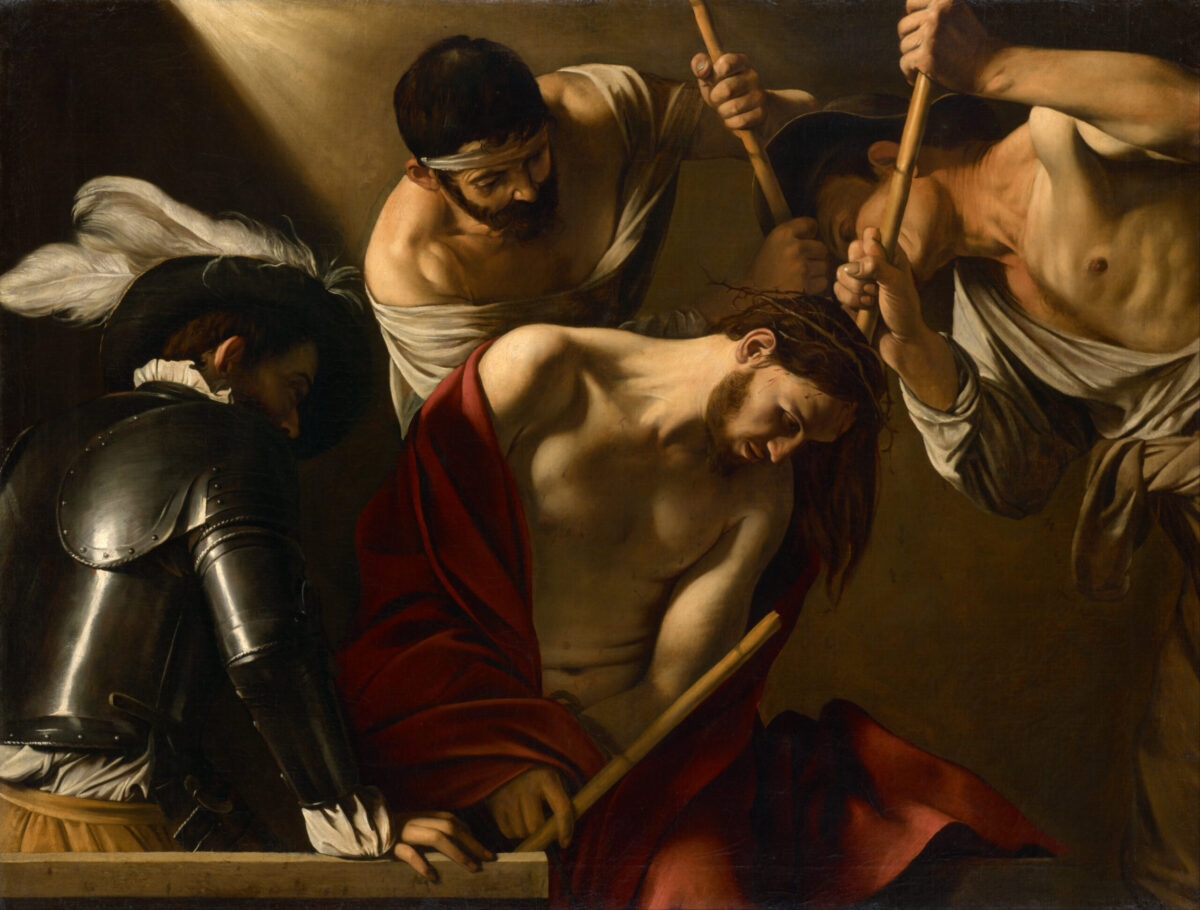
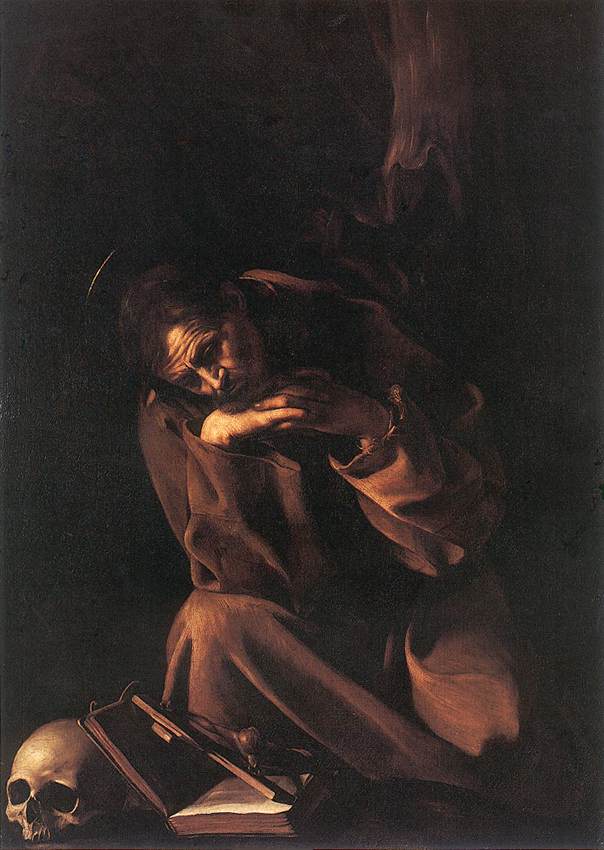
At the center of this transformation stands Michelangelo Merisi da Caravaggio. His radical naturalism—visible in works such as the “Incoronazione di spine” and “San Francesco in meditazione”—rejects idealization in favor of lived experience. Stark chiaroscuro, physical truth, and psychological tension redefine sacred narrative as human drama. In Caravaggio’s hands, light becomes revelation, and faith becomes palpable.
This decisive shift would reverberate across seventeenth-century Europe, shaping the trajectory of the Barocco from Rome to Madrid and beyond.
A Pan-European Dialogue of Masters
The exhibition unfolds as a cross-border conversation among leading figures of seventeenth-century art. Alongside Caravaggio, visitors encounter:
-
Pietro da Cortona, whose grand narrative frescoes amplify the theatrical dimension of the Barocco.
-
Guido Reni, whose devotional intensity refines classical harmony within a Baroque sensibility.
-
Guercino, celebrated for his sculptural force and expressive dynamism.
-
Artemisia Gentileschi, whose psychologically charged compositions expand seventeenth-century naturalism with unprecedented emotional and gendered consciousness.
Approximately two hundred works—paintings, sculptures, drawings, prints, and decorative arts—form one of the most ambitious recent exhibitions devoted to Barocco civilization. The scale is not merely quantitative; it reflects the totalizing visual culture of the era, in which every medium contributed to a shared symbolic horizon.
Museums Without Borders
A defining strength of “The Grand Theater of Ideas” lies in the exceptional quality of its loans. Major institutions have collaborated to create a transnational cultural platform, including:
-
Gallerie Nazionali di Arte Antica (Palazzo Barberini)
-
Albertina
-
Museo del Prado
-
Gallerie degli Uffizi
-
Museo e Real Bosco di Capodimonte
This convergence of institutions signals more than logistical coordination. It reflects a deliberate cultural strategy: to circulate artworks, scholarship, and expertise in ways that transcend institutional and national boundaries.
The Barocco itself was intrinsically European—driven by travel, patronage networks, artistic mobility, and the rapid diffusion of visual models. Today’s museum collaborations symbolically echo that historical interconnectedness, reaffirming art as shared heritage.
Image and Knowledge in the Seventeenth Century
Beyond religious and celebratory masterpieces, the exhibition also foregrounds the relationship between image and knowledge—a crucial dimension of the Barocco. The seventeenth century was an age of scientific inquiry and empirical observation. Art participated actively in this epistemological shift, translating curiosity into visual form.
The installation design avoids theatrical excess. Instead, it privileges clarity and relational reading. The galleries of San Lorenzo become spaces of concentrated looking, where the sequence of works unfolds rhythmically—almost like acts in a theatrical performance. The effect mirrors the Barocco itself: immersive, persuasive, intellectually charged.
Reclaiming the Baroque for Contemporary Audiences
For American audiences accustomed to viewing Rinascimento as the apex of Italian art, this exhibition offers a necessary recalibration. The Barocco emerges not as decadent aftermath, but as a laboratory of modernity—an era in which images learned to address diverse publics, to move, convince, and communicate with unprecedented force.
With “The Grand Theater of Ideas,” Forlì confirms its curatorial direction: exhibitions that go beyond the display of masterpieces to propose expansive interpretative frameworks linking history, aesthetics, and contemporary relevance.
The seventeenth-century theater lives on—not only in the canvases and sculptures now reunited—but in the network of dialogue that made their encounter possible. In that sense, the Barocco remains what it always was: a dynamic, shared, profoundly European inheritance whose resonance extends well beyond its time—and far beyond Italy’s borders.