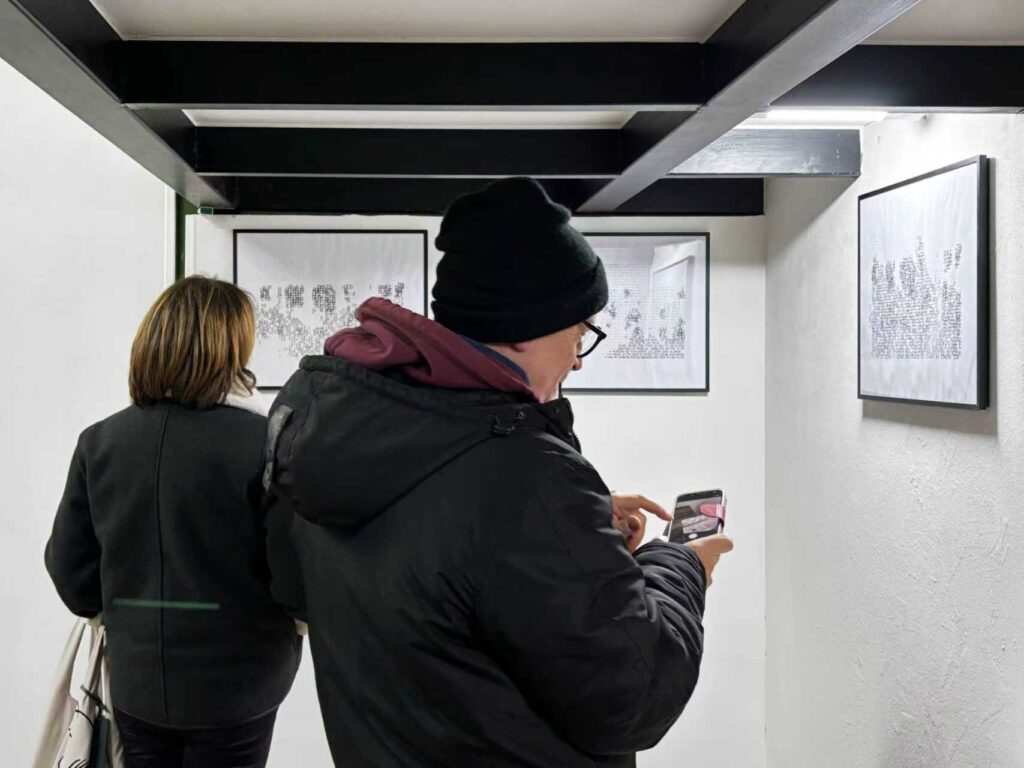
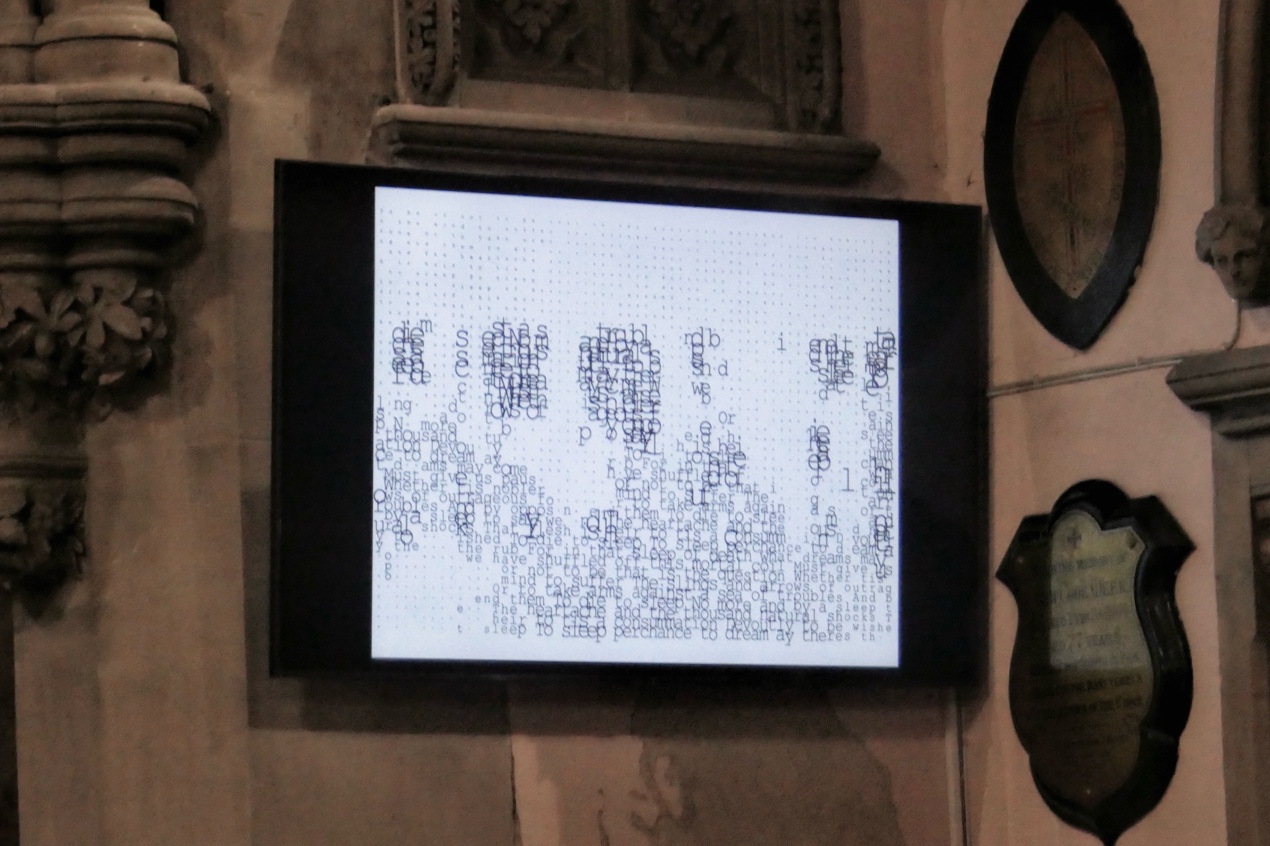
Hosted by Aurora Art&Fashion during this year’s London Design Festival, the group exhibition Threshold brings together experimental works exploring transition, uncertainty, and the boundaries between different states of experience. Held at St Mary’s Hornsey Rise from September 19 to 20, the exhibition features emerging artist Lingqun Teng’s generative moving-image work To be or not to be, an introspective exploration of emotional change and recovery.
Rather than relying on the visual spectacle often associated with digital art, Teng’s work takes a quieter approach. Its understated presence invites viewers to look beyond immediate visual impact and consider the emotions that unfold over time.
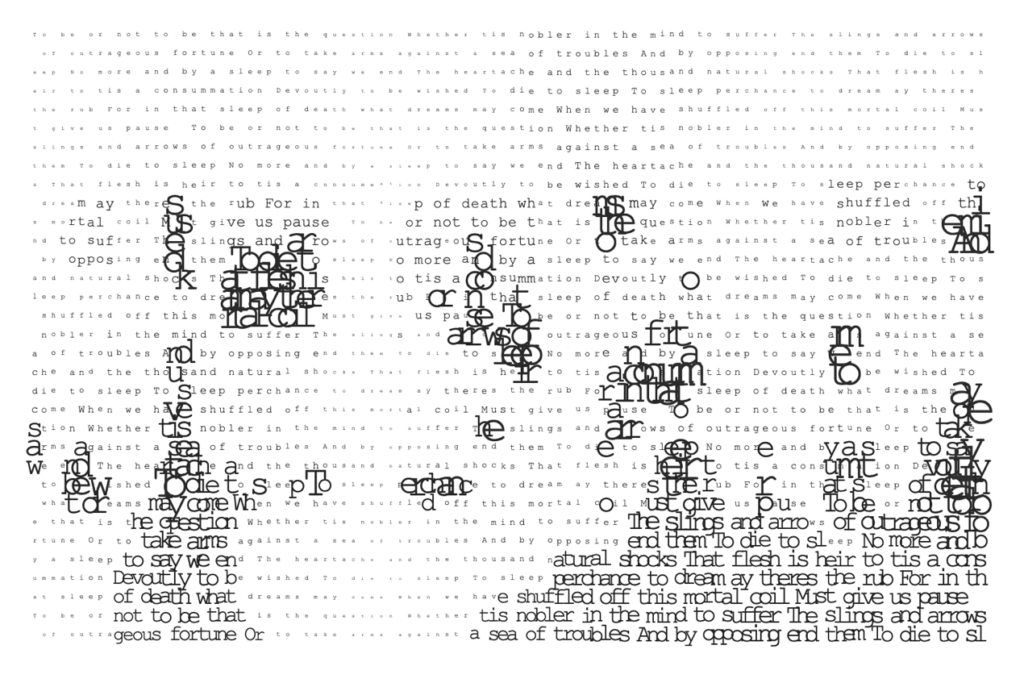
Created through a set of custom algorithmic rules, To be or not to be has no fixed composition or definitive final frame. Its visual elements continually shift, overlap, and reorganise, resisting a conventional narrative or a clearly defined conclusion. This ongoing transformation evokes the uneven process of grief and recovery. Memories can persist, emotions can resurface, and healing rarely follows a predictable course. Instead of presenting change as a straightforward journey from pain to resolution, the work leaves room for uncertainty and experiences that remain unresolved.
This open-ended structure is central to the work’s emotional resonance. Its continuous movement does not promise a final state of completeness. Rather, it suggests that renewal may involve learning to live with the past instead of trying to erase it. What remains unresolved does not necessarily disappear; over time, its place in the present can change. In this sense, the work offers a restrained reflection on recovery as an ongoing process rather than a definitive destination.
Teng’s approach also challenges a familiar perception of digital art. Code-generated imagery is often associated with precision, order, and emotional detachment, while computational art is frequently discussed in terms of technical complexity or visual innovation. Yet these associations can obscure the expressive possibilities of the medium. In Teng’s practice, code is not primarily a vehicle for technical display or artistic provocation. It is a means of expression, much like paint on canvas, shaped by the artist’s intentions and decisions.
By working with generative processes, Teng explores how a system governed by rules can produce forms that remain open to change. The relationship between structure and unpredictability gives the work much of its character. The algorithm establishes the conditions for the image to develop, while its evolving forms resist being reduced to a single, fixed composition. This tension also invites reflection on the limits of control: we may establish intentions and boundaries, yet emotional change does not always unfold according to plan.
The work therefore raises a broader question about authorship in generative art. When an artist creates a system rather than a single predetermined image, creative decisions extend beyond the visible result to the rules and possibilities that shape it. The process does not diminish the artist’s role; it shifts attention towards how the work is conceived and how its forms are allowed to develop. In To be or not to be, this approach provides a fitting framework for exploring experiences that cannot be neatly resolved or fully controlled.
In a digital art landscape where technical sophistication and polished effects can sometimes overshadow the ideas behind a work, Teng offers a more introspective perspective. Her practice suggests that digital tools need not produce emotionally detached results. Their expressive possibilities emerge through the relationship between the artist’s intentions, the structure of the system, and the forms that develop over time. Ultimately, To be or not to be places human experience at the centre of a technological medium, showing how generative art can make space for vulnerability, uncertainty, and renewal.
The presentation at the London Design Festival follows Teng’s solo exhibition in Milan, curated by Angelo D’Amato, which ran from December 6 to 13, 2025.