

Rick Lowe has spent more than three decades arguing that art does not have to hang on a wall to count. On Sunday, a national television audience got to see what that looks like now, when CBS Sunday Morning ran a profile of the Houston-based artist by correspondent Martha Teichner, built around his largest museum show in the United States to date.
The exhibition, Black Wall Street Journey: Re and De Imagining Black Progress, is on view at the University of Michigan Museum of Art in Ann Arbor until January 24, 2027.
Data as material
The show brings together more than 20 new works: large acrylic and paper-collage paintings, sculpture and public installations. Their starting point is economic data. For three years Lowe was in residence at the university’s Institute for Social Research, working with researchers on long-running surveys of American households, including the Panel Study of Income Dynamics, to look at how Black progress in income, education, housing and business ownership is measured, and by whom.
The paintings turn those numbers into dense, map-like abstractions. The most public piece is a 40-foot LED ticker, mounted on the museum’s roof and in the institute’s atrium, that streams figures drawn from the research, a deliberate echo of the stock tickers that have long kept financial information in a few hands.
The project takes its name and spirit from Greenwood, the prosperous Black district of Tulsa, Oklahoma, known as Black Wall Street, which was destroyed in the 1921 Tulsa Race Massacre and rebuilt by its residents. Lowe began Black Wall Street Journey in 2018; the Michigan show, organised by guest curator Abigail Winograd, draws on eight years of that work.
From Project Row Houses to Gagosian
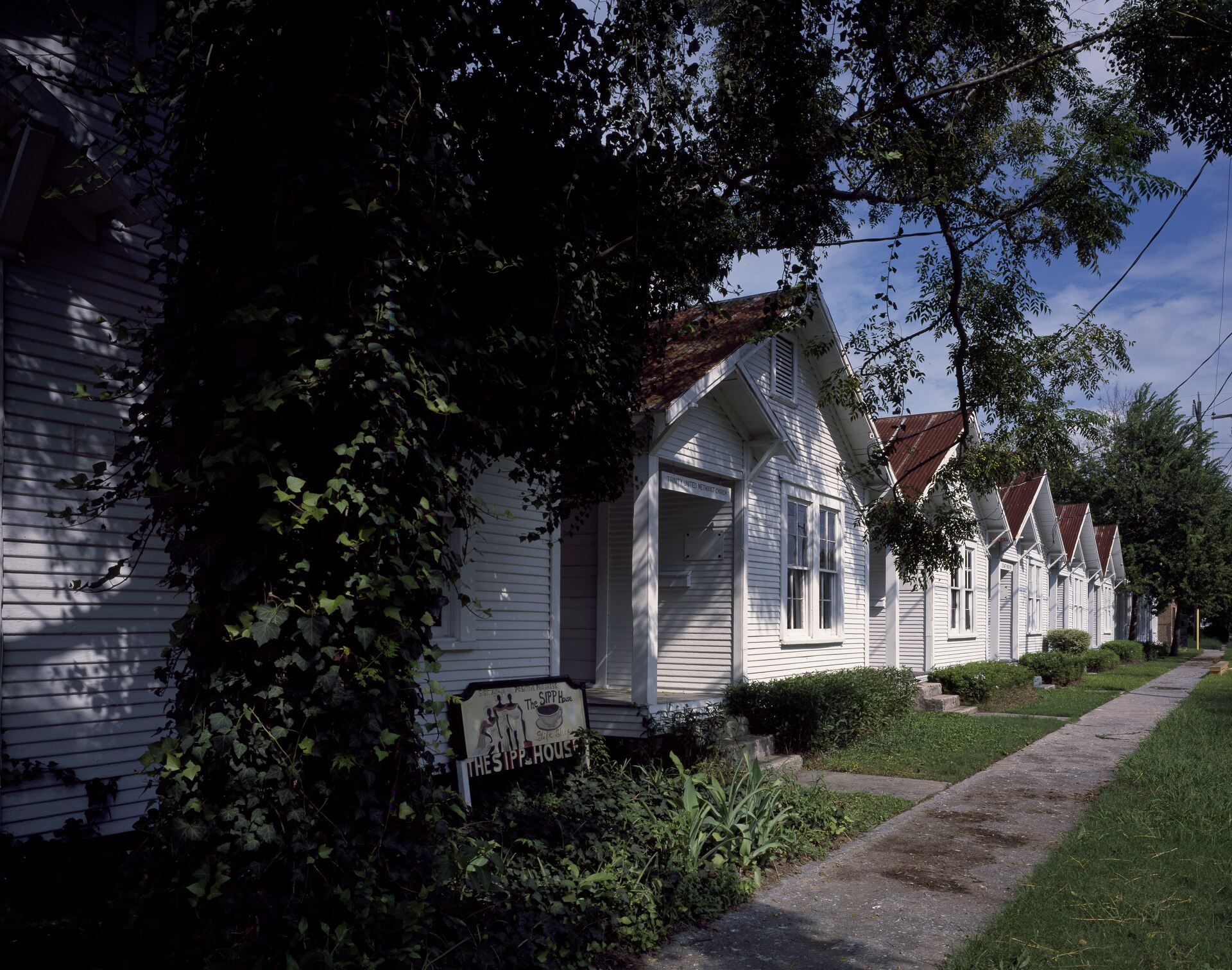
Lowe was born in 1961 in rural Russell County, Alabama. Trained as a painter, he became best known for leaving the studio behind. In 1993 he and a group of fellow artists took over a row of derelict shotgun houses in Houston’s Third Ward and turned them into Project Row Houses, a mix of artist spaces, housing for young mothers and community programmes. It now spans five city blocks and 39 structures, and it became one of the founding examples of what is now called social practice art.
That work brought him a MacArthur Fellowship in 2014, and he has led community-based projects from Athens, where his Victoria Square Project ran in the orbit of Documenta 14, to Venice, where he showed at the Museo di Palazzo Grimani during the 2024 Biennale.
The return to painting is the more recent chapter. Lowe is now represented by Gagosian, and the abstract canvases at the heart of the Michigan show have brought his studio work to collectors and audiences who knew him only as a community builder.
For anyone who caught Sunday’s segment, the exhibition is the place to see how those two sides of his career meet: the paintings and the ticker are drawn from the same question Project Row Houses has been asking for 30 years, about what progress looks like, and who gets to define it.