


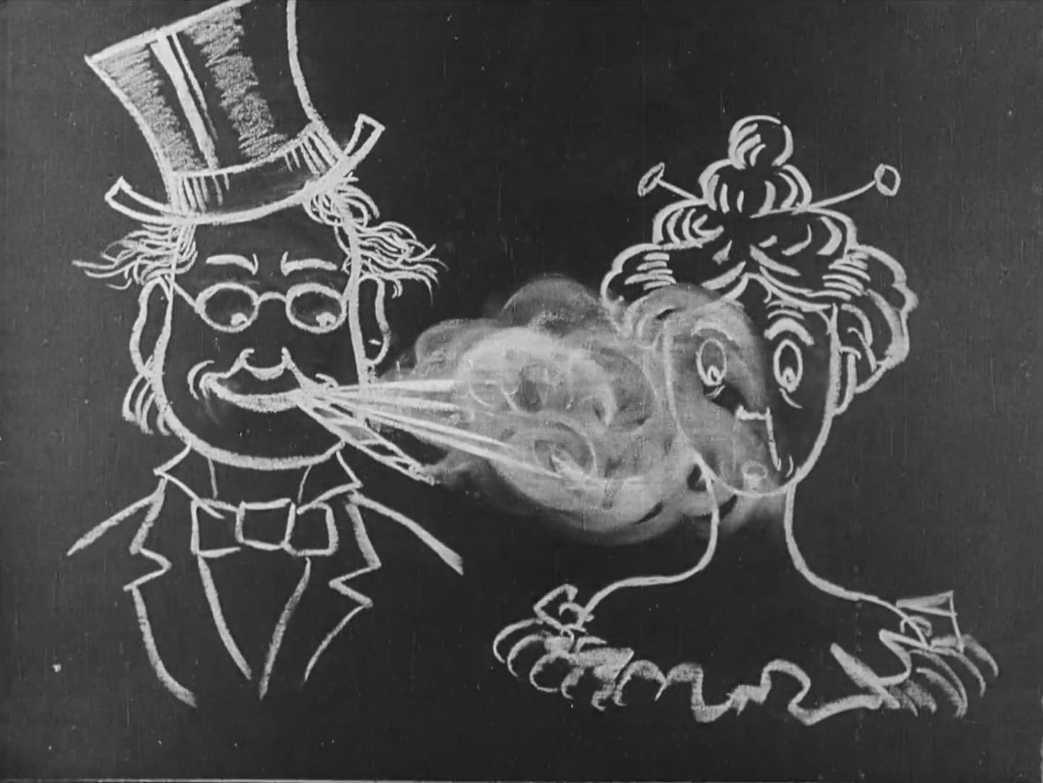
Before Walt Disney, before the American studios of the twentieth century, before animation became an industry, there was an ancient question: how can life be given to something that has no life?
The first chapter of the series From Walt to Walton begins here, at the origins of traditional animation, on a journey through light, shadow, paper and film. It is not only a technical story. It is a cultural story, because every era has built its own living images to tell fears, desires and memory.
The origins can be traced to shadow theater, an ancient form of visual storytelling. In China, the shadow tradition is linked to the Han period, between 206 BC and AD 220, saw wide circulation during the Tang era, between 618 and 907, and reached a central phase during the Song era, between 960 and 1279. Figures made of leather or paper, lit from behind, became characters before a gathered audience. Before the cinema screen, there was already a screen. Before the frame, there was already illusion.
In the nineteenth century, during the industrial 1800s, this wonder entered optical devices. The phenakistoscope of the 1830s, the zoetrope and then the praxinoscope by Charles Émile Reynaud, invented in 1877, proved that movement could be born from still images. All it took was a sequence, all it took was the human eye willing to complete what was missing.
The transition to cinema took place in the early years of the twentieth century. In 1906, J. Stuart Blackton made Humorous Phases of Funny Faces, often remembered as one of the first animated films on film stock.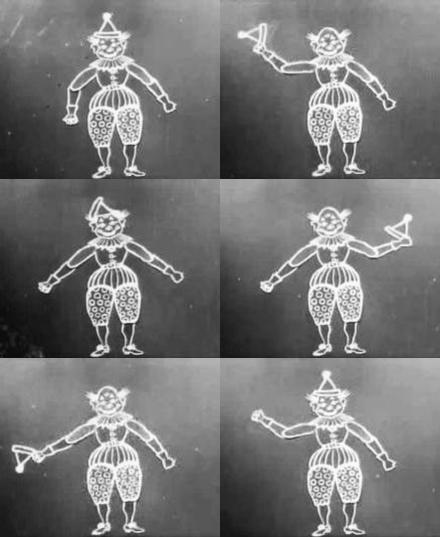
https://archive.org/embed/HumorousPhasesOfFunnyFaces
Two years later, in 1908, Émile Cohl created Fantasmagorie, considered by many historians to be one of the first true hand drawn cartoons. The work appears to have been made on a blackboard, but its effect came from about 700 drawings on paper, later filmed in negative. It is a crucial detail, because animation was born already as a conscious deception, not to lie, but to make the invisible appear.
Fantasmagorie does not seek realism. It seeks metamorphosis. A line becomes a face, the face becomes a body, the body transforms into something else. The image does not want to seem real, it wants to declare its own freedom.
“In the birth of traditional animation I do not see only a technical achievement, I see the moment when man accepted that a line could hold a soul,” says Walton Zed, academic and guiding figure of the series From Walt to Walton, in an editorial statement created for this series. “Today we produce images that move in a matter of seconds, but in 1908 every movement required time, hand and intention. That is where the difference between generating and creating is measured.”
Today, between artificial intelligence, digital avatars, generative video and synthetic influencers, the animated image is everywhere. The Guardian has reported how some brands are already using AI generated influencers to promote products on social media, raising questions about transparency and trust. Reuters has highlighted how digital art is entering the international market more and more, including through fairs such as Art Basel.
But the harder point is another. Traditional animation was born as a shared experience. A family in front of a screen, a silent theater, a child seeing a drawing move for the first time and an adult beside him becoming, for an instant, a child again. That magical moment was not only vision, it was presence. Today the image is consumed alone, vertically, with a finger ready to scroll. We have gained speed, but we have lost ritual. We have multiplied content, but we have often impoverished the experience. Emotion was not born only from movement, it was born from living it together.
For this reason, returning to the origins of animation is not nostalgia. It is a form of clarity. From Chinese shadows to Fantasmagorie, man did not simply invent an image that moves. He invented a place where, for a few minutes, one could believe that even a line could become memory.