


On June 16, at Art Gallery Finestreria in Milan, Guido Rocca’s solo exhibition came to a close. Rocca is an artist whose research is attracting growing attention within the contemporary art scene.
To define it simply as an art exhibition, however, would be reductive. What visitors encountered while walking through those rooms was not merely a sequence of abstract works, but an inner journey. An invitation to pause, to breathe, to look not only at the surface of the canvas, but also at something deeper within themselves.
At a time when everything seems to be measured through possession, speed, and performance, Rocca makes a countercultural gesture: he asks for silence. Not an empty silence, but a space for listening.
His canvases do not tell a linear story. They do not illustrate, explain, or seek immediate understanding. Rather, they open inner territories that belong to all of us and that we often forget to cross: fragility, hope, pain, loss, and the possibility of rebirth.
Looking at his works, one understands how abstraction is not an escape from reality, but a way of moving closer to its deepest essence. Where words come to an end, color continues to speak.
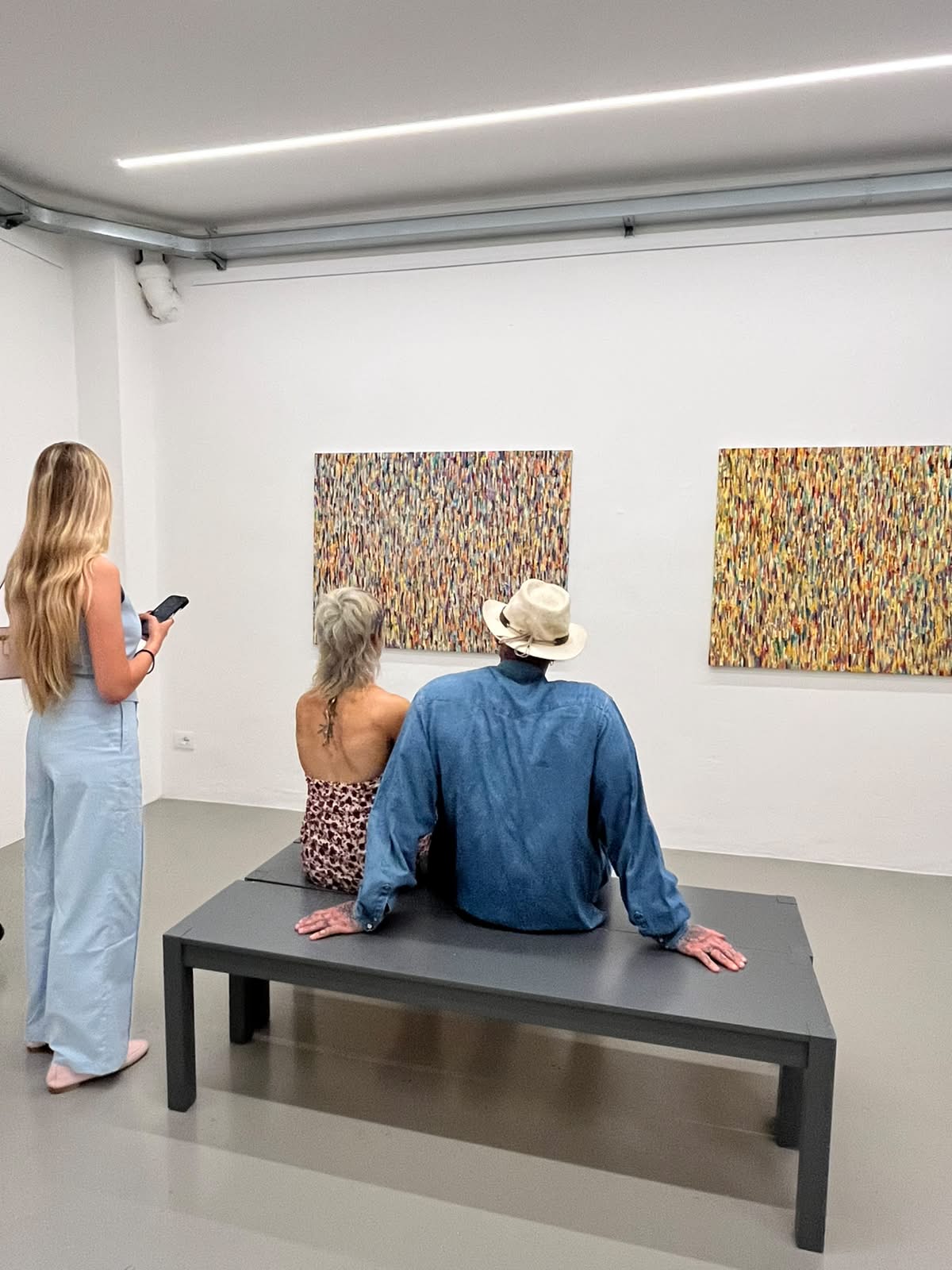
The surfaces vibrate with energy. The chromatic layers seem to preserve memories, wounds, battles fought and survived. Nothing appears decorative. Every pictorial gesture seems to carry the weight of lived experience, transformed and entrusted to the canvas not as a private confession, but as a universal possibility.
Perhaps this is precisely where the emotional strength of Rocca’s work begins.
His art seems to emerge from a life marked by extremes: from fall to rebirth, from shadow to light, from despair to the discovery of a dimension of existence that cannot be reduced to matter, success, possession, or the image we build of ourselves.
His works remind us of a simple and often forgotten truth: much of human suffering arises from our total identification with what we have, with what we lose, with the role we play in the world. When all this begins to tremble, we believe we are collapsing. But it is precisely in that moment that a more essential question can emerge: who are we really?
Guido Rocca’s canvases do not offer definitive answers. They offer something more precious: the possibility of remaining inside the question.
In this exhibition, art becomes a bridge between the visible and the invisible, between what we can touch and what we can only feel. Walking among the works, an unexpected sensation arises: that of not being alone.
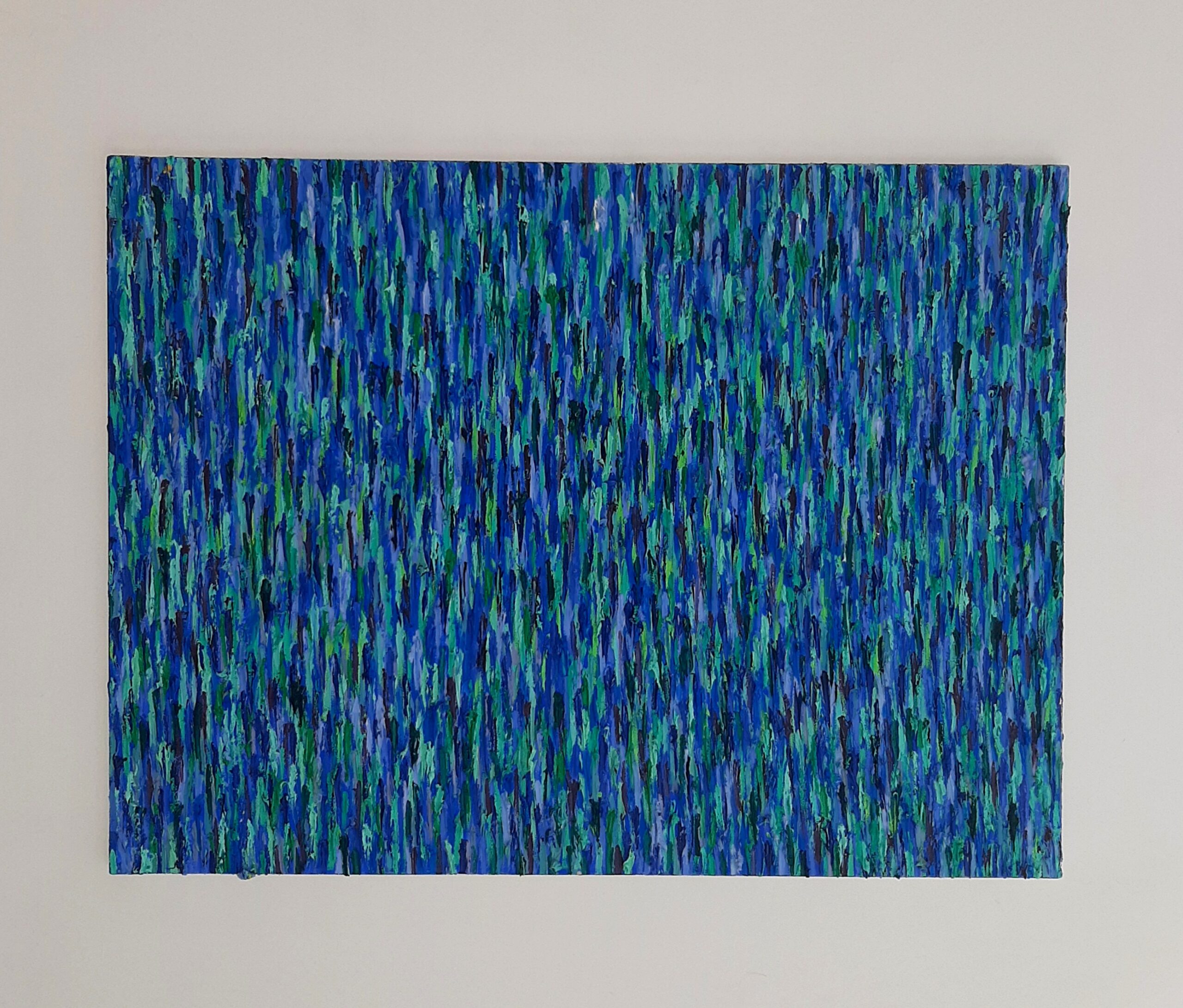
Because every human being knows pain. Every human being has experienced loss, failure, the fear of not being enough. And yet authentic art reminds us that within every wound there may be a passage.
Rocca’s works seem to suggest that life is not only a battle to be won, but a mystery to be crossed. That happiness does not arise from accumulating, but from recognizing who we are beyond circumstances.
Perhaps this is why one leaves this exhibition slightly different from how one entered. Not because everything has been understood, but because something has been perceived.
Something that belongs to that deep dimension of the human being that no economic crisis, no romantic disappointment, no professional failure can truly destroy. A part of us that remains intact. A part that art, when it is authentic, can still reach.
Guido Rocca’s exhibition at Art Gallery Finestreria was not merely an exhibition event. It was an invitation to remember that we are much more than our fears.
And that, sometimes, a painting can do what a thousand words cannot: bring us back home.
