


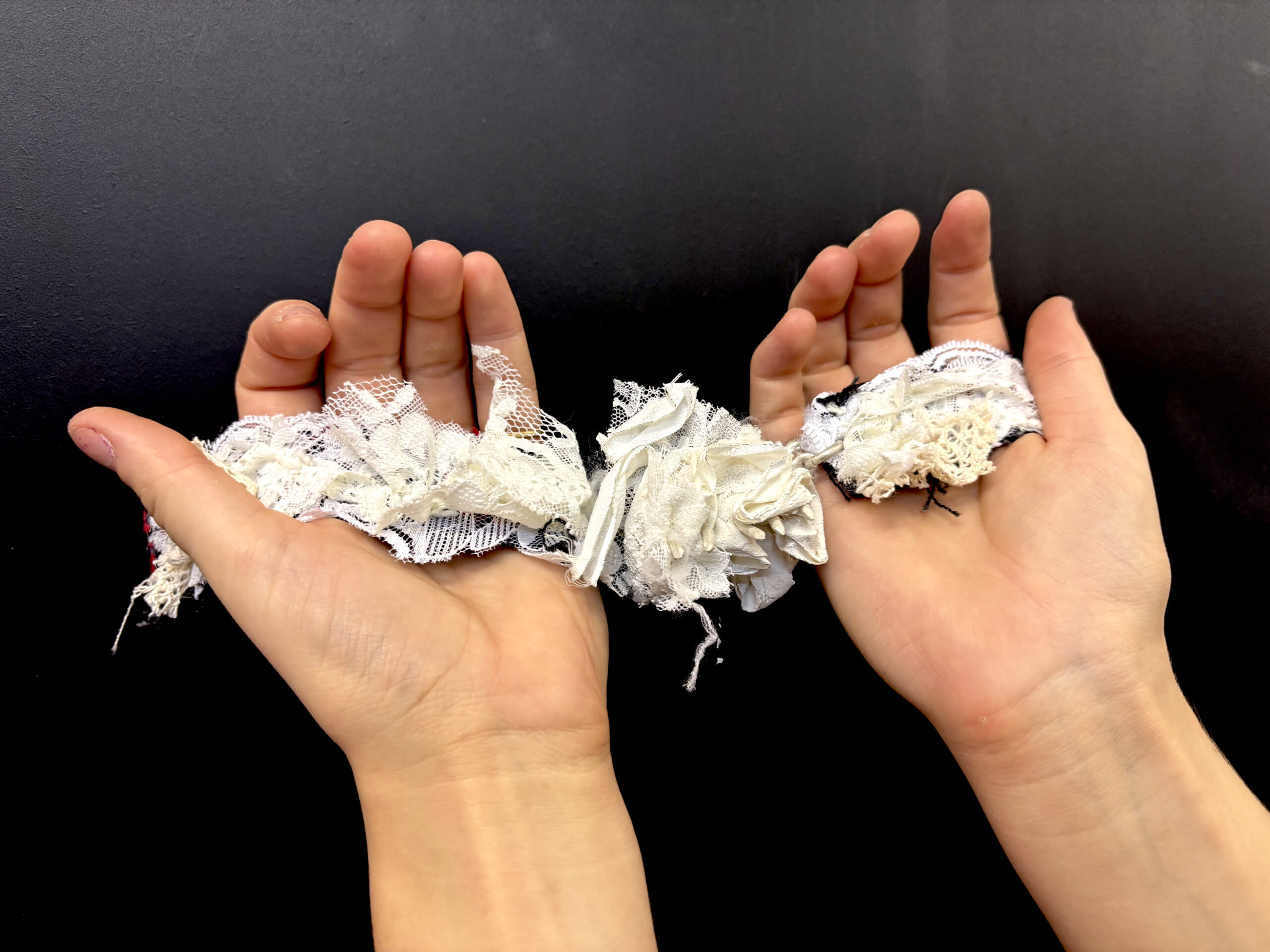
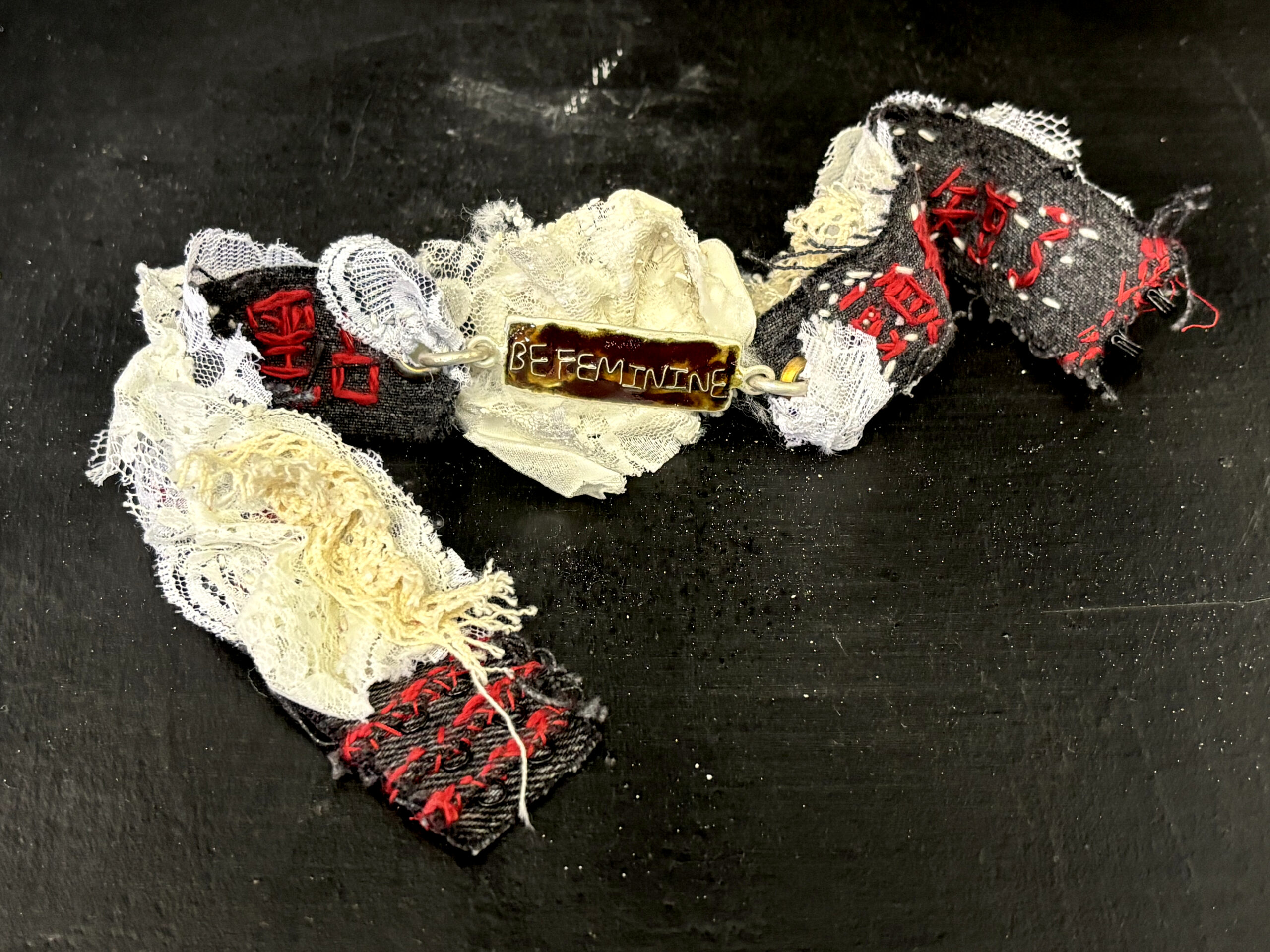
In a photograph of Ning Chang’s Screw Femininity: Internalised, two open hands support a sequence of pale, irregular forms. Lace gathers across their surfaces; loose threads interrupt the edges. Held against the skin, the work has an uneasy delicacy. Another view reveals its reverse, where words and red stitching disturb the pale exterior. Among them is a small but insistent command: “BE FEMININE.”
The movement between these two views is central to the work. What appears on the surface and what lies underneath tell different stories. Chang uses that division to examine how expectations placed upon women can become embedded in their own inner speech. An instruction issued from outside eventually acquires the familiarity of a personal thought.
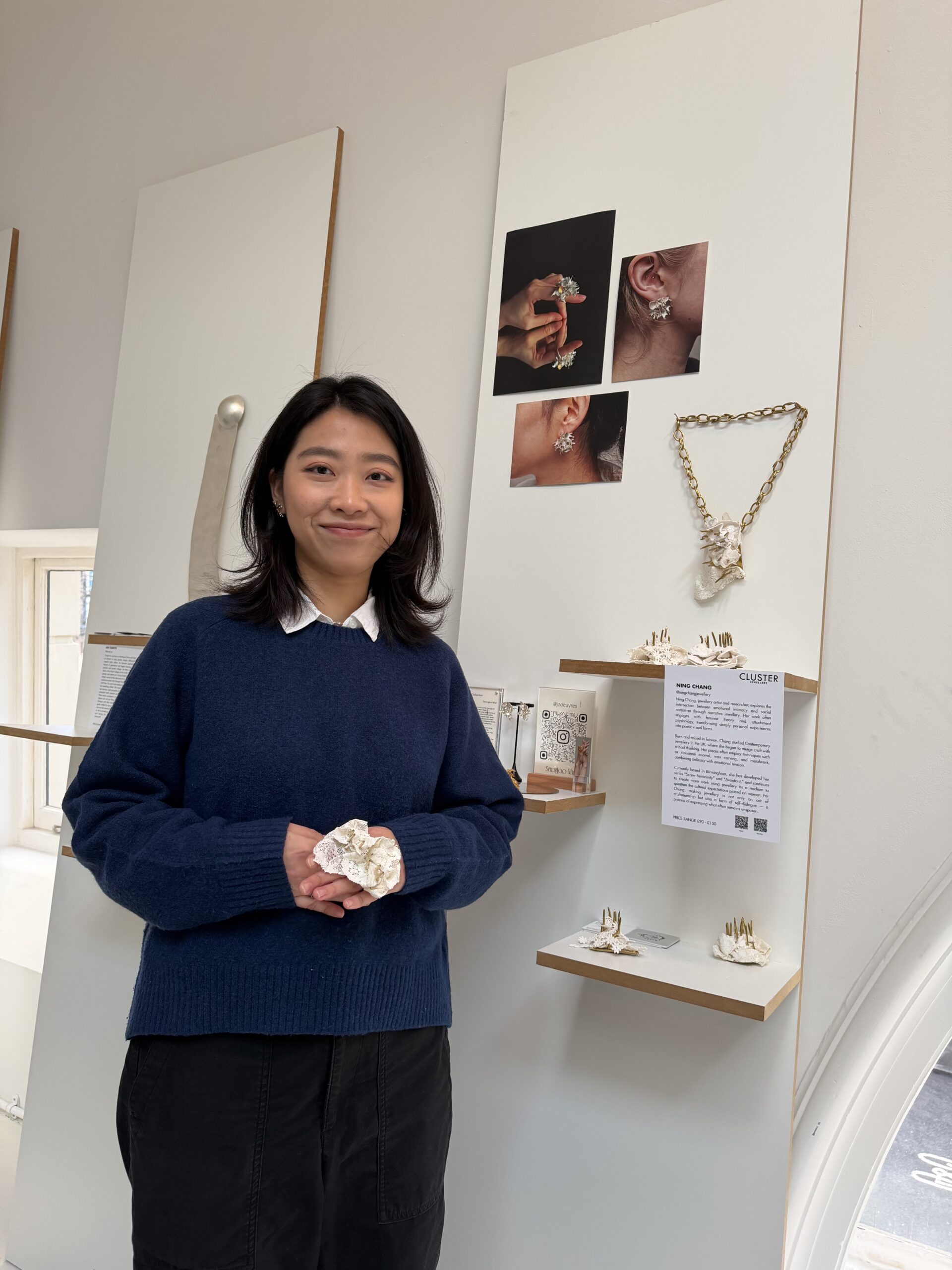
Born and raised in Taiwan and now based in Birmingham, Chang works with contemporary jewellery as a means of giving physical form to experiences that resist easy description. Her subjects include emotional attachment, personal memory, identity and the relationship between vulnerability and strength. These concerns find a particularly intimate setting in jewellery: an object that can be seen by others while remaining close to the person who carries it.
That proximity gives her practice its stakes. Jewellery participates in how a person presents themselves to the world, yet it can also hold meanings unavailable to an observer. A piece may disclose something, conceal something or do both at once. Chang makes use of this ambiguity, allowing the distance between public appearance and private experience to become part of the work’s structure.
Her ongoing Screw Femininity series questions the assumption that femininity should define womanhood. The title is confrontational, but Internalised directs that challenge towards a less visible form of constraint. In the artist’s account, the work draws on the legacy of Manchester’s suffragettes and contemporary feminist activism to consider what persists after formal barriers have been challenged. How do inherited judgements continue to shape the way women understand themselves?
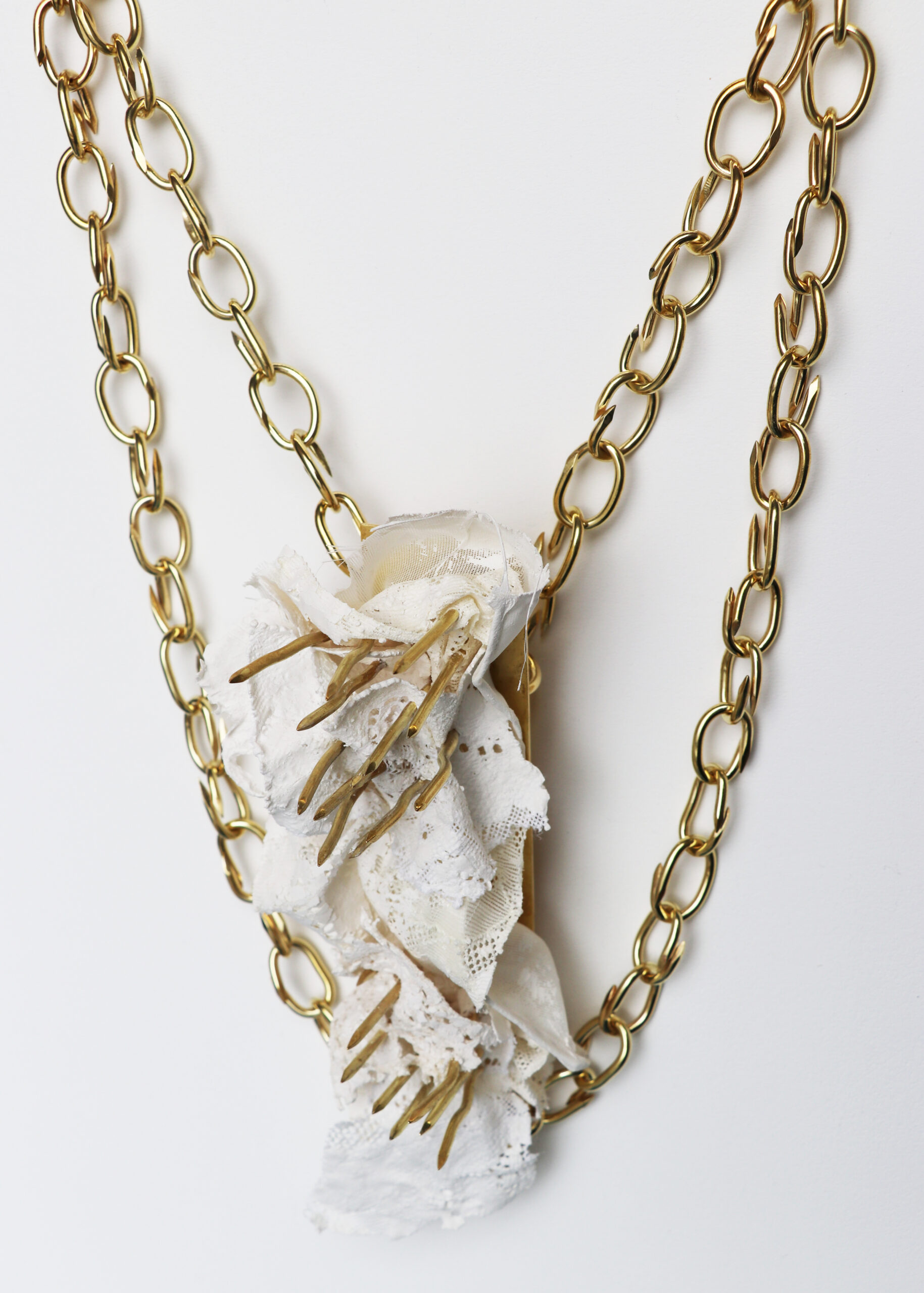
The materials give this question a physical vocabulary. A silver body structure is partially concealed beneath lace and plaster. Lace brings associations of ornament, delicacy and prescribed femininity; plaster introduces a sense of covering and restriction. In the photographs, their combination appears unsettled, with folds, rough edges and exposed threads complicating any impression of decorative ease. The structure remains present, but access to it is interrupted.
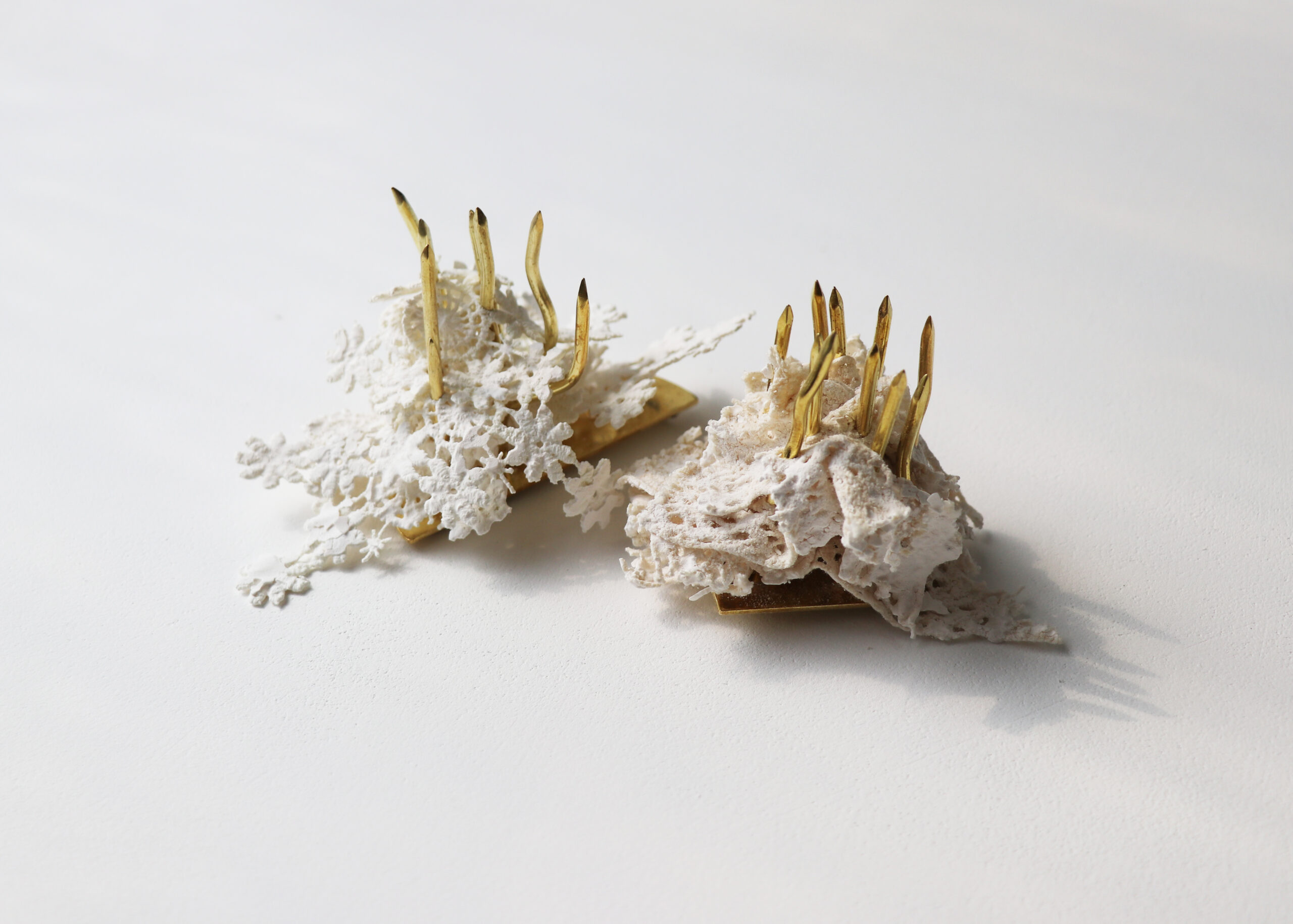
On the reverse, concealed cloisonné enamel phrases locate social judgement within the object itself. Their placement matters as much as their content. The viewer cannot take in every aspect from a single position. Understanding requires another view, an encounter with what the outward presentation withholds. This gives the work’s feminist argument a formal expression: the pressure to conform operates beyond what is immediately visible.
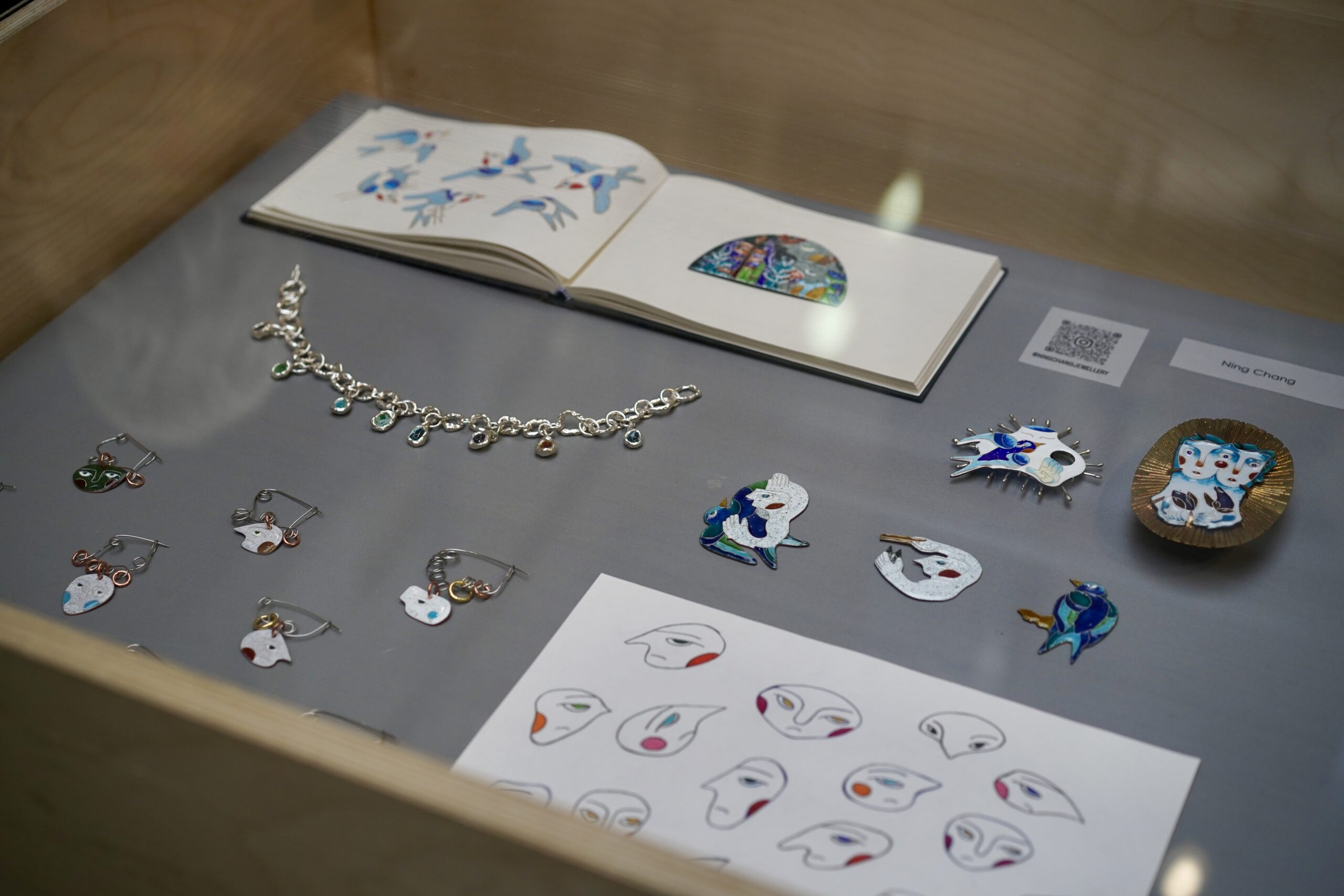
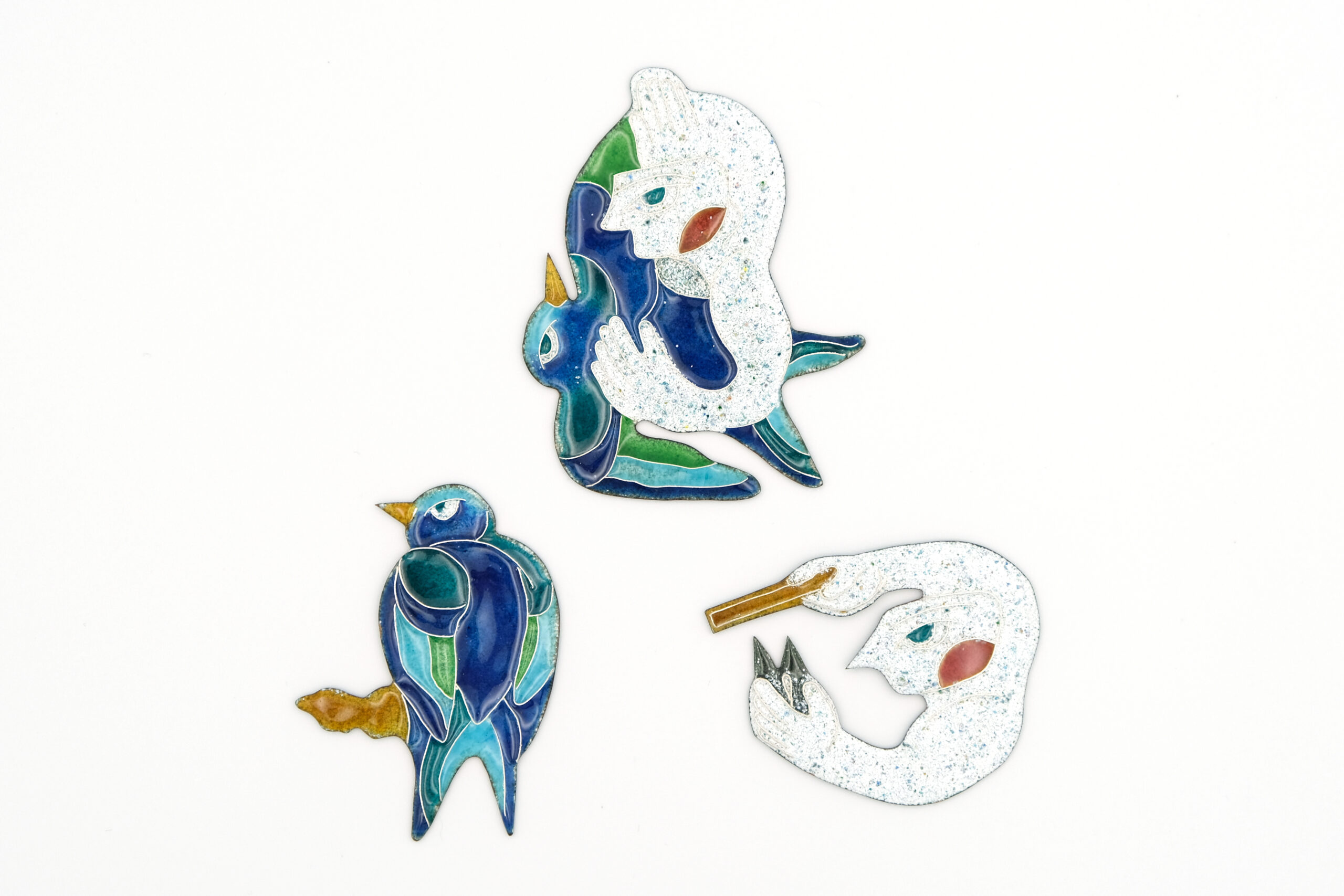
Chang’s use of cloisonné also connects her conceptual concerns to the demands of making. The technique involves shaping fine metal wires into compartments, filling them with vitreous enamel and firing them in successive stages. It is a deliberate, exacting process, one that she brings into contact with emotionally difficult material. The Jointworks, where her practice is profiled, identifies this combination of traditional enamelling and contemporary narrative as central to her work.
Her professional development has been closely connected to Birmingham. After studying contemporary jewellery in the UK, she undertook artist residencies at Birmingham City University’s School of Jewellery in 2023-24 and 2025-26. Her supplied biography records a further residency at The Joint Works beginning in June 2026. Exhibitions in London, Birmingham and Bucharest have placed her work in settings ranging from London Craft Week to Romanian Jewellery Week.
The Manchester context brings the political concerns of Internalised into particular focus. Chang’s background material identifies City of Suffragettes, an Association for Contemporary Jewellery member exhibition, as the setting for her September presentation. Running at Manchester Craft & Design Centre from 12 September to 24 December 2026, the exhibition connects contemporary jewellery with the city’s feminist history.
Within that conversation, Chang’s contribution turns attention towards the intimate afterlife of social expectations. The question extends beyond the right to occupy public space to the judgements a person carries into it.
The photograph of the work resting in open palms offers a fitting expression of this concern. The hands support an object whose surfaces alternately conceal and expose their messages. In Chang’s jewellery, an expectation can become something tangible enough to examine: a phrase, a covering, a structure held against the body. Once made visible, its authority becomes available for questioning.
