


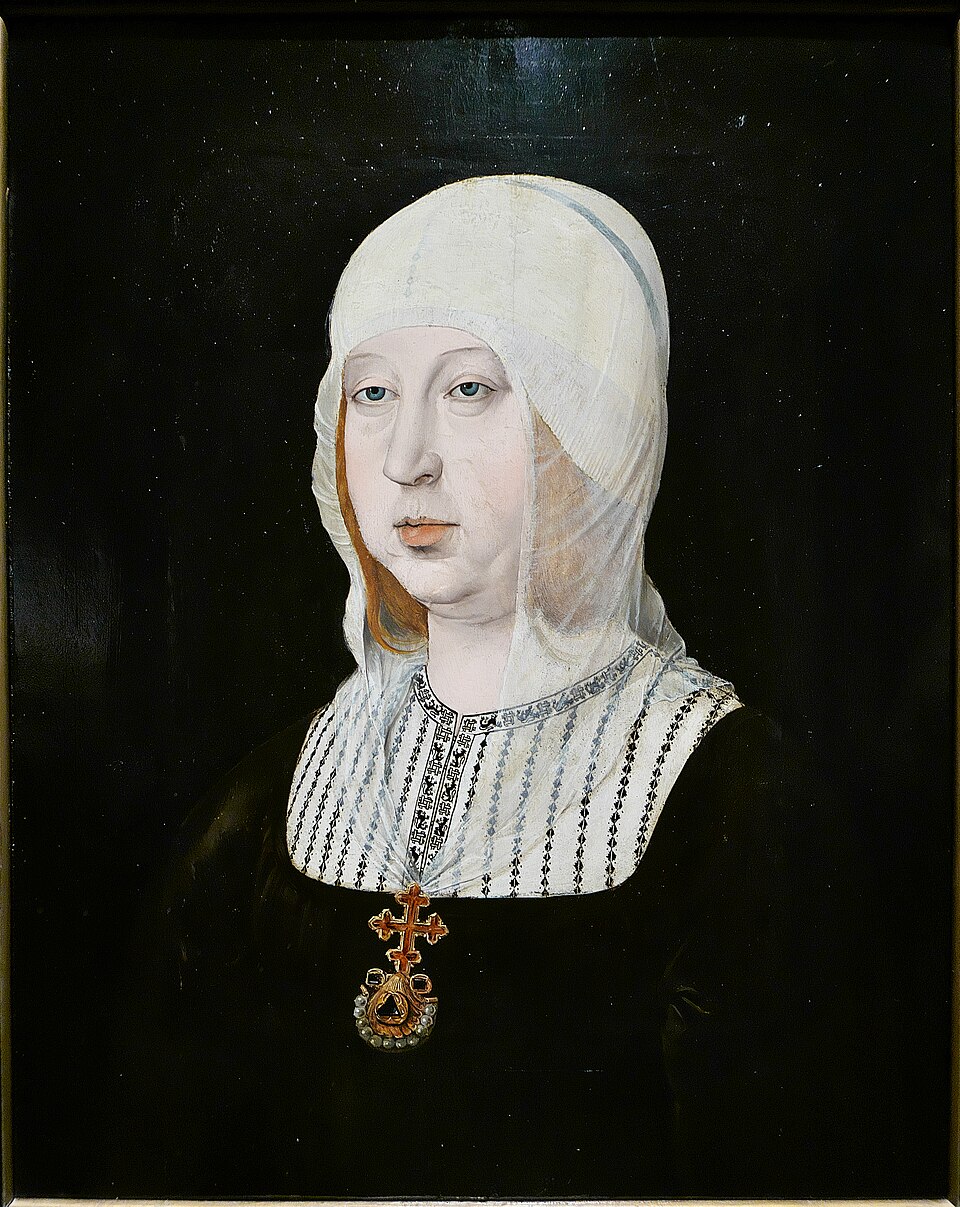
Painted on the panels of a small Flemish triptych, in Spanish capitals, is a line of provenance most collectors can only dream of: “ESTA IMAGEN ES DE LA CAMARA DE LOS REIES CATOLICOS”, this image is from the chamber of the Catholic Monarchs. The work, which once belonged to Queen Isabella of Castile and King Ferdinand of Aragon, has resurfaced in Spain and will be offered in December by the Madrid auction house Abalarte, with a starting price of €1.5 million.
A private altarpiece for a queen
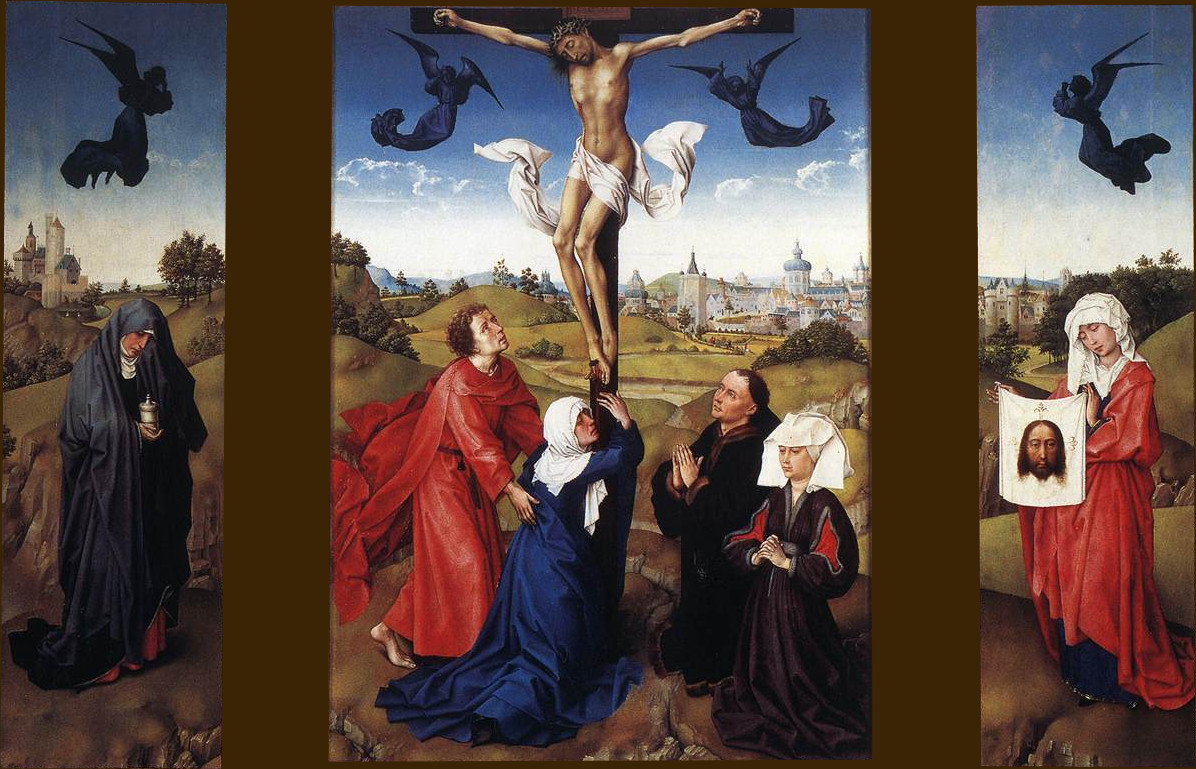
The triptych is a portable devotional piece in oil on panel, measuring 39.7 by 26 centimetres when closed and 39.7 by 52.5 centimetres when open. Its central image is the Crucifixion, flanked by Saint John the Evangelist and Saint Elizabeth of Hungary, the queen’s namesake saint. When the wings are opened, they reveal an Annunciation painted in grisaille, the grey monochrome technique Netherlandish painters used to imitate sculpture.
According to Abalarte, its iconography and dimensions match an entry in Isabella’s inventory of “Retablos e cosas de devoçion” (altarpieces and devotional objects), which lists a “retablo de tres pieças”, an altarpiece in three pieces. That inventory was published by the art historian Francisco Javier Sánchez Cantón in 1950. Isabella died in 1504, which means the triptych must have been painted by then, most likely around 1500.
The work of Rogier van der Weyden’s followers
Isabella was one of the great collectors of Flemish painting of her time, and much of her collection came from the workshops of the Low Countries. A conservation study signed in July 2025 by Carmen Levenfeld Laredo and Ana Monereo Megías concludes that the triptych is not the work of a single artist but of followers of Rogier van der Weyden, the master of 15th-century Brussels. The grisaille panels, in particular, are described as very close in execution to Rogier himself. The central Crucifixion is harder to judge because of its condition, but its composition echoes a work in the Gemäldegalerie in Dresden that the great connoisseur Max J. Friedländer attributed to Rogier’s workshop.
Five centuries in one family line
After the queen’s death, the triptych reportedly passed to Juan López de Lazárraga (around 1440–1536), Ferdinand’s chief accountant and one of the executors of Isabella’s will. It then descended through his heirs in the Lazárraga, Plaza and Artazcoz families. At some point the central panel was refitted into a different frame, topped with a lunette showing God the Father, the Holy Spirit and angels.
What happens at the sale
The triptych is lot 1162 in Abalarte’s final auction of the year. The starting price of €1.5 million is high for the Spanish market, but objects with a documented royal provenance of this kind very rarely appear for sale. Spanish law also gives the state significant powers over important heritage works, and the authorities can restrict export or exercise a right of first refusal at auction, so the sale may well be watched closely by Spain’s museums as well as private collectors.
For a work that spent five centuries in the same family line, it would be a fitting end if the queen’s small altarpiece found a public home.