


Comets streak across black skies. Cities burn. Blood-red moons hang over flooded valleys, and monsters wash up on riverbanks. Nearly five centuries after it was painted, the Augsburg Book of Miracles, one of the strangest and most spectacular illustrated manuscripts of the German Renaissance, is coming to auction at Christie’s in London with an estimate of £700,000 to £1 million.
A catalogue of wonders and warnings
The manuscript was made around 1552 in Augsburg, then one of the richest cities in the Holy Roman Empire and a centre of printing and painting. It contains 167 watercolours of natural phenomena, some real and some imagined, alongside scenes from the Old and New Testaments.
The pictures move from biblical history to events within living memory: comets, volcanic eruptions, floods, strange creatures and fire from the sky, each accompanied by a short handwritten caption giving the date and place. The illustrations are attributed to Hans Burgkmair the Younger and Heinrich Vogtherr the Younger, two Augsburg painters, printmakers and designers who ran separate workshops but sometimes worked together on major commissions.
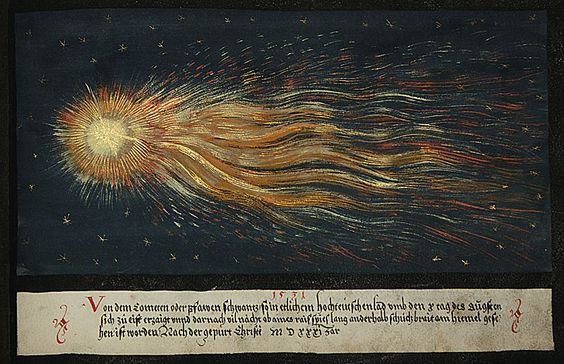
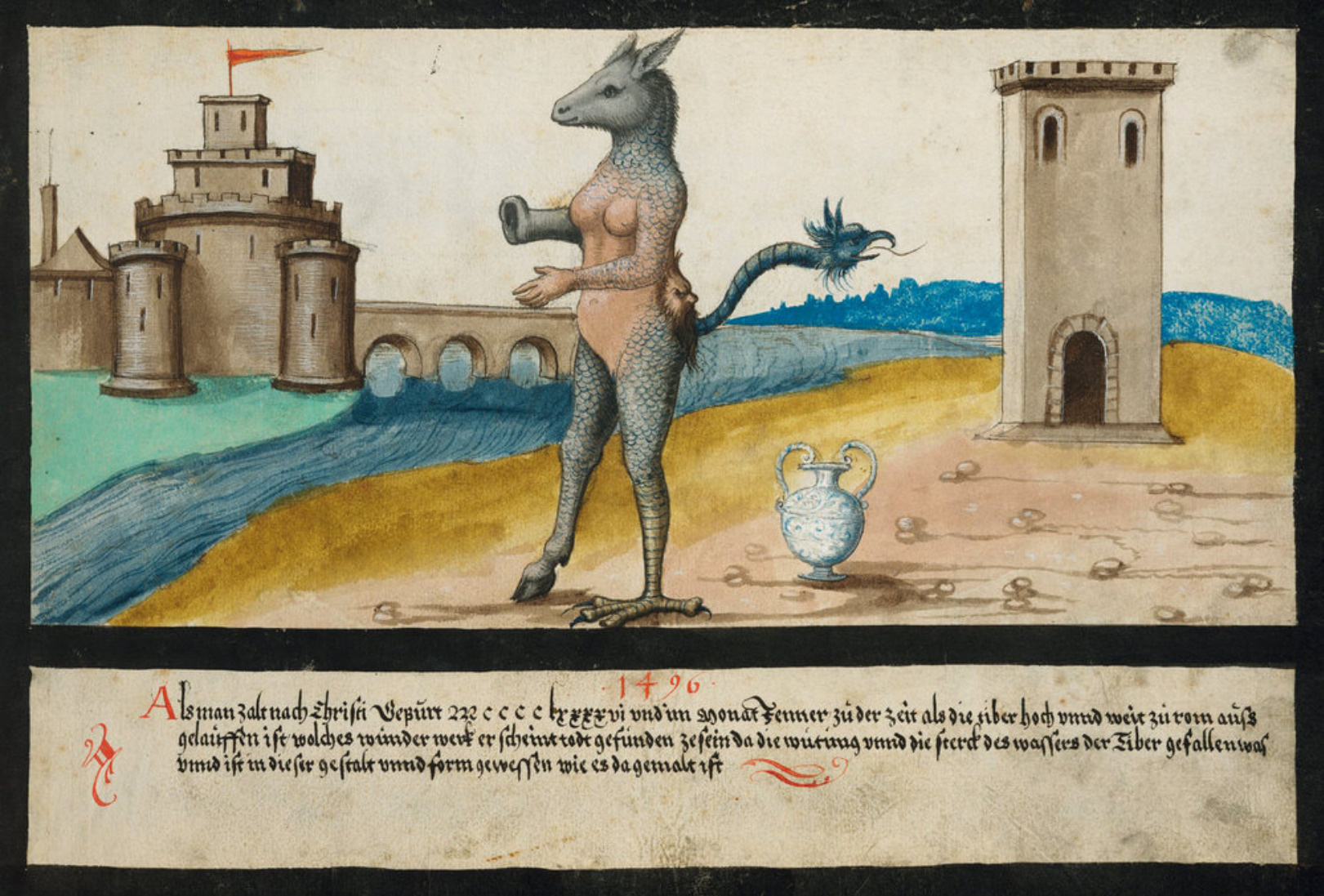
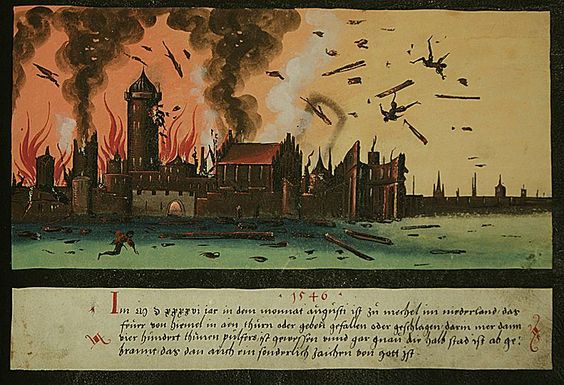
One page shows the comet that appeared over the German lands in August 1531, its tail filling the night sky. Another records a disaster in Mechelen, in the Low Countries, in 1546, when lightning struck a tower holding a huge store of gunpowder and half the city burned. Elsewhere a hybrid beast, said to have been found on the banks of the Tiber in Rome in 1496, stands before the city walls with a donkey’s head, scales and a trunk for an arm.
Signs of the end?
To a modern viewer the book can look like a Renaissance disaster movie. To its first readers it was something more serious. In the decades after the Reformation, many Europeans believed they were living in the last days, and unusual events in the sky and on earth were widely read as divine messages. As Eugenio Donadoni, Christie’s specialist in medieval and Renaissance manuscripts, puts it, such phenomena could be interpreted as signs of something greater.
That mood explains the book’s structure, which runs from the Creation and the Flood through the wonders of recorded history and ends with the visions of the Apocalypse. It is at once a natural history, a news chronicle and a warning.
From a Bavarian collection to a Taschen bestseller
For most of its existence the manuscript was almost unknown. It resurfaced in a private collection in Bavaria around 2007 and was bought in 2010 by Mickey Cartin, a Connecticut collector who runs an electrical supply business founded by his grandfather and has been collecting since the 1980s.
Its fame came in 2013, when the publisher Taschen issued a facsimile. The book’s apocalyptic imagery found a huge audience, and pages from it have circulated online ever since. Donadoni says the colours remain as vivid as when they were painted, and that nearly 500 years later the images are as compelling as ever.
The sale
The Book of Miracles will be offered on December 10 in An Alchemy of Ideas: Works from the Mickey Cartin Collection at Christie’s in London. It will be on public view at Christie’s King Street saleroom from December 4 to 10.
The sale was first reported by The Art Newspaper.