


For almost half a century, a narrow strip of earth sat untouched in the middle of one of Mérida’s richest Roman houses. When archaeologists first dug the site at Huerta de Otero in 1976, they left it alone. This autumn, trainee excavators finally opened it up and found painted walls decorated with peacocks, other birds and figures from mythology.
The City of Mérida announced the discovery on November 17. The paintings cover both the inner and outer walls of the peristyle, the colonnaded courtyard at the centre of a wealthy Roman home, and are described by the excavation team as very well preserved.
Who found them
The excavation is not being carried out by a university team but by students of Barraeca V, a municipal employment-training school in Mérida where students learn a trade while working. Since 2019 the school has offered a specialisation for archaeological excavation workers, and its trainees have spent several seasons at Huerta de Otero under the supervision of the Consorcio de la Ciudad Monumental, the body that manages the city’s Roman heritage.
“The excavation gave us the surprise of some wall paintings,” said José Vargas, the school’s archaeology instructor. “They are very well preserved, with motifs that combine nature, a rich birdlife and mythological themes.”
Pilar Amor, the city councillor responsible for employment training, visited the site and singled out the peacocks. In Roman art the bird was an emblem of luxury and was linked to the goddess Juno, and for Amor, choosing it for the walls of the house says a great deal about the status of the family who lived there.
The house of the Medusa
The paintings are not the first major find at Huerta de Otero. In 2023, students from an earlier edition of the same school uncovered a polychrome mosaic of about 30 square metres covering one of the main rooms of the house. At its centre is the head of Medusa in an octagonal medallion, with four peacocks representing the seasons in the corners, surrounded by masks, fish and floral motifs. Images of Medusa were common on Roman floors of the second century AD, where they were meant to ward off evil.
In 2024 the mosaic was shortlisted for best national historical discovery in the readers’ awards of the Spanish magazine Historia National Geographic. The new paintings suggest the house was decorated with the same ambition from the floors up.
Only 15 per cent excavated
The numbers explain why the site keeps producing surprises. According to the city, the plot covers more than 5,000 square metres, and only about 15 per cent of it has been excavated so far. Digging began in 1976 and then stopped for decades. It resumed in 2019, when the vocational school added archaeology to its programme. This year’s campaign focused on a strip that the 1976 team left untouched, using what Vargas called an old methodology.
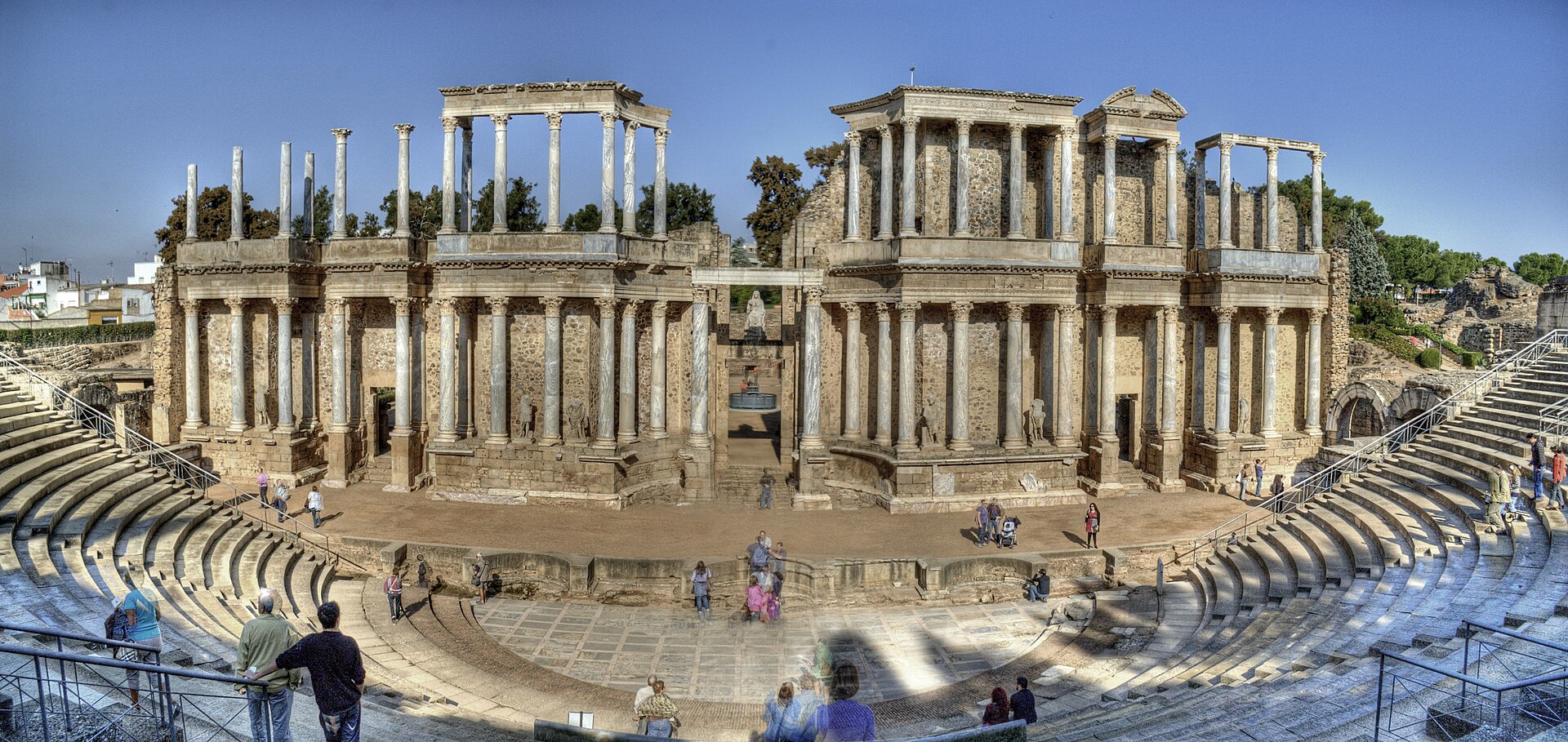
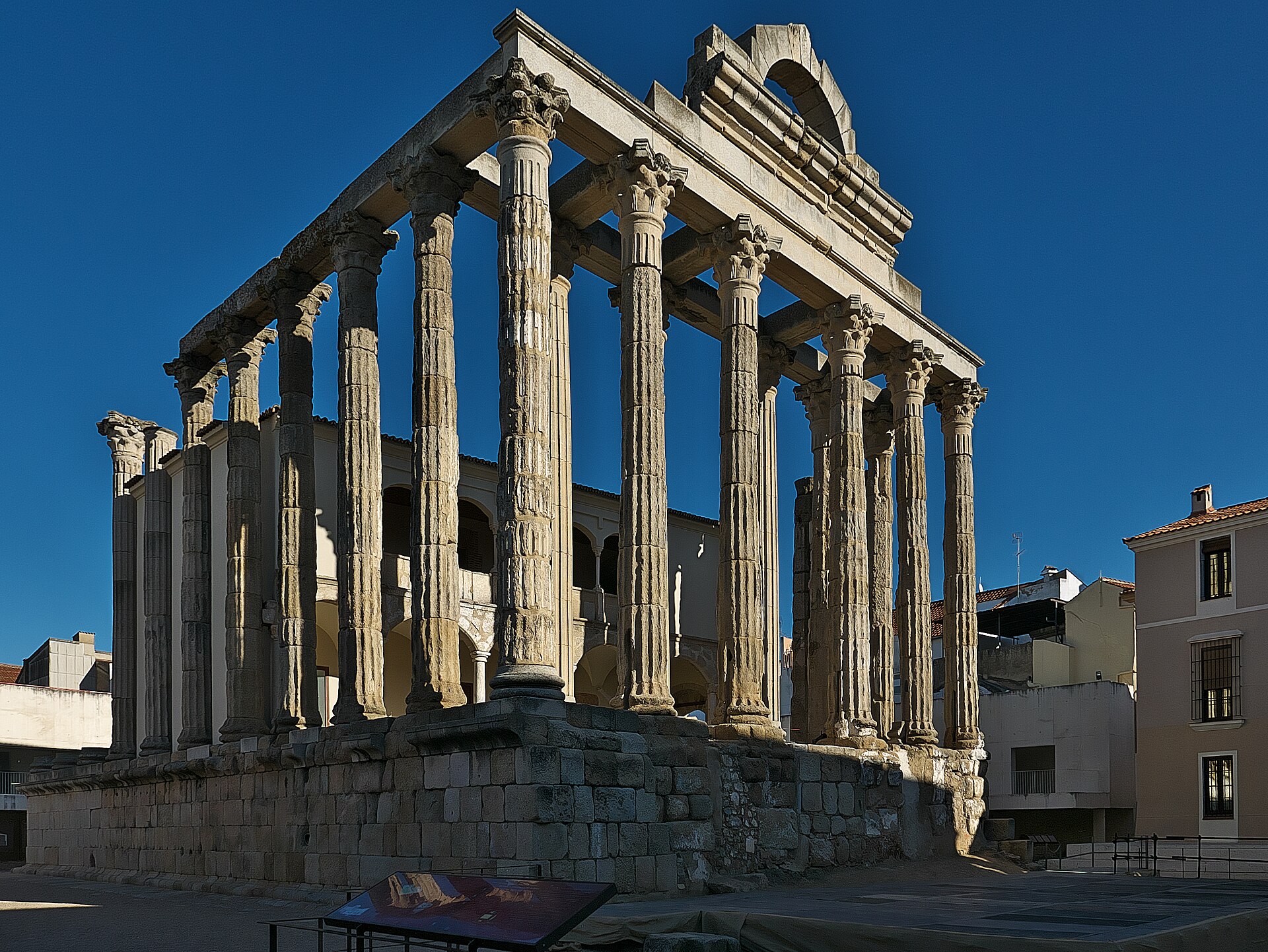
Mérida was founded in 25 BC as Augusta Emerita, a colony for veterans of the Roman legions, and became the capital of the province of Lusitania. Its Roman theatre, amphitheatre and bridge form a UNESCO World Heritage Site, but much of the ancient city still lies under modern streets and gardens. Huerta de Otero, on the western side of the city, is one of the places where that hidden city is slowly being brought back to light.
What happens next
The current edition of the school ends in December, and a new group of students is due to start in January after a period of training, so the work in the peristyle should continue next year. Conservators will need to decide how the paintings can be protected and, eventually, shown to the public.
The city has already started opening the site to visitors. A guided tour of the house, “Paseo por la Domus en la Huerta de Otero,” was scheduled for Sunday, November 22, with places allocated by public draw, according to the City of Mérida.