

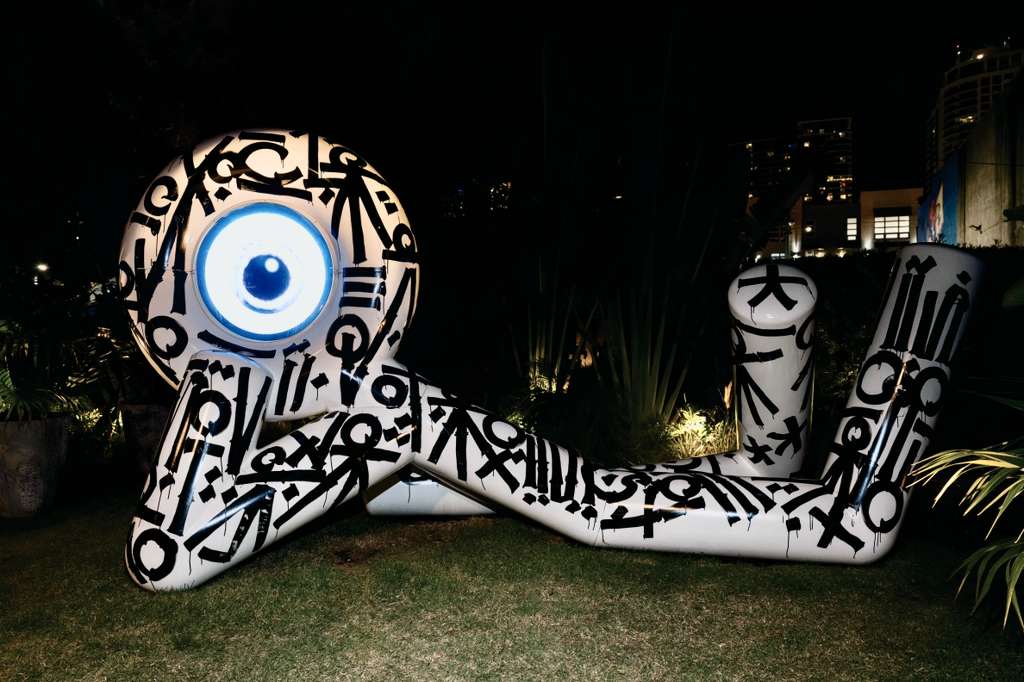
At the intersection of art, engineering, and cultural legacy stands the RETNA × Lina Condes SPHINX iSculpture—a monumental work that redefines what contemporary sculpture can be in the age of technology. Unveiled during Miami Art Week, the collaboration brings together two distinct yet complementary practices, merging aerospace logic, mythological symbolism, and one of the most recognizable visual languages in contemporary art.
The SPHINX was created using technologies borrowed directly from aviation. Engineered by a former specialist from the Antonov aircraft plant, the sculpture is constructed from composite fiberglass—materials traditionally used in aircraft manufacturing to optimize aerodynamics, reduce weight, and simplify maintenance. Here, engineering expertise is transformed into artistic expression: no line is decorative—every line performs, echoing the precision-driven logic of aircraft design.
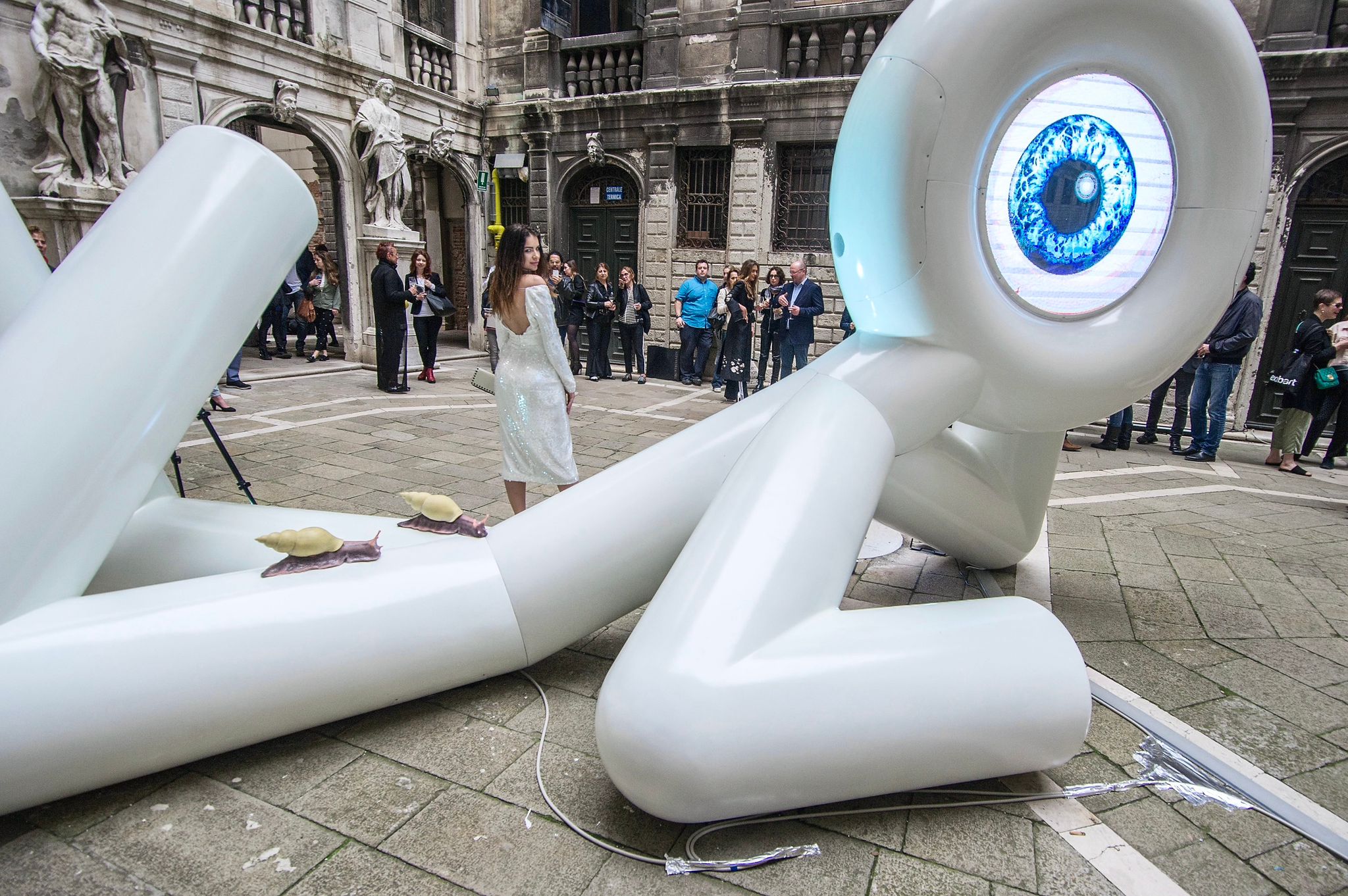
Integrated into the sculptural form are two programmable LED screens capable of displaying any video content. This digital layer transforms the object into a living, evolving system—one that shifts meaning over time and responds to context. The result is a sculpture that exists not as a static monument, but as a dynamic interface between form, motion, and narrative—an engineered system rather than a fixed object.

At the conceptual core of Condes’ practice lies a continued reexamination of The Thinker—not as a historical reference, but as a universal human condition. The Thinker operates as a timeless and universal pose, a symbol of internal processing, decision-making, and intellectual tension.
Within this framework, SPHINX emerges as a natural evolution: where the Thinker embodies internal cognition, SPHINX externalizes it—transforming thought into system, structure, and signal. The sculpture no longer represents thinking; it performs it.
For Lina Condes, SPHINX represents a pivotal moment in her international trajectory. The work began its journey at the Venice Biennale, where it was positioned not merely as an artwork, but as a conceptual statement—bridging classical mythology with future-facing materials and digital intelligence. This trajectory reflects a broader shift in her work toward the intersection between human consciousness and machine logic—an area that continues to define her evolving sculptural language.

The collaboration is further elevated by the involvement of RETNA, whose calligraphic system introduces an additional layer of coded language into the structure. Drawing from Blackletter, hieroglyphics, and global script traditions, RETNA’s work embeds symbolic communication directly into the architectural body of the sculpture. At its core, the work aligns with a global culture of human performance—a shared drive rooted in discipline, resilience, and the pursuit of continuous improvement. The embedded visual language carries motivational cues designed to inspire emerging generations—transforming the structure into both a landmark installation and a narrative experience.
The project “Power of Thought” sits at the crossroads of art, sport, and global identity. It presents a progressive model for how public art can engage international audiences, foster cultural dialogue, and promote a shared vision of ambition and achievement.
RETNA’s career includes collaborations with Louis Vuitton, Chanel, and cultural projects, from Purpose to institutional opera productions at the San Francisco Opera and the Kennedy Center.
Within iSculpture SPHINX, his contribution operates as a linguistic system layered onto Condes’ engineered form—transforming the sculpture into a structure that not only exists in space, but communicates within it.
As SPHINX continues its trajectory, the work signals a broader direction in contemporary sculpture: away from static representation and toward adaptive, interdisciplinary systems. In this context, Condes’ reinterpretation of the Thinker becomes critical—not as a figure, but as a framework. The question is no longer what it means to think, but how thought can be constructed, externalized, and sustained through form.