

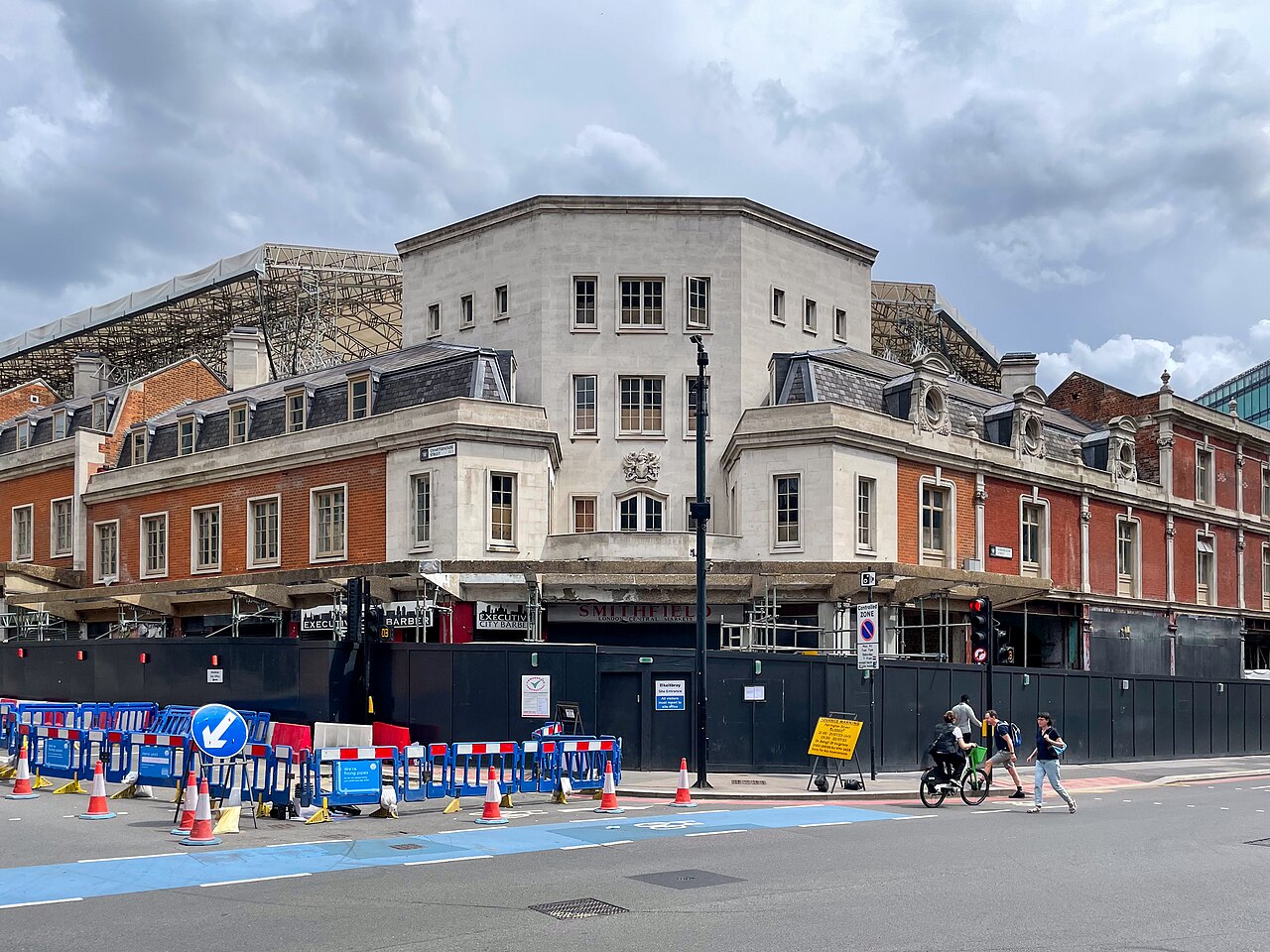
After ten years of work and around £437 million, London finally has its new city museum. The London Museum opens its new home in the old market buildings at Smithfield on Saturday, November 28, and the permanent galleries are free.
The museum, formerly the Museum of London, closed its old site at London Wall in 2022 to make the move. Its new premises are the Victorian General Market, built in 1883 and shuttered in the 1990s, a short walk from Farringdon station. Here is what to expect.
The key facts
- Opens: Saturday, November 28, 2026
- Where: Smithfield, London EC1A 9AG, a few minutes from Farringdon (Elizabeth line and Thameslink)
- Admission: free to the permanent galleries; some events and exhibitions are ticketed
- Cost of the project: about £437 million
- Collection: around 7 million objects, covering 450,000 years of London’s history
- Expected visitors: about two million a year, according to the City of London Corporation
Three “times” of London
The museum is organised around three ideas. Real Time is the main entrance, a covered former street inside the market. Our Time fills the vast Linbury Hall, the old trading floor, with 13 large installations, a restaurant, shop and event space. Past Time is the permanent history gallery, set underground, where London’s story is told from prehistory to the present.
The museum also has a dedicated Goldsmiths’ Gallery for the Cheapside Hoard, the extraordinary cache of Elizabethan and Jacobean jewellery found under a London street in 1912, and a six-metre window looking onto the railway that runs beneath the site.
Twelve things not to miss
The museum’s opening announcement lists the objects it expects to be crowd-pleasers. Among them:
- The Lord Mayor’s Coach, the gilded state coach still used every November in the Lord Mayor’s Show
- The Cheapside Hoard
- A piece of the Whitechapel fatberg, the vast mass of fat and wet wipes removed from the sewers in 2017
- Banksy’s Piranhas
- The waistcoat said to have been worn by Charles I at his execution in 1649, on show for six months
- Emmeline Pankhurst’s hunger strike medal
- Anna Pavlova’s Dying Swan costume
- Roman writing tablets from the Bloomberg Collection, part of more than 14,000 Roman artefacts
- The Art Deco lift from Selfridges
- Charles Dickens’s chair
- Queen Victoria’s mourning dress
- Tom Daley’s diving trunks from the 2012 Olympics, and the smashed Fender bass of The Clash’s Paul Simonon
What the people behind it say
The director, Sharon Ament, has described the aim as a museum “to be London itself, in all its grit and glitter,” adding: “Above all, I hope we make Londoners proud!” More than 100,000 people contributed to the project, according to the museum, and more than 70 trades and over 40 apprentices worked on restoring the buildings.
Christopher Hayward of the City of London Corporation, the lead funder, called the opening “a landmark moment for the Square Mile.”
Tips for visiting
Entry to the permanent galleries is free, but the opening weekend and the run-up to Christmas are likely to be busy, so check the museum’s website for timed tickets before you travel. A spotlight exhibition, London Tastes, runs from November until August 2027. Later phases are still to come: a free exhibition on Roman London is planned for spring 2027, and the neighbouring Poultry Market, which will hold temporary exhibitions, is due to open in 2028.
Opening times and ticket details are on the London Museum’s website.